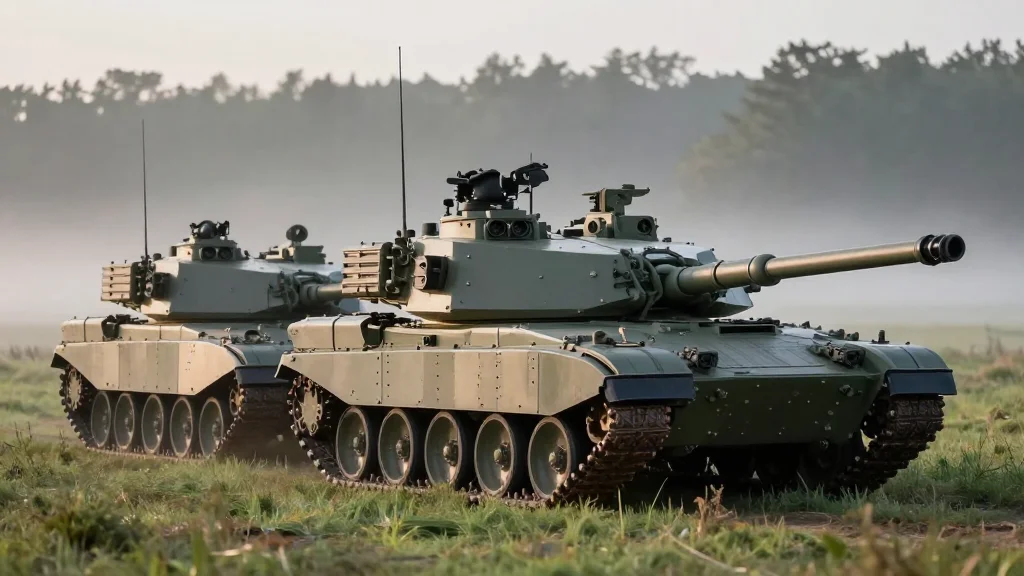
Europe Driving IFV and Tank Demand in Global Armour Market
Why It Matters
The surge reshapes defence procurement dynamics, offering European OEMs a revenue boost while pressuring rivals to secure market share. It also signals a longer‑term shift toward heavier, network‑centric ground forces across the alliance.
Key Takeaways
- •Europe accounts for 45% of global IFV orders in 2025
- •Poland and Germany lead new tank procurement, totaling €4 bn ($4.3 bn)
- •Supply chain bottlenecks push delivery timelines to 2027
- •Domestic production ramps up, with France targeting 2,000 IFVs by 2030
Pulse Analysis
Europe’s renewed focus on heavy armour reflects a broader strategic recalibration after Russia’s 2022 invasion of Ukraine. NATO members are allocating record defence budgets, with the EU’s collective spending on ground combat systems projected to exceed $15 billion this year. This capital influx benefits legacy manufacturers such as Germany’s Rheinmetall, France’s Nexter and the joint venture KNDS, which are modernising legacy platforms like the Leopard 2 and Leclerc while introducing next‑generation IFVs equipped with advanced sensor suites and hybrid propulsion.
The market’s rapid expansion is not without challenges. Global semiconductor shortages and limited steel production capacity have already delayed several high‑profile contracts, shifting expected in‑service dates from 2025 to 2027. To mitigate these bottlenecks, firms are diversifying supply chains, investing in domestic foundries, and exploring additive‑manufacturing for low‑volume components. These moves not only safeguard delivery timelines but also create new opportunities for smaller suppliers across Europe’s defence ecosystem.
Looking ahead, the heightened demand for IFVs and tanks is likely to spur further consolidation among European defence firms, as they seek economies of scale and broader product portfolios. At the same time, the push for interoperable, network‑centric platforms will drive investment in digital architecture and AI‑enabled combat systems. Stakeholders—from policymakers to investors—should monitor how these trends influence export potential, especially in emerging markets that view European armour as the benchmark for modern land warfare capability.
Europe driving IFV and tank demand in global armour market
Comments
Want to join the conversation?
Loading comments...