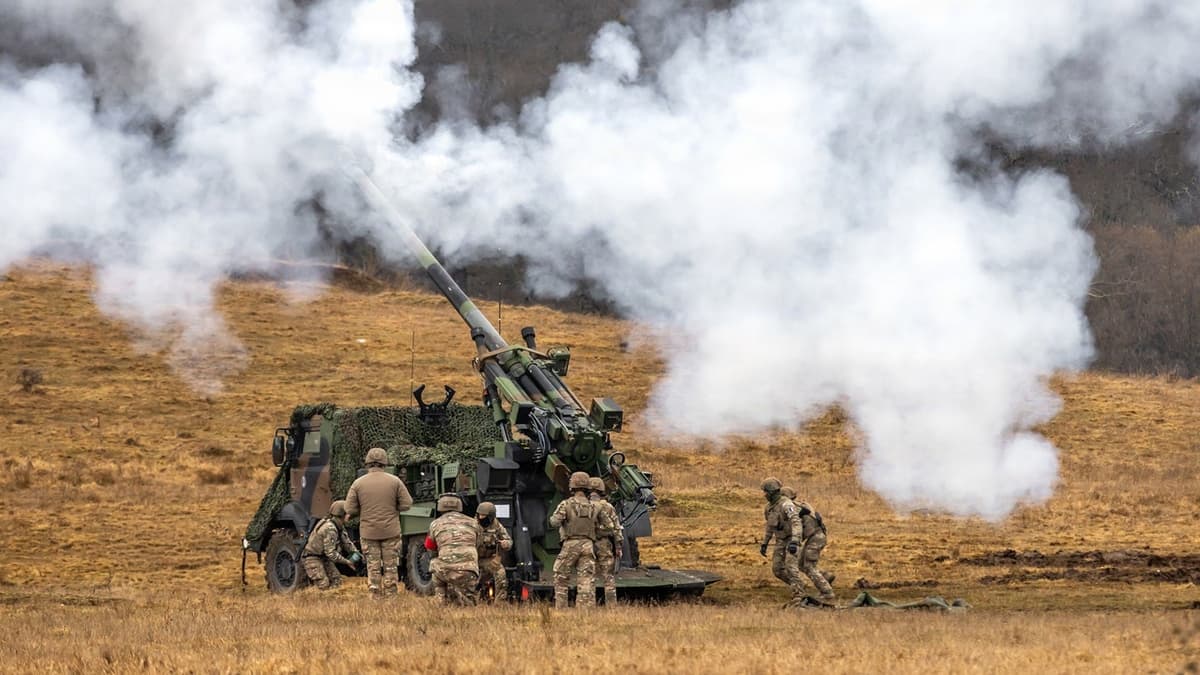
Europe vs Asia-Pacific in Battle to Dominate Global Artillery Market
Why It Matters
Control of the artillery market signals broader strategic influence, affecting defense spending, supply‑chain resilience, and geopolitical leverage for both regions.
Key Takeaways
- •Europe holds 45% of global artillery sales in 2025.
- •Asia‑Pacific manufacturers secure 30% market share, growing 8% annually.
- •France's Caesar 155 mm leads European export growth.
- •South Korea's K9 Thunder dominates low‑cost segment.
- •Asia‑Pacific defense budgets rise 6% YoY, boosting artillery demand.
Pulse Analysis
The artillery sector, long dominated by legacy European defense houses, is undergoing a rapid transformation driven by shifting geopolitical priorities and budgetary constraints. Analysts estimate the market will surpass $12 billion by 2030, with a compound annual growth rate of roughly 5%. Europe’s advantage lies in advanced self‑propelled systems, precision fire control, and integrated digital networks, positioning platforms like the Caesar 155 mm as premium export offerings for NATO allies and select partners. However, the high price tag limits penetration in emerging markets.
In contrast, Asia‑Pacific manufacturers are reshaping the competitive landscape through scale and cost efficiency. South Korea’s K9 Thunder, produced in multiple variants, has secured contracts across Southeast Asia, the Middle East, and even Europe, undercutting traditional suppliers by up to 20%. China’s Norinco and India’s Ordnance Factory Board are expanding production capacity, targeting both domestic modernization programs and export pipelines. The region’s defense budgets are rising at an average of 6% year‑over‑year, fueling demand for mobile, rapid‑deployment artillery that can be fielded in large numbers.
The rivalry has broader implications for supply‑chain security and strategic autonomy. Nations seeking to diversify away from single‑source dependencies are evaluating mixed procurement strategies, blending European precision with Asia‑Pacific volume. This dynamic is prompting joint‑development projects, technology‑transfer agreements, and increased competition in after‑sales support services. As the market matures, the side that balances cutting‑edge capability with affordable scalability is likely to command the majority of future artillery contracts, reshaping global defense postures for the next decade.
Europe vs Asia-Pacific in battle to dominate global artillery market
Comments
Want to join the conversation?
Loading comments...