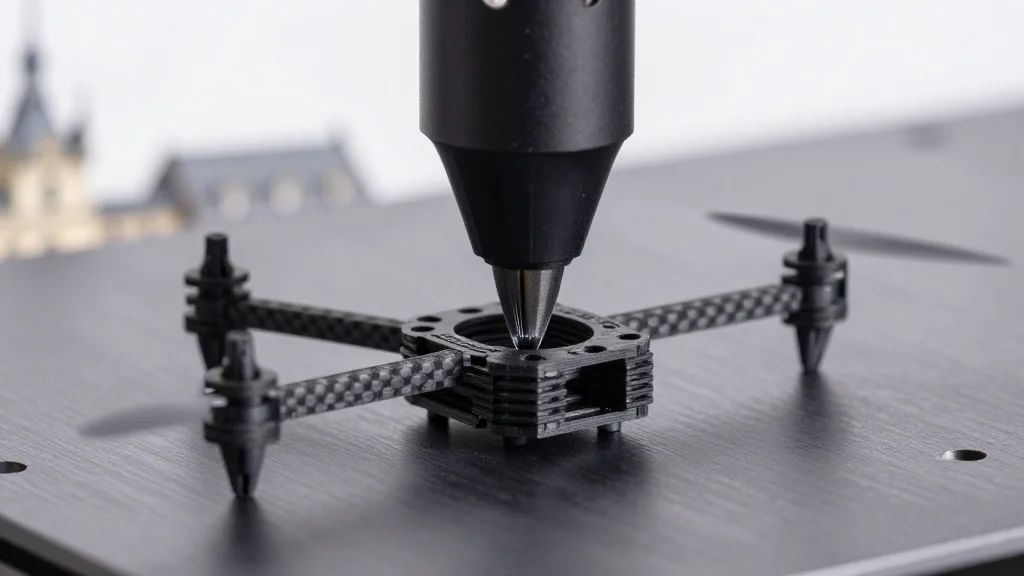
European Start‑ups Scale 3D‑Printed Drones for Ukraine as EU Pours €800 Bn Into Defence

Companies Mentioned

Why It Matters
The acceleration of low‑cost, 3D‑printed weapon production marks a turning point for European defence autonomy. By reducing reliance on US‑made systems, Europe can respond faster to crises, keep supply chains within friendly jurisdictions, and lower the cost per engagement for attritable platforms. For Ukraine, the influx of affordable drones and munitions bolsters its ability to contest Russian air superiority and sustain a high‑tempo defence. On a strategic level, the shift signals a rebalancing of the transatlantic defence relationship, compelling the United States to reconsider its role as the primary supplier to European allies. Moreover, the rapid‑manufacture model could spill over into civilian sectors, spurring advances in additive manufacturing, materials science and logistics. If European firms can prove the scalability and reliability of these processes under combat conditions, the technology may become a cornerstone of future NATO procurement strategies, influencing how allies design, produce, and field next‑generation weapons.
Key Takeaways
- •EU commits €800 bn over four years to boost defence sovereignty and fund low‑cost weapon projects.
- •Start‑ups like Skycutter and Tekever are producing hundreds of thousands of 3D‑printed drone components monthly.
- •Tekever reached a billion‑dollar unicorn valuation and now operates factories in the UK and France.
- •Kusti Salm (Frankenburg) warns that supply‑chain diversification dreams have evaporated, highlighting the push for domestic content.
- •UK and other European nations are tightening rules on foreign components to ensure sovereign production.
Pulse Analysis
Europe’s rapid‑manufacture push is more than a budgetary exercise; it is a strategic hedge against supply‑chain fragility exposed by the Ukraine war. The traditional defence procurement model—decades‑long development cycles, single‑source contracts, and heavy reliance on US platforms—has proven too slow for a conflict where drones can be fielded in weeks rather than years. By leveraging additive manufacturing, European firms can iterate designs on the fly, respond to battlefield feedback, and keep unit costs low enough to treat many systems as expendable.
Historically, Europe has struggled to achieve a unified defence industrial base, hampered by fragmented national interests and divergent procurement standards. The current surge in private capital and the EU’s sizable budget signal a convergence of incentives: governments want sovereign capability, while investors see a market for “attritable” systems that can be sold to multiple allies. This alignment could finally overcome the coordination deficit that has long plagued European defence.
Looking ahead, the real test will be integration. NATO’s interoperability standards demand that new drones and loitering munitions communicate seamlessly with legacy command‑and‑control networks. If European startups can deliver plug‑and‑play solutions that meet NATO’s data‑link and encryption requirements, they will not only secure Ukraine’s front lines but also set a template for future coalition operations. Failure to achieve this could re‑entrench US dominance and leave Europe vulnerable to supply disruptions. The next six months, therefore, will be decisive in determining whether Europe’s low‑cost, high‑volume approach becomes a lasting pillar of its defence architecture or a fleeting response to an urgent crisis.
European Start‑ups Scale 3D‑Printed Drones for Ukraine as EU Pours €800 bn into Defence
Comments
Want to join the conversation?
Loading comments...