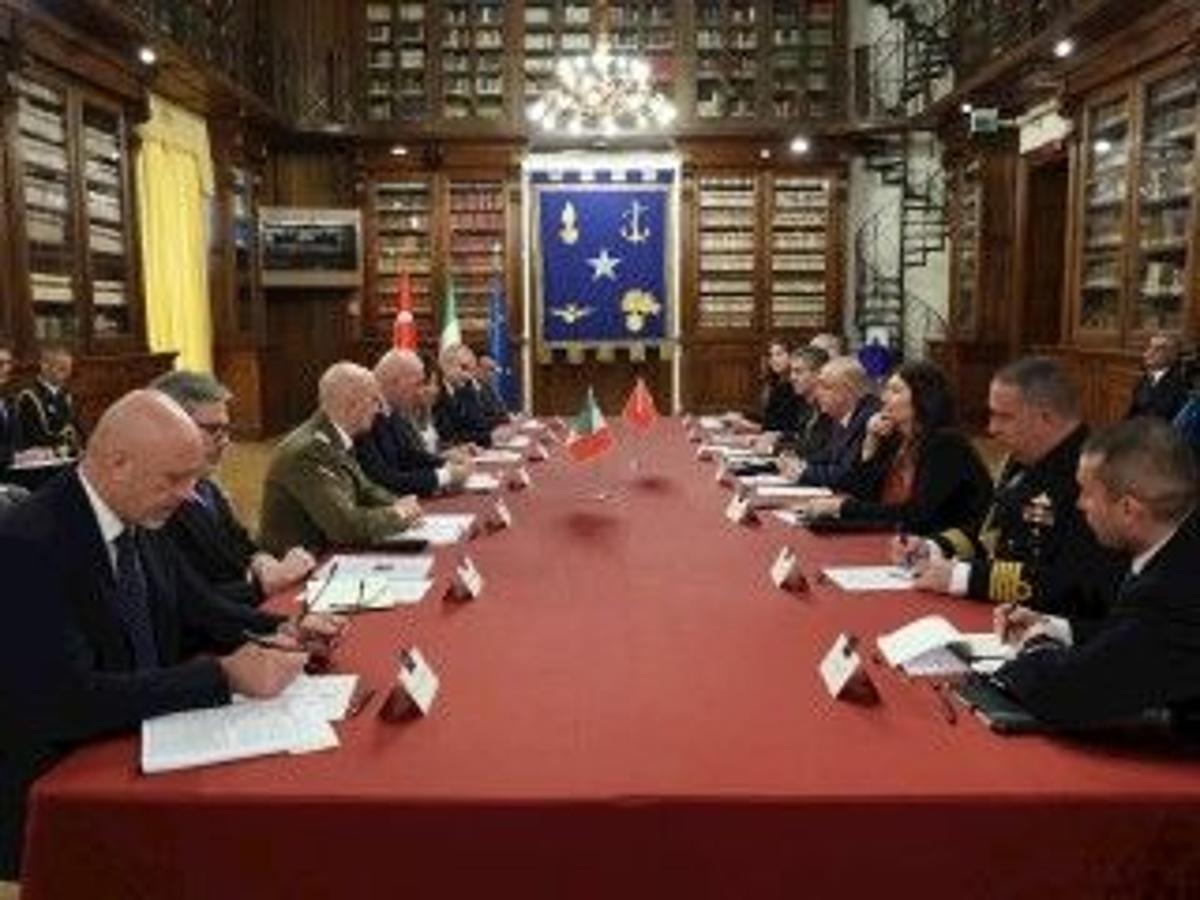
Europe’s Unspoken Divide: Italy’s Quiet Pivot Toward Türkiye
Companies Mentioned
Why It Matters
Italy’s turn to Turkey provides immediate access to critical defence technology, exposing the EU’s inability to meet its own strategic‑autonomy goals and reshaping Europe’s security supply chain.
Key Takeaways
- •Italy plans to buy Turkish Bayraktar TB3 carrier‑based drones
- •Turkey seeks SAMP/T co‑production to replace Russian S‑400s
- •LBA Systems links Leonardo and Baykar for EU‑market drones
- •Ankara offers faster, cheaper defence tech with technology transfer
- •Italy’s pivot highlights EU strategic‑autonomy gap in armaments
Pulse Analysis
Europe’s strategic‑autonomy drive is hitting a wall as member states scramble for modern air‑defence and unmanned systems. Italy, confronting delayed EU programmes and rising regional threats, has turned to Turkey, whose defence industry can deliver drones, missiles and naval platforms at speed and lower cost. This pragmatic choice reflects a broader tension: the EU’s rhetoric of independence clashes with the reality that critical capabilities—especially in drone technology and rapid‑deployment air‑defence—are increasingly sourced from non‑EU partners like Ankara.
The partnership is already materialising in high‑profile projects. Turkey’s long‑awaited SAMP/T co‑production talks aim to replace its Russian S‑400s with a Western system, while Italy’s Navy has selected the Turkish Bayraktar TB3 for carrier‑based operations, becoming the first EU force to field an armed drone from a warship deck. The newly formed LBA Systems joint venture between Leonardo and Baykar consolidates drone design, production and maintenance under a European banner, allowing Turkish technology to bypass political barriers and enter EU markets. Parallel maritime initiatives see Turkish AI and autonomy expertise embedded in Italian coast‑guard vessels.
The implications ripple across the continent. By bypassing EU procurement channels, Italy demonstrates a model of bilateral cooperation that could erode collective defence projects and weaken the EU’s bargaining power with external suppliers. At the same time, Turkey gains a foothold in European industrial policy, potentially reshaping future EU‑Turkey relations. Policymakers must weigh the short‑term gains of rapid capability acquisition against the long‑term risk of deepening dependence on a partner that remains outside the Union’s political framework. The Italy‑Turkey defence nexus may thus become a litmus test for Europe’s ability to reconcile strategic autonomy with pragmatic security needs.
Europe’s unspoken divide: Italy’s quiet pivot toward Türkiye
Comments
Want to join the conversation?
Loading comments...