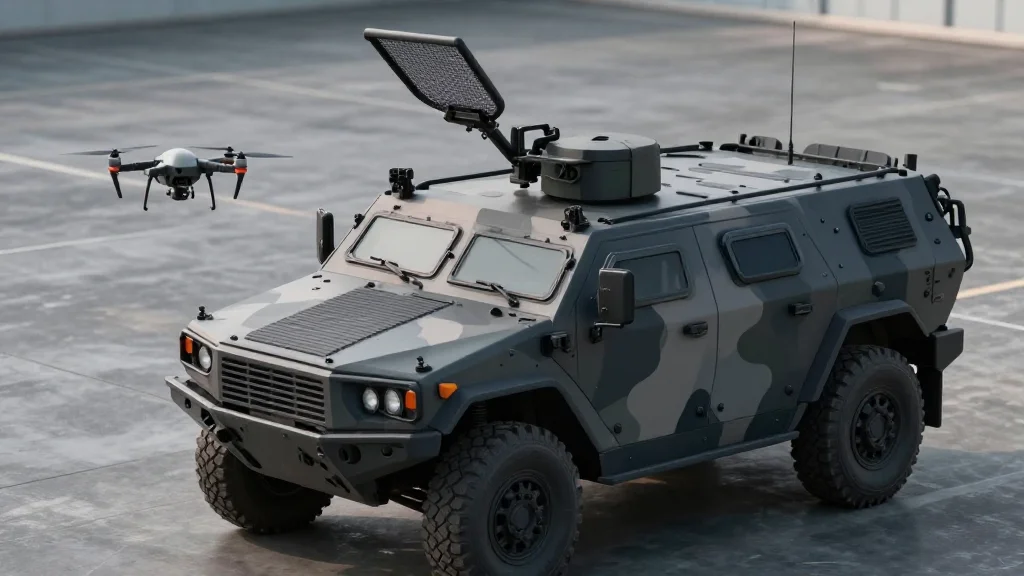
Eurosatory 2026: New and Improved Vehicles and Counter-Drone Technology Foreshadowed
Companies Mentioned
Why It Matters
The showcased technologies signal a strategic pivot toward autonomous combat and rapid‑response protection, reshaping defence procurement and force structure worldwide.
Key Takeaways
- •Ondas Holdings launches MODUS mobile CUAS platform at Eurosatory
- •Patria TRACKX UGV with Renk HSWL 076 transmission previewed
- •Babcock introduces GLV light‑utility vehicle built on Toyota HiLux
- •SCATA Mk1 4×4 protected vehicle makes first public appearance
- •Italian‑Main Battle Tank (I‑MBT) rumored to debut, details unconfirmed
Pulse Analysis
Eurosatory 2026, the world’s largest defence exhibition, will host over 2,000 exhibitors and attract more than 43,000 visitors across an expanded 185,000 m² floor. The show’s agenda reflects a decisive shift toward uncrewed systems and the means to neutralise them, signaling that modern militaries are prioritising autonomy and electronic warfare. Attendance figures and exhibitor breadth underscore the event’s role as a barometer for global procurement trends, where governments and prime contractors converge to assess emerging platforms that promise higher lethality with reduced personnel risk.
The headline draw is Ondas Holdings’ MODUS mobile counter‑uncrewed aerial system (CUAS), a modular solution designed to protect forward operating bases from swarms of hostile drones. Alongside it, Patria’s TRACKX unmanned ground vehicle, now fitted with Renk’s HSWL 076 transmission, showcases the push for rugged, high‑torque mobility in contested terrain. New wheeled assets such as Babcock’s GLV, built on the reliable Toyota HiLux chassis, and SCATA’s Mk1 protected 4×4, illustrate a demand for versatile, lightly armored platforms that can be fielded quickly and sustain logistical simplicity.
These introductions hint at broader market dynamics. The rumored Italian Main‑Battle Tank (I‑MBT) could revive interest in heavy armor, yet its uncertain specifications suggest manufacturers are hedging between traditional firepower and the agility of lighter, networked systems. For defence budgets, the proliferation of counter‑drone and unmanned ground technologies offers cost‑effective force multipliers, prompting procurement officers to re‑evaluate legacy platforms. As NATO allies and non‑aligned states alike seek to modernise, the innovations displayed at Eurosatory are likely to shape contracts and R&D priorities well into the next decade.
Eurosatory 2026: new and improved vehicles and counter-drone technology foreshadowed
Comments
Want to join the conversation?
Loading comments...