Evaluating Drape and Impact Performance of 2D and 3D Woven Composites
Why It Matters
The findings prove 3D woven composites can deliver superior damage tolerance and formability for defense platforms without prohibitive cost, enabling lighter, more resilient aircraft, armor and missile systems.
Key Takeaways
- •3D woven composites match 2D energy absorption but limit delamination
- •Orthogonal 3D weave loses only 0.23% compressive strength versus 15.3% for 2D
- •Layer-to-layer 3D weave exhibits best drapability with minimal fiber defects
- •Dobby looms cut 3D weave setup time by up to 120 hours
- •Adoption could slash weight in aircraft skins, armor and missile structures
Pulse Analysis
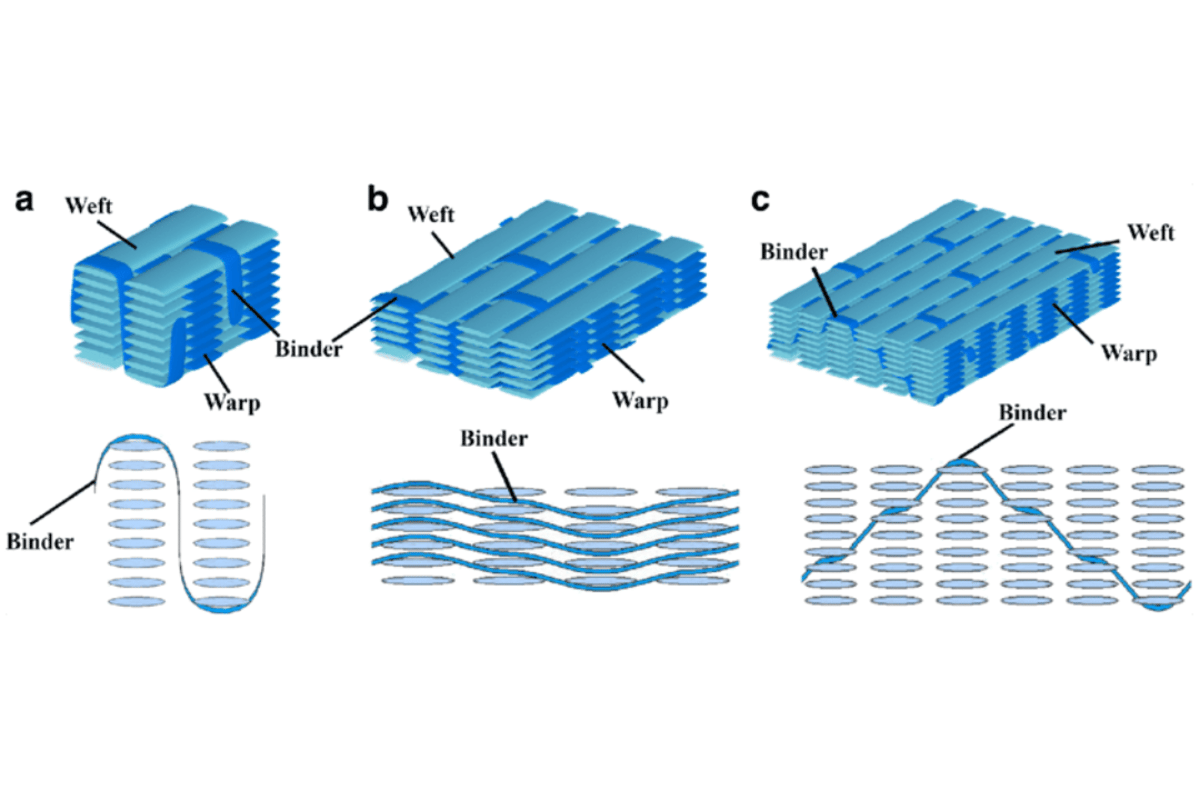
The NCC‑DSTL investigation underscores a shift in composite strategy for high‑performance defense applications. Traditional 2D and unidirectional laminates excel in in‑plane stiffness but falter when struck out‑of‑plane, often delaminating and losing load‑bearing capacity. By integrating through‑thickness yarns, 3D woven architectures distribute impact forces more evenly, preserving residual compressive strength and extending service life. This intrinsic damage tolerance is especially valuable for aircraft skins that must survive bird strikes, armored vehicle panels exposed to shrapnel, and missile casings that endure high‑G launch environments.
Beyond impact resistance, the study highlights drapability as a decisive factor for complex geometries. The layer‑to‑layer 3D weave demonstrated the lowest incidence of fiber waviness and tow gaps during fold‑over and dome drape tests, suggesting smoother lay‑up and fewer post‑process repairs. Such formability can reduce manufacturing scrap and enable tighter tolerances on curved structures like fuselage domes or missile nose cones. Conversely, 2D fabrics exhibited pronounced wrinkling, which can compromise aerodynamic performance and increase inspection costs. The ability to produce defect‑free preforms directly translates into higher part reliability and lower lifecycle expenses.
Cost and scalability have long impeded broader adoption of 3D weaving, but the NCC team’s use of conventional Dobby looms offers a pragmatic pathway. By re‑programming existing loom shedding sequences, manufacturers avoided the capital outlay of bespoke Jacquard equipment and slashed setup times by up to 120 hours. This manufacturing efficiency narrows the cost gap with 2D alternatives, making 3D woven composites a viable option for defense procurement budgets. As aerospace and defense programs prioritize weight reduction and survivability, the convergence of performance gains and more accessible production methods positions 3D woven composites to become a mainstream material choice in the coming decade.
Evaluating drape and impact performance of 2D and 3D woven composites
Comments
Want to join the conversation?
Loading comments...