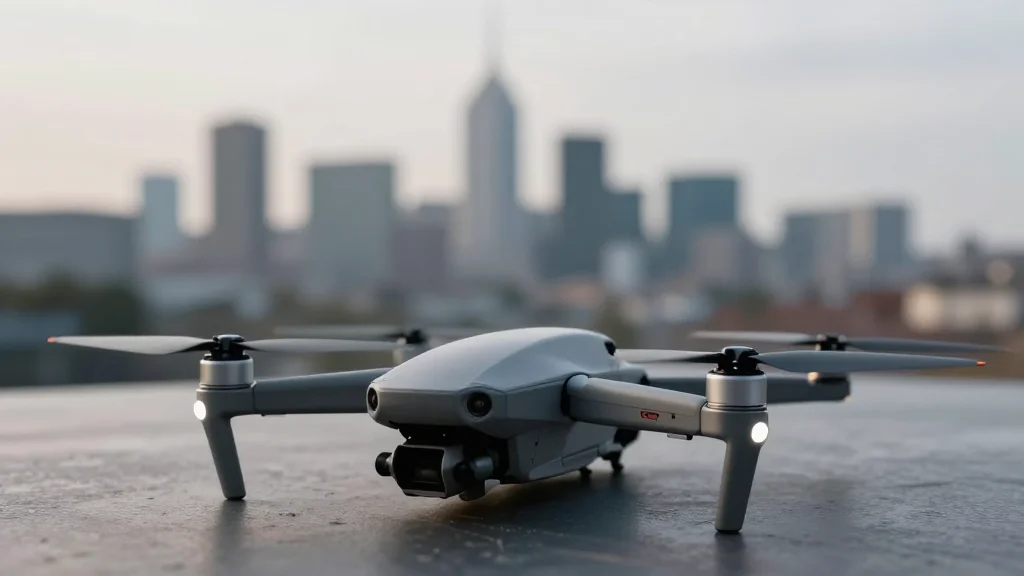
Experts Warn of European Vulnerability to Drone Threat
Why It Matters
If unaddressed, the drone threat could compromise critical infrastructure, civilian safety, and NATO’s collective security, forcing Europe to divert resources toward costly countermeasures. The market response also signals a lucrative opportunity for defense firms specializing in AI‑driven C‑UAS solutions.
Key Takeaways
- •European airspace faces rising risk from low‑cost kamikaze drones
- •C‑UAS market projected to exceed $10 billion by 2028
- •Ukraine conflict accelerates development of expendable attack drones
- •EU defense spending trails needed counter‑UAS capabilities
- •AI‑driven detection systems gain traction among NATO allies
Pulse Analysis
The proliferation of inexpensive, off‑the‑shelf unmanned aerial systems has reshaped the threat landscape across Europe. What began as a tactical advantage for insurgents in Ukraine quickly evolved into a strategic concern for NATO members, as the same low‑cost platforms can be repurposed for sabotage, reconnaissance, or direct attacks on critical infrastructure. Unlike traditional aircraft, these drones require minimal logistics and can be mass‑produced, making them attractive to both state and non‑state actors. Consequently, the counter‑UAS (C‑UAS) industry is experiencing unprecedented demand, with forecasts indicating a global market value exceeding $10 billion by 2028, driven largely by European procurement programs.
European governments are now confronting a dual challenge: acquiring effective C‑UAS solutions while balancing fiscal constraints. Many EU nations have historically allocated modest portions of their defense budgets to air‑defense modernization, leaving a capability gap as drone threats multiply. Recent policy briefs highlight the need for integrated sensor networks, AI‑powered detection algorithms, and kinetic or directed‑energy interceptors that can engage swarms in real time. However, procurement cycles remain slow, and interoperability among NATO allies is still a work in progress, risking fragmented responses to coordinated drone attacks.
The market response is shaping the next wave of defense innovation. Companies are racing to embed machine‑learning models that differentiate between benign commercial UAVs and hostile threats, while also developing portable, low‑cost jamming and laser systems suitable for deployment at airports, power plants, and urban centers. This technological arms race not only promises to bolster Europe’s defensive posture but also creates a lucrative export opportunity for firms targeting allied nations facing similar challenges. For policymakers, the imperative is clear: invest now in scalable, interoperable C‑UAS architectures to stay ahead of an adversary that can field a lethal drone for a fraction of the cost of a traditional missile system.
Experts warn of European vulnerability to drone threat
Comments
Want to join the conversation?
Loading comments...