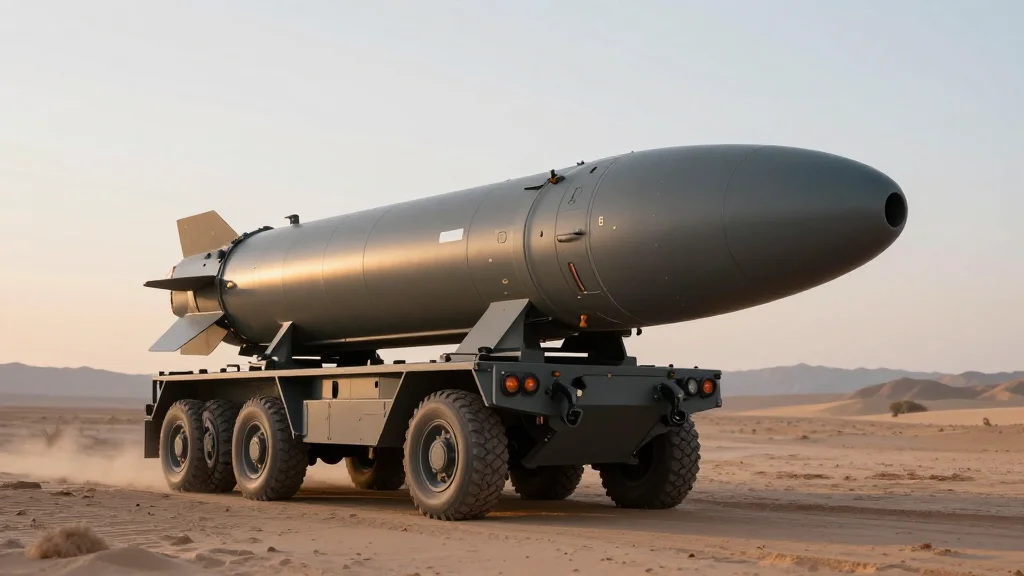
Explainer: How Hard Would It Be to Stop Iran's Missile Threat?
Why It Matters
Iran’s growing missile arsenal threatens regional stability and complicates U.S. defense planning, forcing policymakers to balance deterrence with escalation risk.
Key Takeaways
- •Iran now fields >600 missile launchers, many with >2,000 km range
- •Mobile and underground launch sites reduce detection and targeting chances
- •U.S. and allies lack sufficient mid‑tier interceptors for saturation attacks
- •Sanctions on missile components cost Iran $1 billion annually, roughly $1.1 billion USD
- •Deploying additional Aegis Ashore sites would cost $15 billion, about $16 billion USD
Pulse Analysis
Iran’s missile program has evolved from short‑range rockets to a layered arsenal that can strike targets across three continents. The latest generation of Shahab‑6 and Hoveizeh missiles boasts ranges exceeding 2,000 km and improved accuracy, enabling Tehran to threaten European capitals and U.S. bases in the Gulf. Production is dispersed across multiple facilities, many concealed in mountainous terrain or underground bunkers, making pre‑emptive strikes technically challenging and politically risky. This diffusion, combined with a robust domestic supply chain for propulsion and guidance components, means that conventional military options would require a massive, coordinated effort that could provoke a broader conflict.
For the United States and its allies, the primary dilemma is how to neutralize a threat that can be launched from mobile launchers or hidden silos within minutes. Existing missile‑defense architectures—such as Patriot, THAAD, and the nascent Aegis Ashore network—are optimized for limited, high‑value attacks, not the saturation volleys Iran could field. Upgrading to next‑generation interceptors like the SM‑6 or deploying additional sea‑based Aegis ships would improve coverage but entail billions of dollars in procurement and operational costs, as well as complex political negotiations for basing rights. Moreover, the rapid development of hypersonic glide vehicles could outpace current defensive capabilities, underscoring the need for a layered, adaptable shield.
Beyond kinetic solutions, diplomatic and economic levers remain crucial. Targeted sanctions on entities supplying missile‑grade materials have already cost Iran roughly $1 billion annually, yet the regime continues to source components through covert networks. Enhancing export‑control regimes and expanding intelligence sharing with regional partners could choke off critical inputs. Simultaneously, confidence‑building measures—such as limited missile‑flight transparency or joint verification protocols—might reduce the perceived need for Tehran to maintain a massive deterrent. Ultimately, a blend of advanced defense systems, strategic sanctions, and diplomatic engagement offers the most viable path to mitigating Iran’s missile threat without triggering an uncontrolled escalation.
Explainer: How hard would it be to stop Iran's missile threat?
Comments
Want to join the conversation?
Loading comments...