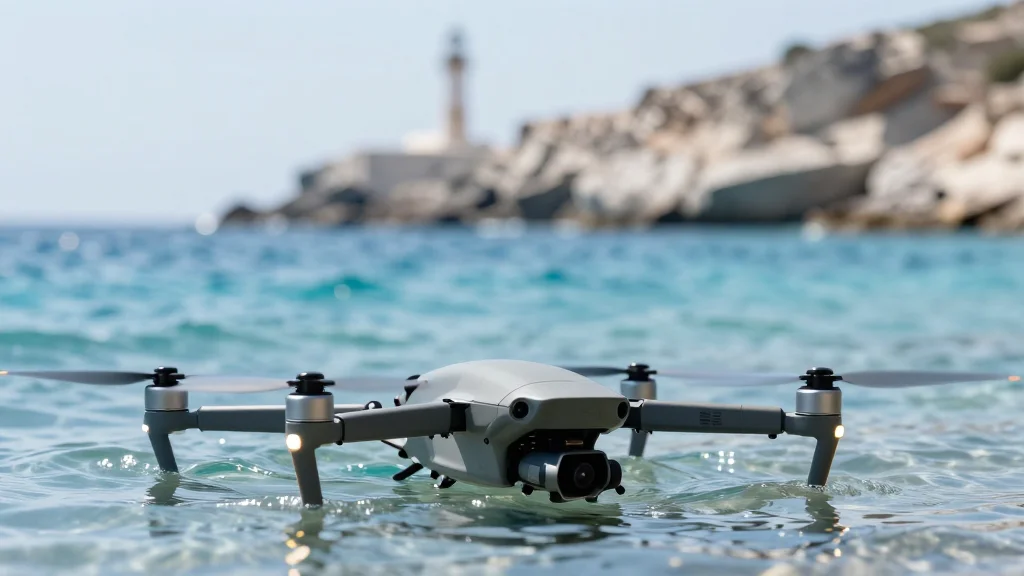
Explosive‑Laden Drone Found Off Greek Coast Triggers Defense Probe

Why It Matters
The discovery of a weaponised drone in Greek waters highlights a new frontier in asymmetric warfare, where low‑cost unmanned systems can threaten critical maritime infrastructure and commercial shipping. For NATO, the incident raises urgent questions about detection gaps, rules of engagement, and the political fallout of attributing attacks to state or non‑state actors. If the drone is linked to Ukrainian operations against Russian logistics, it could complicate diplomatic efforts to manage the broader conflict and risk pulling Greece into direct confrontation. Conversely, a false‑flag scenario would expose vulnerabilities in intelligence sharing and the potential for adversaries to exploit NATO’s internal divisions. Beyond immediate security concerns, the episode may accelerate investment in anti‑drone technologies across Europe, prompting a shift in defence budgets toward electronic warfare, radar upgrades, and rapid‑response interception capabilities. It also serves as a cautionary tale for coastal nations about the need for robust maritime domain awareness in an era where autonomous weapons can be launched from hundreds of kilometres offshore and drift into civilian hands.
Key Takeaways
- •Greek defence ministry opened a formal probe after a drone with ~100 kg of explosives was recovered near Lefkada.
- •Minister Nikos Dendias said the device likely came from a foreign state and resembles Ukraine’s Magura V3 naval drone.
- •Opposition PASOK spokesperson Michalis Katrinis accused the government of secrecy and inadequate preparedness.
- •The incident raises NATO concerns about low‑cost, long‑range drones targeting commercial shipping in the Mediterranean.
- •Forensic analysis at a mainland naval base will examine serial numbers and GPS data to determine launch origin.
Pulse Analysis
The Lefkada drone incident is a textbook case of how unmanned systems are reshaping conventional security calculations. Historically, maritime threats have been dominated by submarines, mines, and conventional missile boats. The emergence of cheap, off‑the‑shelf drones capable of delivering a 100‑kilogram warhead forces navies to rethink layered defence architectures that were never designed for such small, fast, and autonomous threats. Greece’s swift move to detonate the device and transport it for forensic study reflects an awareness that the data it yields could inform broader NATO counter‑UAS doctrines.
From a geopolitical standpoint, the attribution dilemma is as critical as the technical challenge. If the drone is confirmed to be Ukrainian‑made, it could be interpreted as an escalation of Kyiv’s strategy to pressure Russian energy logistics, potentially inviting retaliatory measures from Moscow that could spill over into Greek territorial waters. Conversely, a false‑flag operation by a third party could be aimed at fracturing NATO cohesion, exploiting Greece’s proximity to volatile hotspots in the Eastern Mediterranean. Either scenario underscores the need for transparent intelligence sharing and a unified response framework within the alliance.
Looking ahead, the incident is likely to accelerate procurement cycles for anti‑drone systems across Europe. Nations will prioritize radar capable of detecting low‑RCS objects, directed‑energy weapons, and rapid‑deployment net launchers for littoral zones. The market for such technologies, already buoyed by the Ukraine conflict, could see a surge in contracts worth billions of dollars, reshaping the defence industrial base. Greece, positioned at the crossroads of Europe’s longest coastline, may emerge as a testing ground for integrated maritime UAS defence solutions, setting a precedent for other NATO members facing similar threats.
Explosive‑Laden Drone Found off Greek Coast Triggers Defense Probe
Comments
Want to join the conversation?
Loading comments...