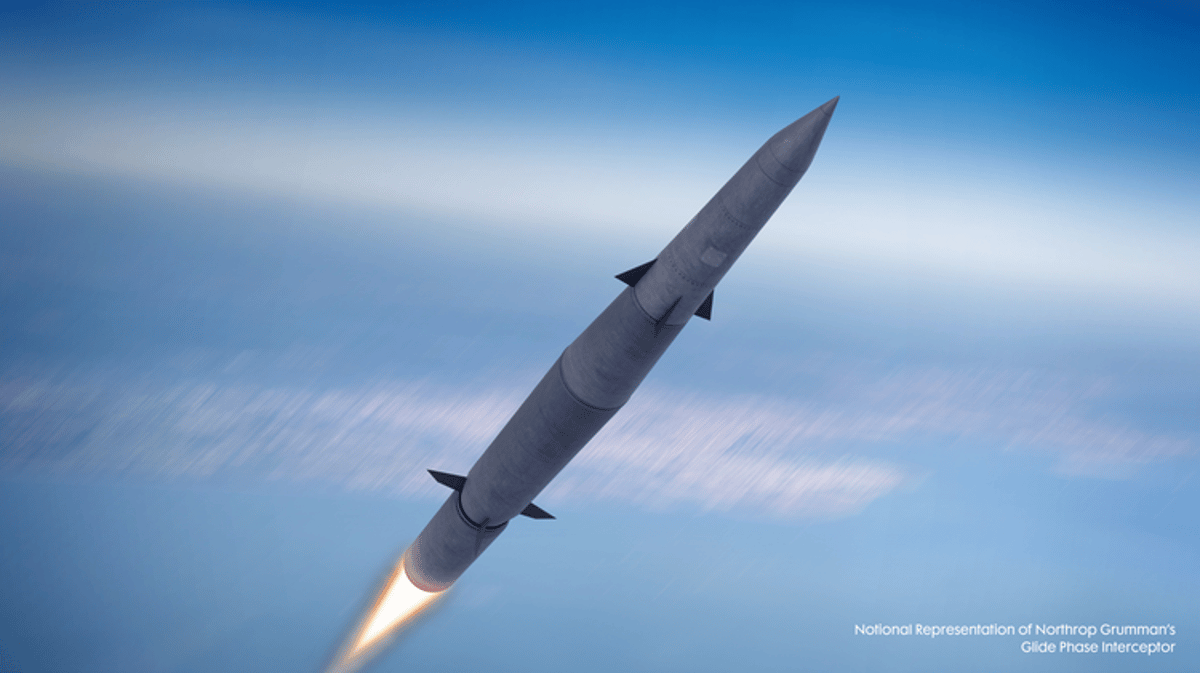
Extra $475 Million Puts Hypersonic Interceptor Program Back on Track
Companies Mentioned
Why It Matters
Accelerating GPI delivery strengthens U.S. missile‑defense posture against near‑term hypersonic threats and signals commitment to allied cooperation, particularly with Japan. The shift also underscores the growing budgetary pressure to field advanced defenses before adversaries achieve operational advantage.
Key Takeaways
- •$475M boost moves GPI delivery to 2031.
- •Program cost rises to $1.31B, up from $832.8M.
- •GPI aims to intercept hypersonic glide-phase threats from naval platforms.
- •U.S.-Japan partnership leverages Japanese propulsion expertise.
- •Accelerated schedule counters China and Russia hypersonic advances.
Pulse Analysis
The United States is racing to close a critical gap in its missile‑defense architecture as hypersonic weapons become a central focus of great‑power competition. Hypersonic glide vehicles travel at five times the speed of sound and can maneuver unpredictably, rendering traditional mid‑course interceptors ineffective. By targeting the glide phase—when the weapon slows after boost but before re‑entry—the Glide Phase Interceptor promises a viable defensive window. The program, initially conceived in 2022, aligns with broader Pentagon efforts to field layered defenses that integrate sea‑based, space‑based, and ground‑based sensors.
The recent $475 million infusion, sourced from the 2025 reconciliation bill, not only accelerates GPI’s schedule but also inflates its lifecycle cost to $1.31 billion. Northrop Grumman, tasked with refining the design and conducting flight tests, must now meet a preliminary design review by 2028 and demonstrate performance in extreme hypersonic environments. Japan’s role as the lead developer of propulsion components deepens the bilateral defense partnership and spreads technical risk. This funding boost reflects congressional pressure to meet a 2029 initial operational capability deadline, a target set to keep pace with China’s declared lead in hypersonic weaponry.
Beyond the GPI, the injection highlights a strategic pivot toward integrated, multi‑domain missile defense. Parallel investments in space‑based tracking constellations and the Golden Dome boost‑phase interceptor illustrate a holistic approach to countering high‑speed threats. While cost escalations—exemplified by the Golden Dome’s projected $542 billion price tag—raise fiscal scrutiny, the urgency of fielding affordable, scalable solutions remains paramount. Successful deployment of GPI could set a precedent for rapid, collaborative development cycles, reinforcing U.S. deterrence and reassuring allies that the missile‑defense ecosystem can adapt to the evolving hypersonic challenge.
Extra $475 Million Puts Hypersonic Interceptor Program Back on Track
Comments
Want to join the conversation?
Loading comments...