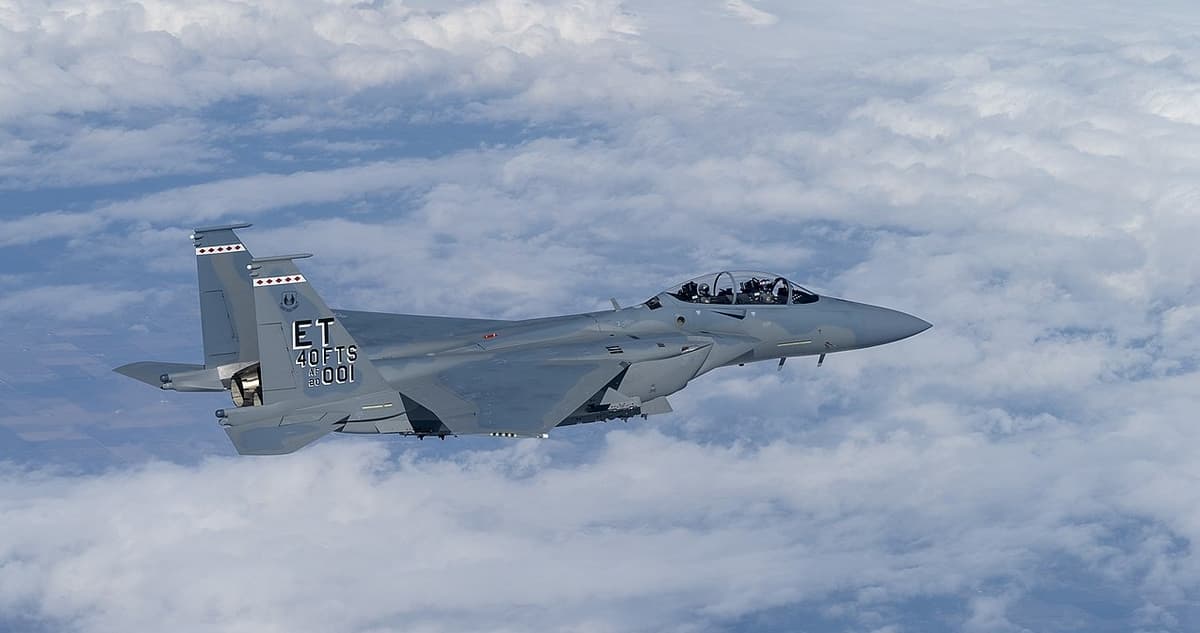
F-15E Shootdown: Iran’s Product 358 Faces Scrutiny as Strike Eagle Pilot Recounts Unusual Drone Activity
Companies Mentioned
Why It Matters
If Iran can field coordinated drone swarms or dense loitering‑drone screens, U.S. air superiority in the region faces a new, cost‑effective counter, forcing revisions to tactics and defense investments.
Key Takeaways
- •Iran’s Product 358 loitering drones may enable swarm‑like attacks
- •Pilot’s “jellyfish” description hints at mesh‑networked drone coordination
- •Iran’s drone advances follow successful long‑range missile strikes
- •U.S. air‑defense planning must account for low‑cost swarm threats
Pulse Analysis
The downing of a U.S. F‑15E over Iran has shifted the focus from the high‑profile F‑35 incident to a more subtle but potentially transformative threat: coordinated drone formations. The pilot’s report of a “jellyfish” cluster of drones suggests Iran may have moved beyond simple one‑way loitering munitions to a mesh‑networked swarm capable of sharing data and reacting autonomously. Such capability, if confirmed, would represent a qualitative jump, allowing Iran to saturate air defenses, obscure radar signatures, and overwhelm modern fighters with sheer numbers and coordinated maneuvers.
Analysts link the observed behavior to Iran’s Product 358 system, a loitering‑drone‑based air‑defense platform that can patrol designated airspace and autonomously engage targets. By deploying dozens of these drones in a tight formation, Iran could create a “drone screen” that mimics swarm dynamics without requiring full mesh networking. This tactic would be especially effective against low‑altitude ingress routes used by U.S. strike aircraft, turning inexpensive drones into a lethal barrier. The approach mirrors tactics seen in recent conflicts where massed loitering munitions have been used to protect high‑value assets, blurring the line between swarm technology and dense barrage deployments.
The strategic implications are significant for U.S. and allied forces. Traditional counter‑air measures, such as high‑power radars and missile interceptors, may struggle against swarms of cheap, low‑observable drones that can adapt their flight patterns in real time. This forces a reevaluation of electronic warfare, directed‑energy weapons, and AI‑driven detection systems to maintain air superiority. Moreover, the rapid diffusion of Iranian drone designs—already copied by Russia and inspiring the U.S. LUCAS program—highlights the need for robust export controls and accelerated development of resilient, cost‑effective counter‑drone solutions across the Indo‑Pacific and Middle East theaters.
F-15E Shootdown: Iran’s Product 358 Faces Scrutiny as Strike Eagle Pilot Recounts Unusual Drone Activity
Comments
Want to join the conversation?
Loading comments...