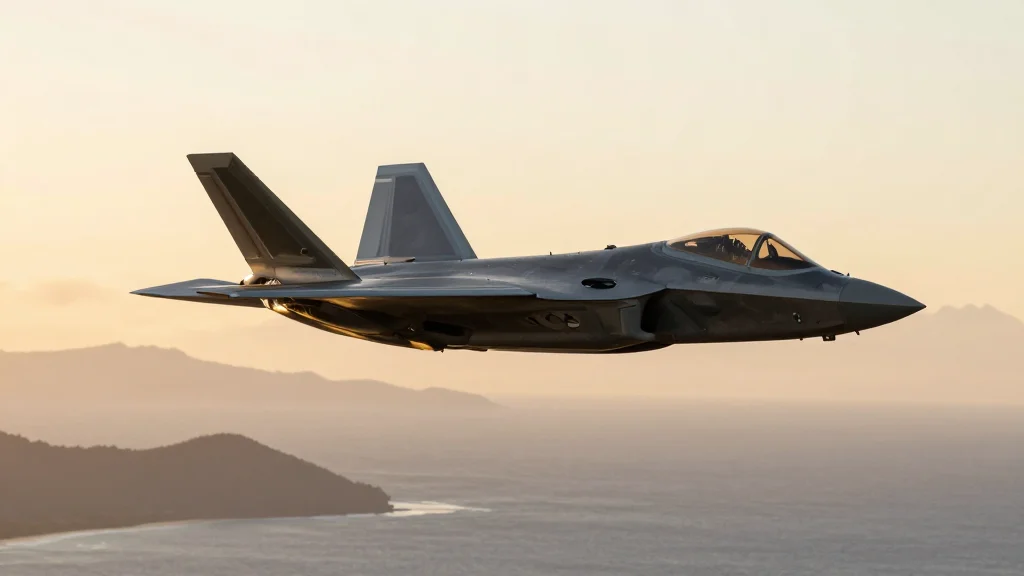
F-22 Raptors Arrive in Japan, Strengthen Indo-Pacific Airpower
Why It Matters
The rotation provides a credible, stealthy deterrent that bolsters U.S. influence and reassures allies amid rising great‑power competition in the Indo‑Pacific.
Key Takeaways
- •F-22 Raptors from Alaska and Virginia deployed to Kadena Air Base.
- •Rotation enhances continuous fifth‑generation fighter presence in Indo‑Pacific.
- •Crews will train with 18th Wing and allied partners for interoperability.
- •Deployment supports U.S.–Japan security pact and regional deterrence.
- •Rotation paves way for future F‑15EX Eagle II integration.
Pulse Analysis
The arrival of F‑22 Raptors at Kadena Air Base marks a deliberate escalation of U.S. airpower in a region where great‑power competition is intensifying. By stationing fifth‑generation fighters from both the 90th and 27th Fighter Squadrons, the United States signals a commitment to uphold the U.S.–Japan security alliance and to deter potential aggression from near‑peer adversaries. The deployment complements existing assets such as F‑35s, A‑10s and reconnaissance platforms, creating a layered deterrent that can respond swiftly to any breach of the Indo‑Pacific’s fragile status quo.
Beyond sheer firepower, the F‑22’s stealth envelope, advanced sensor fusion and long‑range engagement capability give the 18th Wing a qualitative edge over regional air threats. Integration exercises with Japanese Air Self‑Defense Force units and other allied forces are already underway, sharpening joint tactics and logistics coordination. Maintenance crews from Elmendorf‑Richardson and Langley‑Eustis are also sharing best practices, accelerating readiness cycles and ensuring the aircraft remain mission‑capable throughout the rotation. This hands‑on collaboration not only improves interoperability but also serves as a live testbed for future multi‑domain operations.
The Kadena rotation is a stepping stone toward the next wave of modernization, notably the forthcoming F‑15EX Eagle II that will join the Pacific theater later this decade. Together, the F‑22 and F‑15EX will provide a seamless blend of air‑superiority and strike capabilities, reinforcing a persistent U.S. presence that can adapt to evolving threats such as hypersonic missiles and autonomous drones. Analysts view this buildup as a clear message to China and North Korea: the United States is prepared to defend its interests and uphold a free, open Indo‑Pacific environment.
F-22 Raptors arrive in Japan, strengthen Indo-Pacific airpower
Comments
Want to join the conversation?
Loading comments...