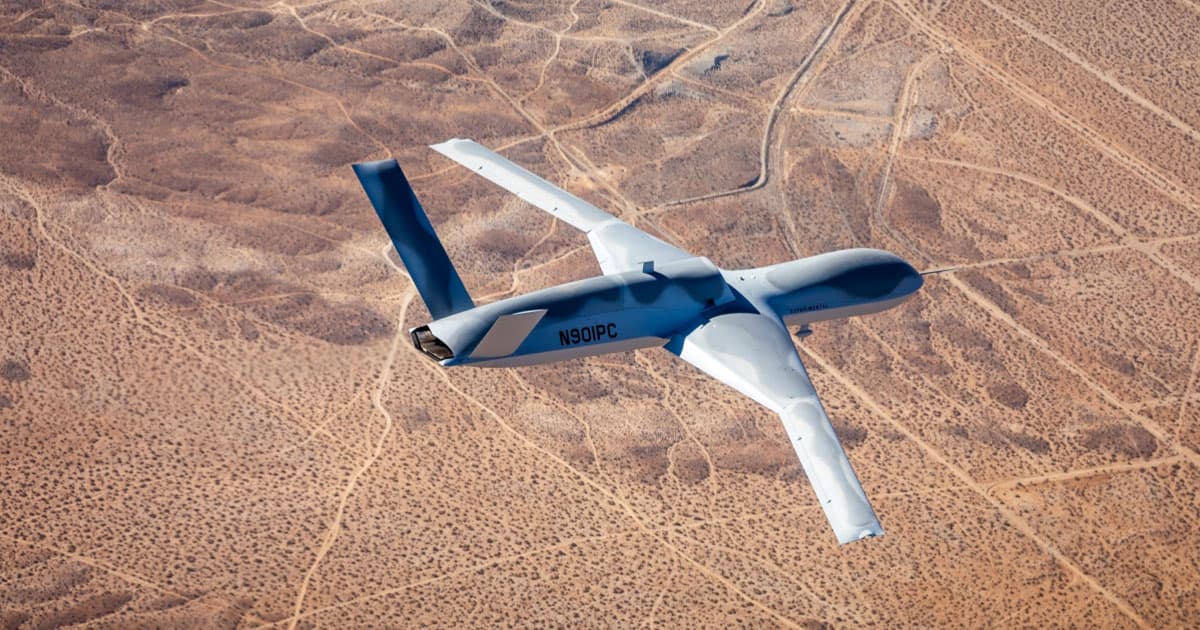
F-35 Controls General Atomics Drone in CCA Autonomy Test
Companies Mentioned
Why It Matters
The successful manned‑unmanned integration proves the viability of low‑cost, networked strike platforms, accelerating the Air Force’s push to field loyal‑wingman drones before 2027. It also signals strong legislative support that could shape procurement and cost‑saving strategies across services.
Key Takeaways
- •F-35 pilot remotely commanded MQ-20 Avenger via tablet and satellite link
- •Test validated Tactical Autonomy Ecosystem software for manned‑unmanned teaming
- •CCA program targets first operational drones by FY 2027, cutting strike costs
- •Congress backs CCA, urging Navy to adopt Air Force’s rapid‑development model
- •General Atomics YFQ-42A positioned as contender for next CCA increment
Pulse Analysis
The United States Air Force has made the Collaborative Combat Aircraft (CCA) program a top acquisition priority as it seeks to counter a near‑peer threat in the Indo‑Pacific while curbing life‑cycle costs. By pairing crewed fighters with semi‑autonomous “loyal wingmen,” the service can project power over greater distances without exposing pilots to high‑risk environments. The concept also promises to deliver strike, electronic‑warfare and ISR capabilities at a fraction of the price of a fifth‑generation fighter, a crucial advantage as China expands its long‑range missile umbrella.
The May 27 flight test linked an F‑35 on the ground to a General Atomics MQ‑20 Avenger via a tablet‑based command interface and a low‑Earth‑orbit satellite data link. Pilots issued tactical autonomy commands—such as maneuver vectors and coordinate adjustments—that the Avenger executed using the Tactical Autonomy Ecosystem software, which conforms to the Department of Defense’s latest autonomous‑software standards. Real‑time telemetry on altitude, velocity and position fed back to the fighter, demonstrating a closed‑loop manned‑unmanned network that can operate beyond line of sight and scale to multiple drones.
The Air Force intends to field its first CCA drones in fiscal year 2027, and Congress has signaled bipartisan backing by embedding cost‑reporting and inter‑service coordination provisions in the upcoming National Defense Authorization Act. General Atomics’ YFQ‑42A, already showcased in the recent test, competes with Anduril’s offering for the next increment, accelerating a development timeline that the subcommittee praised as faster than any recent fighter program. If the Navy adopts the same rapid‑prototype approach, the joint‑service loyal‑wingman fleet could achieve full operational capability within a decade, reshaping U.S. airpower doctrine.
F-35 Controls General Atomics Drone in CCA Autonomy Test
Comments
Want to join the conversation?
Loading comments...