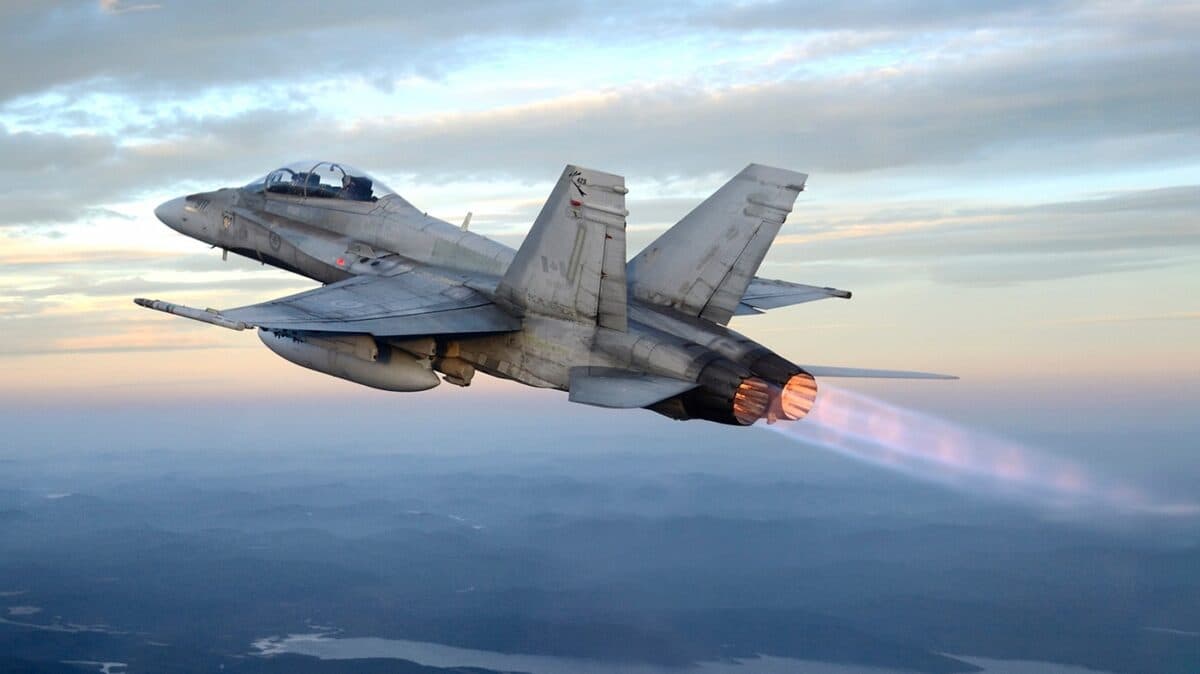
F/A-18 Beat F-15, F-16 & Mirage Jets in Canada’s 1970 NFA Program; Can F-35 Lightning II Repeat A Hornet?
•February 26, 2026
0
Why It Matters
The decision will shape Canada’s defence posture, industrial base, and North‑American aerospace partnership for the next decade.
Key Takeaways
- •F/A-18 beat F-15, F-16, Mirage in 1980 selection
- •Canada paid for 16 F-35s, 14 component sets
- •Prime Minister paused F-35 deal amid US political tension
- •Saab Gripen pitched as European alternative with local jobs
- •CF-18 fleet will serve until early 2030s before replacement
Pulse Analysis
The 1970s New Fighter Aircraft (NFA) competition was a turning point for Canada’s air power. Faced with an aging fleet of CF‑101 interceptors and CF‑104 Starfighters, the RCAF demanded an off‑the‑shelf, multirole jet capable of Arctic operations, NATO commitments, and NORAD defense. After eliminating costly options like the F‑14, F‑15 and Tornado, the selection narrowed to the single‑engine F‑16 and the twin‑engine F/A‑18. The Hornet’s superior radar, twin‑engine safety margin, and attractive industrial offsets clinched the contract, leading to the CF‑18 fleet that served through multiple conflicts and remains a cornerstone of Canada’s air defense.
Fast‑forward to the 2020s, Canada signed a 2023 agreement for 88 F‑35 Lightning II fighters, but political friction with the Trump‑era administration prompted Prime Minister Mark Carney to suspend the procurement in March 2025. Despite the pause, the government is contractually bound to deliver the first 16 jets, already funded, and has reportedly secured components for an additional 14 aircraft. Training for Canadian pilots is slated at Luke Air Force Base in Arizona, where they will integrate with U.S. squadrons. This hybrid approach reflects a pragmatic effort to maintain operational readiness while reassessing long‑term strategic alignment.
The suspension has reignited debate over alternative platforms, notably Saab’s Gripen, which offers lower acquisition costs, domestic production opportunities, and a European supply chain less vulnerable to U.S. policy swings. For Canada, the choice between the high‑tech F‑35 and a more modular, locally supported Gripen will affect not only defense capabilities but also aerospace job creation and technology transfer. With the CF‑18 slated to remain in service until the early 2030s, the next fighter decision will define Canada’s aerial strategy and industrial footprint for the remainder of the decade.
F/A-18 Beat F-15, F-16 & Mirage Jets in Canada’s 1970 NFA Program; Can F-35 Lightning II Repeat A Hornet?
0
Comments
Want to join the conversation?
Loading comments...