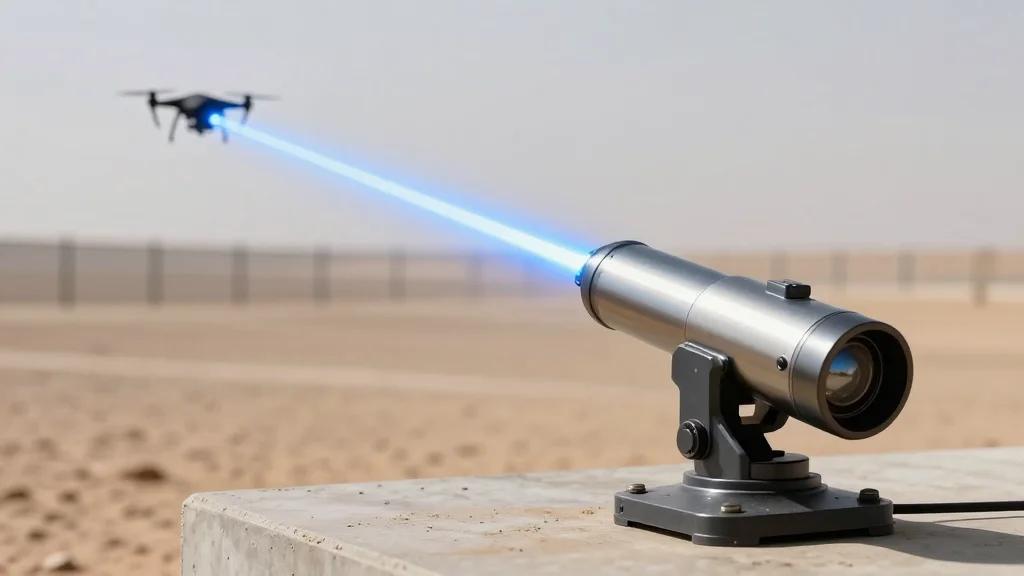
FAA Clears Pentagon’s LOCUST Laser for Border Counter‑Drone Use

Why It Matters
The FAA’s approval represents the first civilian regulatory endorsement of a directed‑energy weapon for domestic use, signaling a shift in how the United States addresses the growing threat of illicit drones near critical infrastructure and busy airspace. By legitimizing the LOCUST system, the government opens the door for broader adoption of laser‑based defenses, which promise rapid, low‑cost engagement of small UAVs without the logistical burden of traditional kinetic interceptors. Beyond immediate border security, the clearance could reshape procurement strategies across the defense sector, encouraging investment in compact, high‑energy laser platforms that can be fielded in a variety of environments. It also raises policy debates about the appropriate level of military technology in civilian domains, the need for transparent safety standards, and the mechanisms for interagency coordination to prevent future airspace disruptions.
Key Takeaways
- •FAA cleared the Pentagon’s LOCUST high‑energy laser for border use after a joint safety risk assessment.
- •Two February incidents in Texas forced temporary airspace shutdowns, prompting the review.
- •Live demonstrations last month showed the laser engaging simulated drones without affecting civilian aircraft.
- •FAA Administrator Bryan Bedford emphasized safety of the flying public; Brig. Gen. Matt Ross highlighted operational readiness.
- •Approval sets a precedent for future domestic deployments of directed‑energy counter‑drone systems.
Pulse Analysis
The FAA’s green light for the LOCUST system is more than a regulatory footnote; it marks a watershed moment for the convergence of military technology and civilian airspace governance. Historically, the U.S. has kept kinetic counter‑drone solutions—such as net guns and radio‑frequency jammers—within the purview of law‑enforcement agencies, while directed‑energy weapons remained confined to test ranges. By bridging that divide, the administration is effectively creating a new category of dual‑use defense assets that can be rapidly fielded in response to asymmetric threats.
Market dynamics will likely accelerate as defense contractors vie for contracts to produce scalable laser platforms that meet the FAA’s safety criteria. Companies that have invested in solid‑state laser research stand to benefit, especially if they can demonstrate lower power consumption and tighter beam control, attributes that directly address the FAA’s concerns about inadvertent illumination of civilian aircraft. This could also spur a wave of innovation in sensor fusion and AI‑driven targeting, as operators seek to automate threat identification while maintaining compliance with stringent airspace regulations.
Looking ahead, the real test will be how interagency protocols evolve to manage the operational tempo of such systems. The February incidents exposed a fragile coordination chain; without robust, real‑time data sharing between the Department of War, the FAA, and civilian air traffic controllers, the risk of accidental interference remains. Future policy will need to codify clear rules of engagement, transparent reporting mechanisms, and perhaps a civilian oversight board to balance security imperatives with public trust. If these governance structures keep pace with technology, the LOCUST approval could usher in a new era of resilient, low‑cost border defense that leverages the precision of directed‑energy weapons without compromising the safety of the national airspace.
FAA Clears Pentagon’s LOCUST Laser for Border Counter‑Drone Use
Comments
Want to join the conversation?
Loading comments...