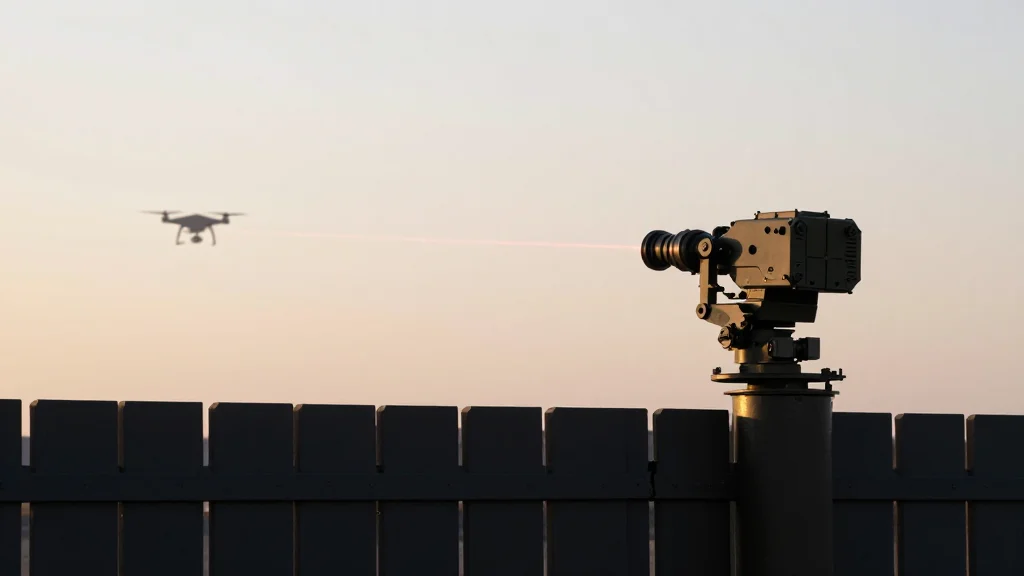
FAA, Pentagon Seal Deal to Deploy Counter‑Drone Lasers Along Mexico Border

Companies Mentioned
Why It Matters
The agreement bridges a critical gap between aviation safety and border security, allowing the United States to counter a rapidly evolving drone threat without compromising commercial air travel. By legitimizing the use of high‑energy lasers, the FAA and Pentagon set a precedent for future civilian‑military collaborations on emerging technologies, potentially accelerating the adoption of directed‑energy weapons across other domestic and overseas missions. Beyond immediate security gains, the deal unlocks substantial federal funding for the defense industrial base, spurring innovation in laser engineering, sensor integration, and command‑and‑control systems. The influx of capital and guaranteed procurement could reshape the competitive landscape, giving an edge to firms that can deliver reliable, low‑collateral‑risk solutions. At the same time, the partnership raises policy questions about oversight, transparency, and the legal framework governing the use of potentially lethal energy weapons in civilian airspace.
Key Takeaways
- •FAA and Pentagon sign agreement to deploy high‑energy laser counter‑drone systems along the U.S.–Mexico border
- •Safety review at White Sands Missile Range cleared the lasers for civilian airspace use
- •More than 1,000 drone incursions are reported each month along the border; 27,000 detections in late 2024
- •$250 million in federal grants allocated this year for state drone‑defense programs, with a matching $250 million slated later
- •Defense contractors such as Raytheon, Lockheed Martin, and Boeing positioned to benefit from accelerated procurement
Pulse Analysis
The FAA‑Pentagon pact reflects a broader shift toward integrating directed‑energy weapons into routine security operations. Historically, laser systems have been confined to niche military applications, but the border environment forces a pragmatic convergence of civil aviation safety and tactical counter‑drone needs. By securing FAA endorsement, the Department of Defense sidesteps the regulatory bottlenecks that have previously delayed fielding of emerging technologies.
From a market perspective, the agreement is a catalyst for a nascent industry that has struggled to find a stable revenue stream. The dual‑grant structure—$250 million now and another $250 million later—provides a predictable procurement pipeline that can sustain R&D and scale production. Companies that can demonstrate low‑power, high‑precision lasers with built‑in safety interlocks will likely capture the bulk of future contracts, pressuring incumbents to innovate or risk losing market share.
Strategically, the deployment also sends a signal to transnational criminal organizations that the U.S. is willing to employ sophisticated, non‑kinetic tools to protect its borders. While the lasers are designed to neutralize small UAVs, their presence may deter larger, more capable platforms from operating in the region. However, the technology could also provoke an arms race, prompting cartels to adopt hardened drones or alternative delivery methods. Continuous oversight, transparent reporting, and adaptive rules of engagement will be essential to ensure that the security benefits outweigh potential escalation risks.
FAA, Pentagon Seal Deal to Deploy Counter‑Drone Lasers Along Mexico Border
Comments
Want to join the conversation?
Loading comments...