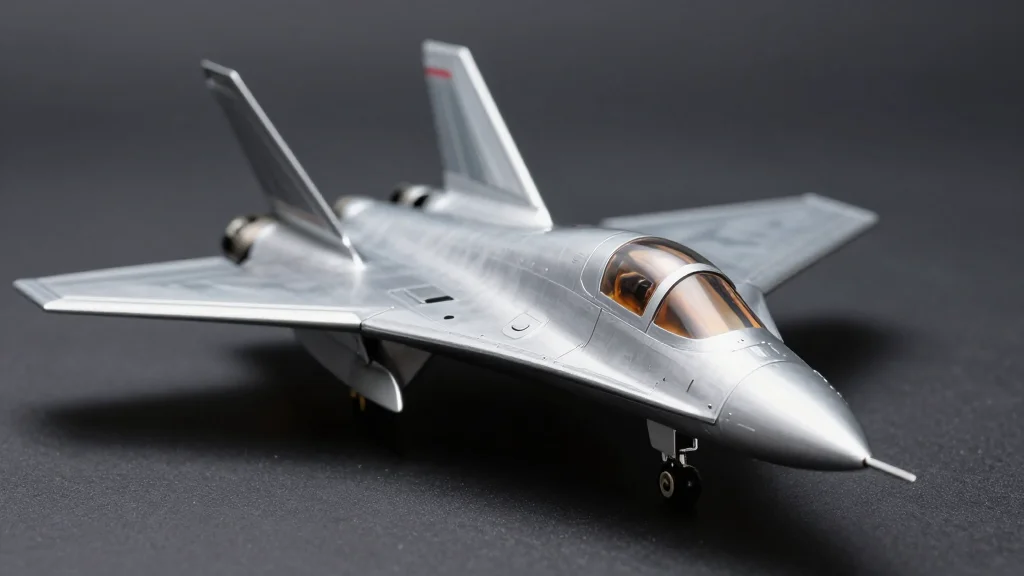
Fast and Furious: Aerospace Firms Reduce Hypersonic Design to Months, Not Years
Why It Matters
Speeding hypersonic development restores strategic advantage for the U.S. defense sector and opens fast‑track pathways for commercial high‑speed aerospace products.
Key Takeaways
- •nTop cuts hypersonic design time from months to days
- •Implicit geometry models avoid CAD file breakage during redesign
- •Specter aims to field hypersonic aircraft within a year
- •Rapid loops enable defense and commercial high‑speed applications
- •Automation links design directly to additive manufacturing validation
Pulse Analysis
The development of hypersonic aircraft has long been hampered by the slow, error‑prone nature of conventional CAD workflows. Engineers traditionally toggle between low‑fidelity sketches that deliver speed and high‑fidelity models that consume months of iterative redesign, remeshing, and validation. At the AIAA SciTech Forum, Specter Aerospace and nTop unveiled a new paradigm that collapses this timeline to days without sacrificing accuracy. By treating geometry as an implicit, mathematically continuous entity, their platform sidesteps the file‑management bottlenecks that have limited rapid prototyping for defense programs such as the Navy’s Mach XL.
The core of nTop’s solution lies in its advanced geometry kernel, which generates models that remain stable through successive design‑build‑test cycles. Coupled with automated high‑fidelity analysis and design‑space optimization, engineers can spin out multiple nozzle or combustor variants from a single model, eliminating the need to open new CAD assemblies. This closed‑loop workflow compresses a typical month‑long design, analysis, and validation sequence into one or two days, and integrates seamlessly with additive manufacturing pipelines, allowing physical prototypes to be printed and tested within weeks.
Accelerating hypersonic design has immediate strategic implications. For the U.S. defense establishment, the ability to deliver a flight‑ready vehicle in under a year restores a critical speed advantage over near‑peer competitors. Beyond weapons, the same technology can underpin commercial high‑speed freight drones and next‑generation electric aircraft, where rapid iteration translates to faster market entry and lower development costs. As adversaries continue to field faster systems, tools that shrink the digital‑to‑physical loop become essential assets, positioning firms that adopt them at the forefront of both military and civilian aerospace innovation.
Fast and Furious: Aerospace Firms Reduce Hypersonic Design to Months, Not Years
Comments
Want to join the conversation?
Loading comments...