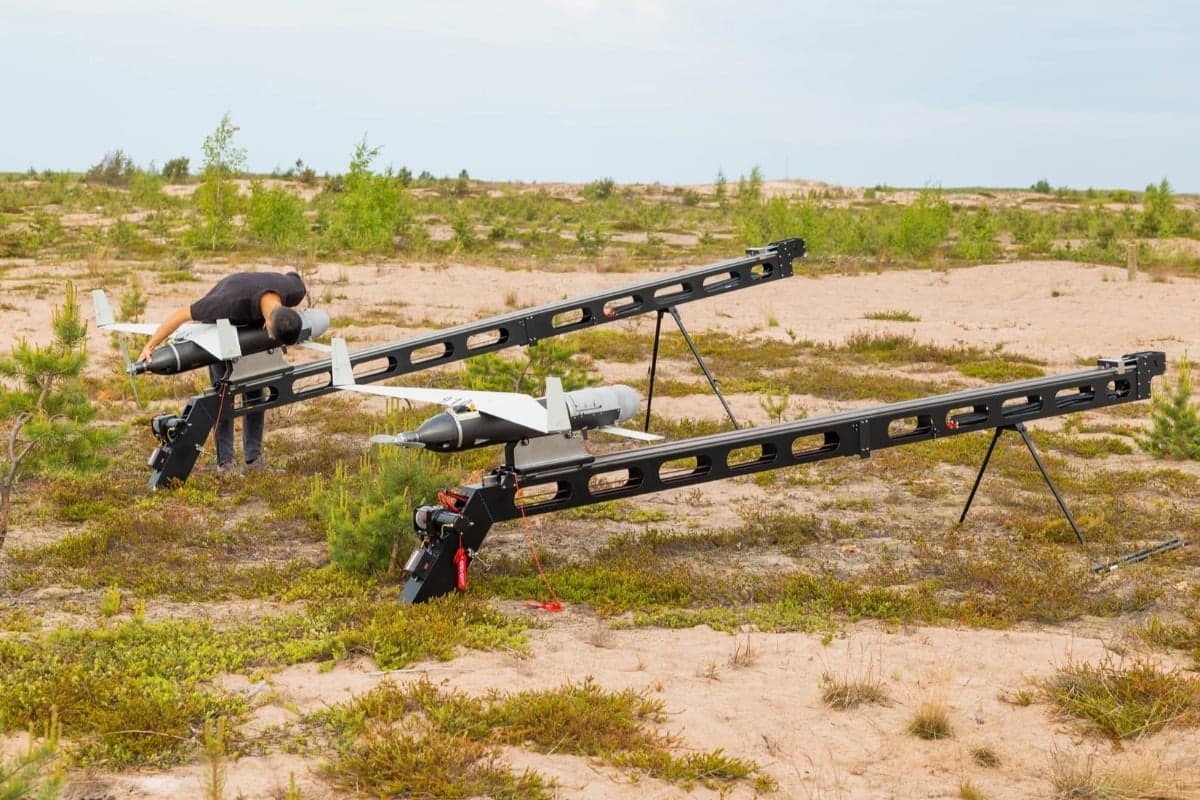
Finland Tests Hornet Drone-Killing Interceptor
Companies Mentioned
Why It Matters
The Hornet’s autonomous, low‑cost interception capability could close the price gap between cheap drone threats and expensive missile defenses, reshaping how NATO allies protect critical assets. Successful adoption by Finland would validate a new class of counter‑drone systems for Europe’s most demanding operational theaters.
Key Takeaways
- •Hornet Block 1 reaches >75 km, carries 1.5 kg payload.
- •AI‑assisted seeker enables autonomous intercept in GNSS‑denied zones.
- •Designed for Group 3 drones and loitering‑munition swarms.
- •Finland’s test reflects NATO’s push for cost‑effective counter‑drone solutions.
- •Destinus’ joint venture with Rheinmetall expands European missile market.
Pulse Analysis
The Hornet Block 1 represents a shift from traditional surface‑to‑air missiles toward purpose‑built interceptor drones. Its dual‑mode guidance—initial radar lock followed by AI‑driven electro‑optical targeting—allows it to locate, track, and neutralize threats autonomously, even when GPS signals are jammed. With a 75‑kilometre reach and a modest 1.5‑kilogram payload, the system can engage a range of targets from medium‑size reconnaissance UAVs to loitering munitions, delivering a kinetic solution that is both precise and cost‑effective.
Finland’s evaluation comes at a time when NATO members bordering Russia are accelerating counter‑drone programs. The country’s 1,340‑kilometre frontier makes it a prime testing ground for technologies that must operate in harsh, contested airspaces. By field‑testing the Hornet alongside other European solutions, Finland is not only bolstering its own air‑defense layers but also providing a real‑world benchmark for allies considering similar procurements. The emphasis on GNSS‑denied capability reflects lessons learned from Ukraine’s war, where electronic warfare has rendered GPS‑reliant systems vulnerable.
Beyond the immediate military implications, Destinus’s rapid evolution—from a startup supplying Ukraine to a joint venture partner with Rheinmetall—highlights the accelerating maturation of Europe’s defense‑tech ecosystem. The $223 million acquisition of Daedalean and the upcoming Rheinmetall Destinus Strike Systems venture signal a consolidation of autonomous‑flight expertise and missile development under a single European umbrella. This trajectory suggests that interceptor drones like Hornet could become a cornerstone of future NATO procurement strategies, offering a scalable, affordable alternative to legacy missile systems while fostering a home‑grown supply chain for advanced air‑defence capabilities.
Finland tests Hornet drone-killing interceptor
Comments
Want to join the conversation?
Loading comments...