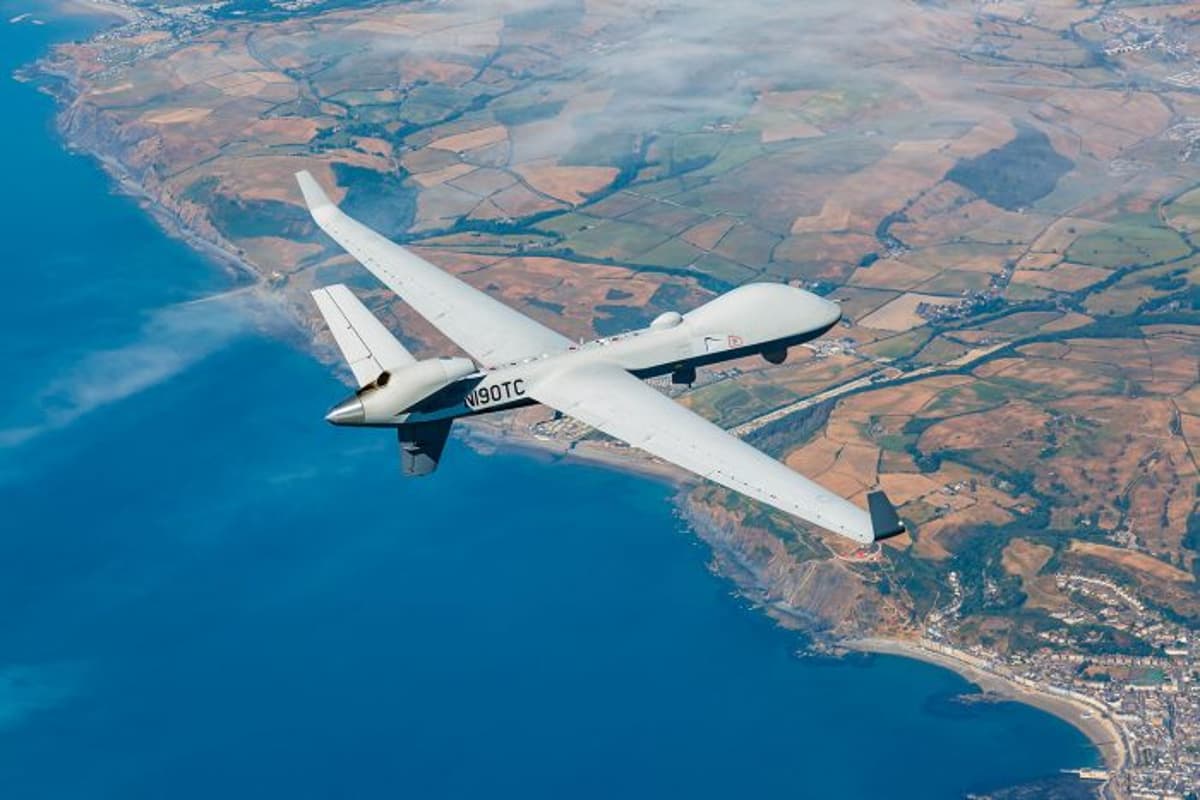
First MQ-9B Sea Guardian Drones Arrive in Taiwan to Shadow Chinese PLA Navy as India Awaits Delivery
Companies Mentioned
Why It Matters
The drones give Taiwan a persistent ISR capability that narrows China’s intelligence advantage, while India’s pending fleet will extend its maritime domain awareness against Beijing’s growing naval presence.
Key Takeaways
- •Taiwan received two of four MQ‑9B Sea Guardians, testing begins
- •Drones offer 40+ hour endurance, covering Taiwan Strait 150‑300 km
- •Sensors include EO/IR, Lynx radar, SAR, enabling maritime and air surveillance
- •MQ‑9B boosts interoperability with US, Japan, enhancing real‑time intelligence sharing
- •India’s $3.3 bn MQ‑9B deal targets Chinese naval activity in IOR
Pulse Analysis
The arrival of MQ‑9B Sea Guardians marks a pivotal upgrade for Taiwan’s intelligence, surveillance and reconnaissance (ISR) architecture. Unlike the manned P‑3C Orion, the UAV’s 40‑hour loiter time and multi‑mode radar allow continuous monitoring of the Taiwan Strait, Bashi Channel and peripheral approaches. By fusing electro‑optical/infrared imagery with synthetic‑aperture radar returns, the drones can track low‑signature vessels and aircraft at ranges up to 300 km, delivering real‑time targeting data to coastal missile batteries and joint forces. This persistent eye in the sky reduces the risk of tactical surprise and strengthens Taiwan’s “deterrence by denial” posture amid Beijing’s intensified grey‑zone tactics.
Beyond the immediate tactical benefits, the MQ‑9B enhances Taiwan’s strategic interoperability with the United States and regional allies such as Japan. Operating the same platform as U.S. forces simplifies data exchange, enabling seamless sharing of ISR products and coordinated response plans. In a crisis, the drones can act as communication relays, extending the reach of naval and air networks and supporting joint exercises that reinforce collective security in the Indo‑Pacific. The limited fleet—four airframes—means coverage gaps remain, but the capability fills a critical void in maritime domain awareness that previously relied on costly, crew‑intensive assets.
India’s parallel procurement underscores a broader shift toward high‑altitude, long‑endurance UAVs as force multipliers against China’s expanding naval footprint. The $3.3 billion contract for 31 MQ‑9Bs will equip the Indian Navy, Army and Air Force with a versatile ISR platform capable of operating from short runways and integrating with existing maritime sensors. With a 1,800‑km radius and the ability to deploy sonobuoys, the drones will monitor submarine activity in the Indian Ocean Region and support search‑and‑rescue missions. Together, Taiwan’s early deployment and India’s upcoming fleet illustrate how advanced UAVs are reshaping power projection and deterrence dynamics across the contested waters of East and South Asia.
First MQ-9B Sea Guardian Drones Arrive in Taiwan to Shadow Chinese PLA Navy as India Awaits Delivery
Comments
Want to join the conversation?
Loading comments...