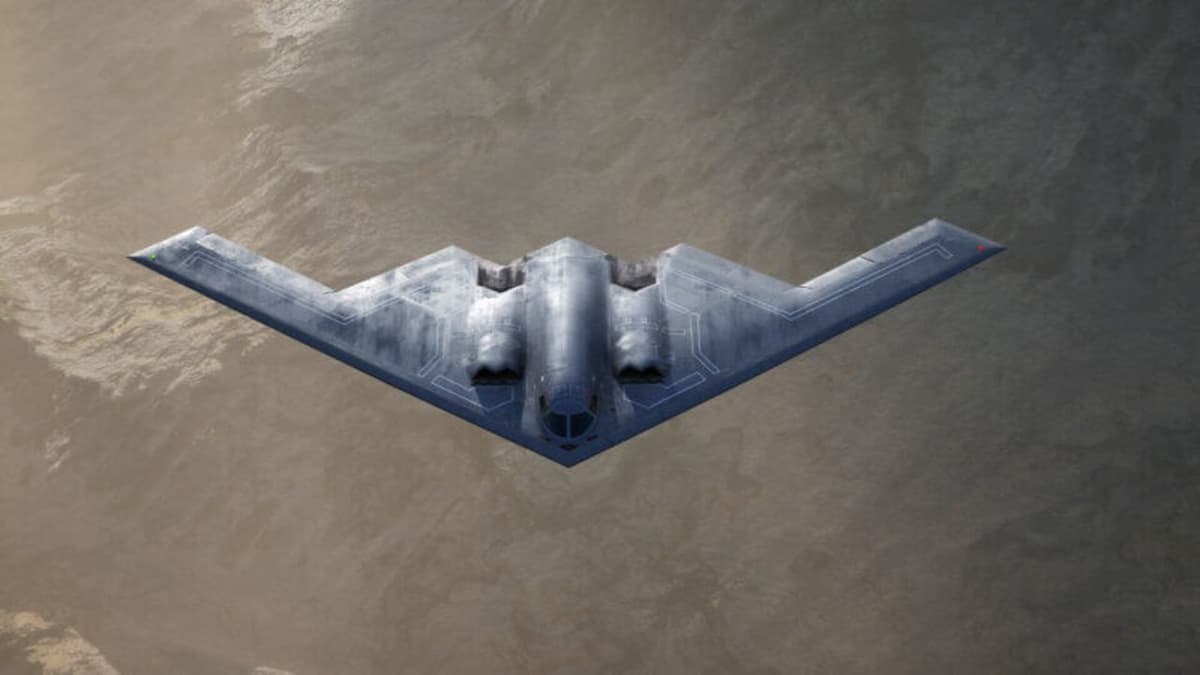
'Flaws Identified in the B-21 Configuration': Chinese Scientists Claim Their Mysterious PADJ-X Stealth Design Software Exposed Major Weaknesses in the USAF’s B-21 Raider Program Using Digital Twins

Companies Mentioned
Why It Matters
If the claims prove accurate, they could expose a performance gap in the United States' premier stealth bomber, reshaping strategic calculations. The episode also highlights China's advancing simulation capabilities, which may influence future aerospace competition.
Key Takeaways
- •PADJ‑X integrates five physics disciplines in one platform
- •Study claims 15% lift‑to‑drag boost for B‑21
- •Analysis based on public imagery, not classified data
- •20 GB of leaked files show prototype components
- •Real‑world impact remains unverified, raising skepticism
Pulse Analysis
The B‑21 Raider represents the United States' most sophisticated low‑observable bomber, designed to evade radar, infrared and acoustic detection across global theaters. In recent weeks, Chinese scientists publicised a peer‑reviewed paper asserting that their home‑grown simulation suite, PADJ‑X, can model a B‑21‑type airframe using only open‑source imagery. By constructing a digital twin and applying 288 aerodynamic, propulsion, electromagnetic, infrared and sonic‑boom parameters, the team reported a potential 15% lift‑to‑drag increase, a figure that would translate into longer range and lower fuel consumption while preserving stealth.
PADJ‑X’s hallmark is its adjoint‑based optimisation, which simultaneously tweaks multiple disciplines—a capability Western tools like NASA’s FUN3D or Germany’s FLOWer typically achieve through sequential, manual adjustments. The leaked 20 GB data package contains earlier versions of the software, including modules validated against Altair FEKO for radar‑cross‑section calculations. While these components appear functional, the full‑scale, end‑to‑end optimisation of a stealth bomber’s geometry demands computational resources beyond what the leak demonstrates. Consequently, analysts caution that the reported performance gains may stem from idealised models rather than a realistic representation of the classified B‑21 design.
The strategic ramifications hinge on verification. Should independent testing confirm PADJ‑X’s findings, U.S. defense planners might need to reassess the Raider’s aerodynamic envelope and consider retrofits or next‑generation designs. Even absent proof, the episode signals China’s rapid maturation in high‑fidelity aerospace simulation, a domain traditionally dominated by Western research institutions. This emerging capability could accelerate Chinese aircraft development cycles and inform future stealth concepts, underscoring the growing importance of digital twins in global defense competition.
'Flaws identified in the B-21 configuration': Chinese scientists claim their mysterious PADJ-X stealth design software exposed major weaknesses in the USAF’s B-21 Raider program using digital twins
Comments
Want to join the conversation?
Loading comments...