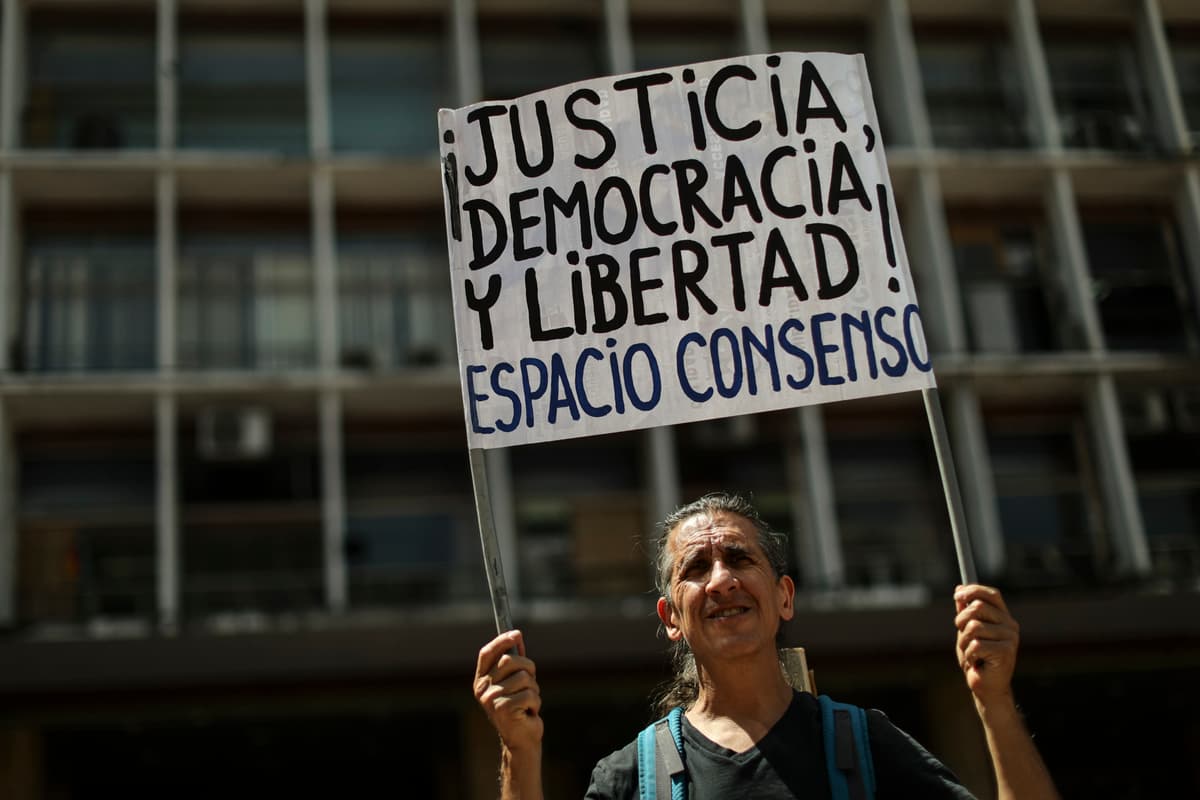
For Lasting Stability, Venezuela Needs a Peace Process
Key Takeaways
- •US captured Maduro, installed Vice President Delcy Rodríguez.
- •Peace process could restore institutions via national unity government.
- •Power‑sharing model draws on Dayton and Loya Jirga precedents.
- •US should shift from coercion to incentives for stability.
- •Opposition, military, business, and church must join dialogue.
Pulse Analysis
The capture of Nicolás Maduro marks a watershed moment for Venezuela, but the ensuing power vacuum underscores the limits of military solutions. Historical parallels—such as the Dayton Accords that halted Bosnia’s civil war and Afghanistan’s Loya Jirga that forged a provisional government—illustrate how inclusive, negotiated settlements can reset entrenched conflicts. By assembling representatives from the ruling United Socialist Party, the fragmented opposition, the armed forces, and civil society, a Venezuelan national dialogue could produce a transitional coalition that stabilizes institutions while respecting the country’s constitutional framework.
Economic stakes amplify the urgency of a political settlement. Venezuela’s oil‑dependent economy has been crippled by sanctions, mismanagement, and dwindling production, prompting U.S. interests to prioritize a reliable partner for energy security. A power‑sharing government would enable a phased reopening of the oil sector to international investors, contingent on transparent governance and the release of over 400 political prisoners. Simultaneously, targeted U.S. incentives—sanctions relief, trade concessions, and agricultural assistance—could galvanize business leaders and the Catholic Church to support the transition, creating a broader coalition that deters spoilers.
For Washington, the strategic calculus shifts from coercive “sticks” to persuasive “carrots.” The United States can leverage its diplomatic clout, regional alliances, and United Nations backing to guarantee the durability of any agreement, while avoiding the reputational costs of prolonged military presence. By championing a structured, constitutionally anchored power‑sharing model, the U.S. not only mitigates the risk of a renewed authoritarian backlash but also positions itself as a constructive partner in Latin America’s most protracted crisis, fostering long‑term stability and market confidence.
For Lasting Stability, Venezuela Needs a Peace Process
Comments
Want to join the conversation?