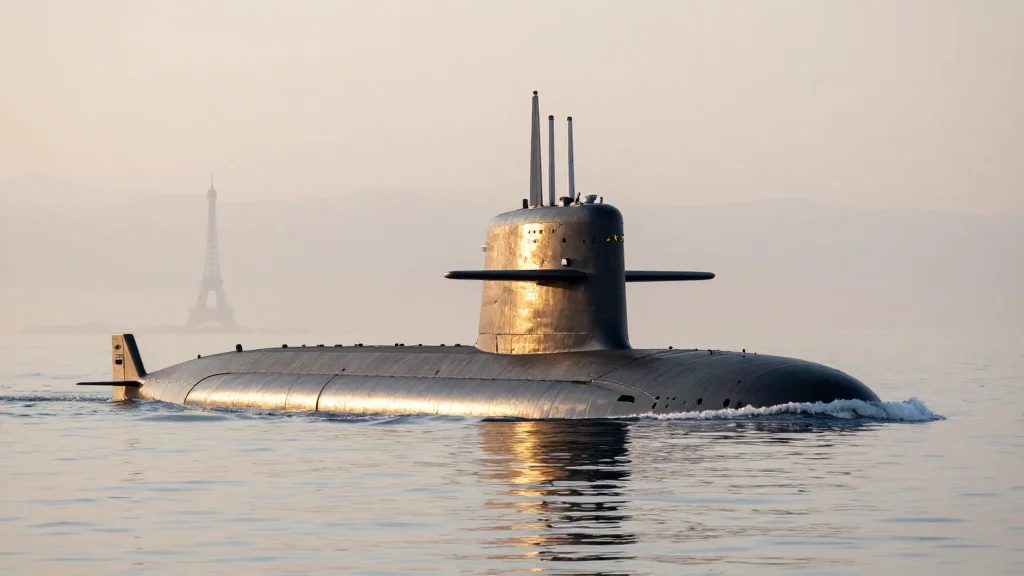
For Security at Home and Across Europe, France Offers Nuclear Deterrence
Companies Mentioned
Why It Matters
By bolstering its independent nuclear capability, France aims to reassure European allies and deter further Russian escalation, filling perceived gaps in transatlantic security. The policy also signals a shift toward greater European defence self‑sufficiency.
Key Takeaways
- •Macron announces “forward deterrence,” expanding France’s nuclear arsenal beyond national borders.
- •France’s warhead count (~300) expected to rise, maintaining strategic ambiguity.
- •New policy aims to supplement NATO, not replace U.S. nuclear umbrella.
- •Europe seeks greater self‑reliance as U.S. commitment under Trump appears uncertain.
Pulse Analysis
France’s nuclear doctrine has long been a pillar of its sovereign defence, dating back to Charles de Gaulle’s 1960 test that made Paris the world’s fourth nuclear power. Under de Gaulle, the arsenal was deliberately kept independent from NATO, a stance that persisted through the Cold War and into the 21st century. Macron’s “forward deterrence” marks the first substantive policy overhaul since the Cold War, signalling an intent to not only increase the warhead count but also to project that capability across Europe, reinforcing Paris’s role as a nuclear guarantor for its own vital interests.
The timing of the announcement reflects growing unease in Europe over the reliability of U.S. security guarantees, especially after the Trump administration’s erratic stance toward NATO and Ukraine. By positioning French nuclear forces as a supplementary layer rather than a replacement for the U.S. umbrella, Paris hopes to reassure allies while preserving strategic autonomy. The doctrine envisions bilateral talks with European partners, potential temporary basing of nuclear‑capable aircraft, and a broader “forward” posture that could see French submarines or air assets operating closer to potential flashpoints, thereby enhancing deterrence without formally extending a nuclear umbrella.
Nevertheless, the move raises concerns about a new European arms dynamic. While French officials stress that the policy does not spark an arms race, the opaque nature of the arsenal—exact numbers, locations, and deployment plans remain undisclosed—feeds strategic uncertainty. Critics warn that heightened nuclear rhetoric could lower the psychological barrier to use, undermining non‑proliferation norms. As Russia escalates its nuclear threats, Europe must balance the need for credible deterrence with the risk of normalising nuclear posturing in conventional conflicts, a tension that will shape transatlantic security debates for years to come.
For security at home and across Europe, France offers nuclear deterrence
Comments
Want to join the conversation?
Loading comments...