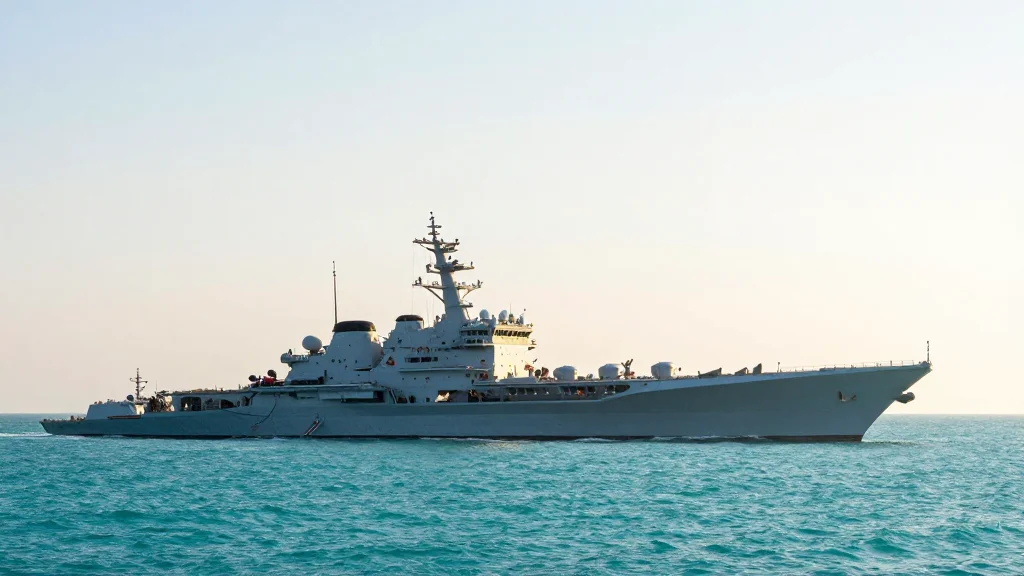
France Moves Aircraft Carrier to Red Sea with Eye on Hormuz Mission
Why It Matters
Securing the Hormuz corridor could dampen oil price volatility and limit economic fallout from competing blockades, while France’s involvement signals a broader European willingness to shape Middle‑East maritime security.
Key Takeaways
- •France deployed Charles de Gaulle group to Red Sea for Hormuz planning
- •Franco‑British plan seeks Iranian consent for safe convoy passage
- •Mission aims to protect global oil flow and reassure traders
- •European naval presence counters escalating U.S.–Iran tensions in Hormuz
Pulse Analysis
The Strait of Hormuz remains a chokepoint for roughly 20% of the world’s oil trade, making any disruption a direct threat to global energy markets. Recent exchanges of fire between U.S. and Iranian forces have heightened the risk of a prolonged blockade, pushing oil prices toward the $100‑per‑barrel level and prompting concerns among shipping firms and commodity investors. Analysts view the waterway as a barometer for broader geopolitical stability in the Middle East, where even brief closures can reverberate through supply chains and inflation metrics worldwide.
In response, France sent its flagship Charles de Gaulle carrier strike group to the southern Red Sea, joined by Italian and Dutch vessels, to lay the groundwork for a possible multinational security force. The deployment supports a Franco‑British diplomatic initiative that proposes a reciprocal arrangement: Iran would allow commercial ships to transit Hormuz while the United States lifts its own naval restrictions, paving the way for renewed nuclear and missile negotiations. By positioning assets close to the theater, Paris aims to evaluate the operational environment, integrate partner capabilities, and demonstrate that Europe can contribute to crisis‑management beyond its traditional borders.
If the proposal gains traction, the impact on markets could be significant. A stabilized Hormuz corridor would likely ease oil price pressures, restore confidence among freight forwarders, and reduce insurance premiums for vessels navigating the Gulf. Moreover, France’s visible commitment may recalibrate U.S.–European coordination, offering Washington a broader coalition to counter Iranian leverage. Investors and policymakers will be watching closely for any diplomatic breakthrough, as the success of a multinational convoy security mission could reshape the strategic calculus of energy security in the coming years.
France moves aircraft carrier to Red Sea with eye on Hormuz mission
Comments
Want to join the conversation?
Loading comments...