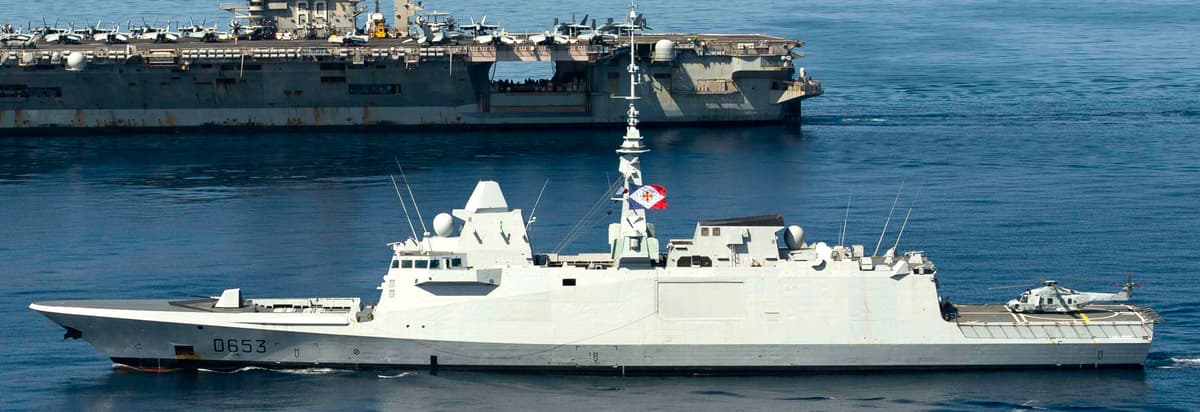
France to Lead EU Naval Mission to Protect Strait of Hormuz Tankers After ‘Hot Phase’ of Iran War
•March 9, 2026
0
Why It Matters
Securing the Hormuz corridor protects global oil supplies and demonstrates the EU’s willingness to act independently in high‑risk maritime zones. The mission also signals a shift toward a more security‑focused European foreign policy amid escalating Middle‑East tensions.
Key Takeaways
- •France leads EU naval mission to secure Hormuz
- •Mission includes eight French frigates, carrier, allies' ships
- •Goal: escort tankers, reopen Strait after conflict peak
- •Iran threatens European targets, missile attacks on Turkey
- •EU urges Israel to halt Lebanon invasion
Pulse Analysis
The Strait of Hormuz remains a chokepoint for roughly a fifth of the world’s oil trade, making its security a priority for both energy markets and geopolitical stability. By deploying a sizable French fleet—eight frigates, two amphibious helicopter carriers and the Charles de Gaulle carrier—alongside allied vessels, the EU aims to provide a credible deterrent against any Iranian attempts to disrupt shipping. This defensive posture is designed to reassure commercial operators that container ships and tankers can transit safely once the "hot phase" of the regional conflict eases, thereby limiting price volatility and supply chain disruptions.
Macron’s initiative reflects a broader evolution in European defence policy, where the Union seeks to act autonomously while still coordinating with NATO partners. The inclusion of non‑EU navies underscores a pragmatic approach to collective security, leveraging shared maritime capabilities without triggering a direct confrontation with Iran. By framing the mission as strictly defensive, the EU attempts to balance deterrence with diplomatic restraint, avoiding escalation that could draw NATO assets into Iran’s crosshairs. This stance also aligns with EU leaders’ calls for a more interest‑driven foreign policy that integrates security considerations across defence, trade, and technology sectors.
Beyond the immediate maritime focus, the mission carries symbolic weight in the context of the Israel‑Lebanon crisis. The EU’s simultaneous urging of Israel to cease operations in Lebanon signals a willingness to use diplomatic pressure alongside military readiness. As global powers watch the Middle East’s volatile theatre, Europe’s proactive engagement may reshape its role as a security actor, influencing future negotiations on energy routes, regional stability, and the balance of power between the United States, Iran, and Russia.
France to lead EU naval mission to protect Strait of Hormuz tankers after ‘hot phase’ of Iran war
0
Comments
Want to join the conversation?
Loading comments...