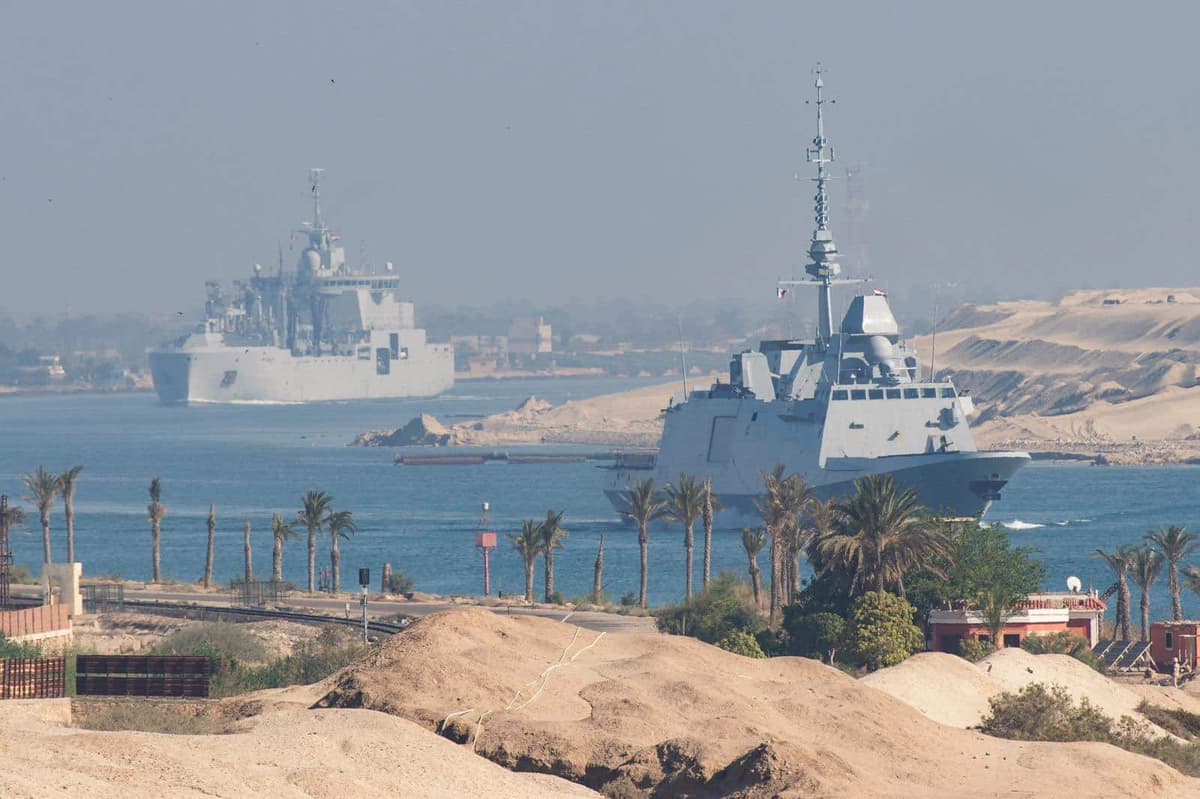
French Carrier Strike Group Transits Suez Amid Hormuz Tensions
Companies Mentioned
Why It Matters
By positioning a major carrier group near two critical chokepoints, France signals a tangible deterrent against further disruptions to global trade routes, reinforcing NATO’s collective security posture in a volatile region.
Key Takeaways
- •Charles de Gaulle CSG transited Suez on May 6, 2026
- •Move aims to bolster security in Red Sea, Bab el‑Mandeb
- •French deployment supports multinational effort to keep Hormuz open
- •Action follows Iranian missile strike on CMA CGM San Antonio
- •CSG reposition follows UK‑France plan for defensive Hormuz mission
Pulse Analysis
The Strait of Hormuz has re‑emerged as a flashpoint after an Iranian cruise missile struck the French‑owned CMA CGM San Antonio, injuring crew and prompting heightened alerts across the shipping community. Washington’s Project Freedom, temporarily paused for diplomatic talks, underscores the United States’ willingness to project power to safeguard the 21 million barrels of oil that flow daily through the waterway. European allies, notably France and the United Kingdom, have responded by coordinating a multinational security framework that now includes over forty nations, aiming to preserve freedom of navigation and prevent escalation.
France’s decision to move the Charles de Gaulle carrier strike group from the East Mediterranean through the Suez Canal reflects a calculated shift in force posture. The carrier, accompanied by escort vessels, will operate in the southern Red Sea and the Bab el‑Mandeb, two chokepoints that together handle roughly 10 percent of global maritime trade. By positioning high‑end air and surface assets in the region, Paris can conduct real‑time assessments of the operational environment, offer crisis‑exit options for allies, and integrate partner resources under a UN‑law‑of‑the‑sea framework. This deployment also reinforces the UK‑France joint initiative to restore navigation in Hormuz, signaling a unified European response to Middle‑East volatility.
The broader implication for global commerce is a reinforced deterrent that may stabilize shipping lanes at a time when insurers are pricing in heightened war‑risk premiums. While the transit itself does not constitute combat, the visible presence of a nuclear‑powered carrier group can dissuade hostile actors from further attacks on commercial vessels. For shipowners and logistics firms, the French move offers a measure of reassurance that key arteries—from the Suez to the Arabian Sea—remain protected, potentially limiting supply‑chain disruptions and supporting market confidence in an otherwise uncertain geopolitical climate.
French Carrier Strike Group Transits Suez Amid Hormuz Tensions
Comments
Want to join the conversation?
Loading comments...