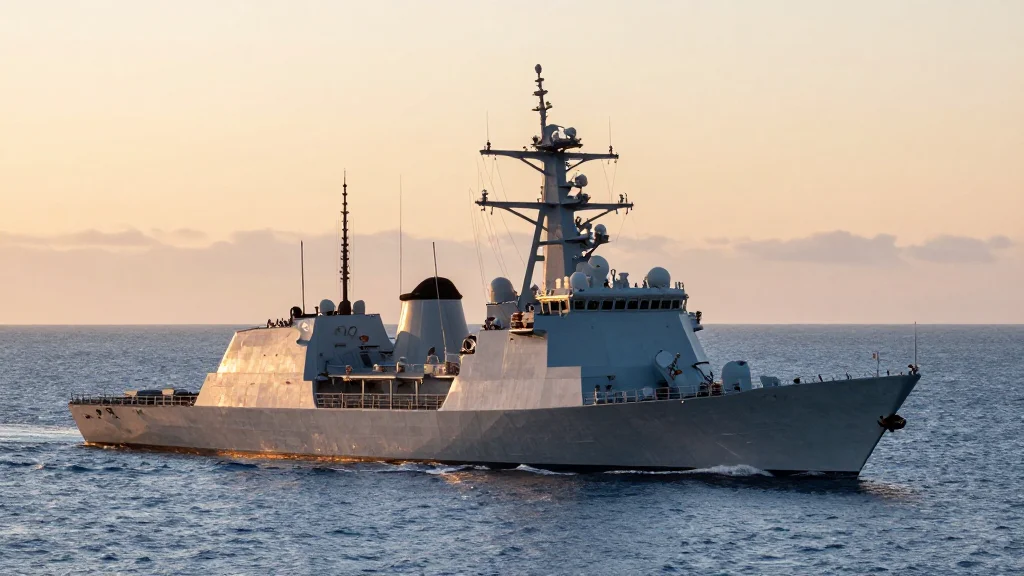
Frigates, Destroyers to See Market Growth Despite Dawn of UMVs
Why It Matters
Sustained growth in frigate and destroyer procurement reinforces shipyard pipelines and shapes defense spending, underscoring the continued strategic value of crewed warships despite the rise of autonomous systems.
Key Takeaways
- •GlobalData forecasts ~4% CAGR for frigates through 2030
- •Destroyer orders projected to grow about 3.5% annually
- •UMVs gain share but won’t displace crewed combatants
- •NATO and Indo‑Pacific navies drive new procurement cycles
- •Budgets favor multi‑role platforms with advanced sensor suites
Pulse Analysis
The resurgence of crewed surface combatants reflects a broader recalibration of naval strategy amid rising great‑power competition. Nations across NATO and the Indo‑Pacific are accelerating frigate and destroyer programs to counter advanced submarine threats and to secure sea‑lane dominance. This shift is fueled by higher defense budgets, longer ship service lives, and the need for platforms capable of integrating emerging technologies such as directed‑energy weapons and integrated air‑defense systems. As a result, shipbuilders are seeing a pipeline of contracts that emphasize modular design and rapid upgrade paths.
Unmanned maritime vehicles (UMVs) are undeniably gaining traction, offering cost‑effective surveillance and mine‑countermeasure capabilities. However, GlobalData’s analysis suggests that UMVs will act as force multipliers rather than replacements for traditional warships. Crewed frigates and destroyers still provide the endurance, firepower, and decision‑making flexibility required for high‑intensity conflict and power‑projection missions. Consequently, procurement strategies are increasingly hybrid, pairing manned hulls with autonomous payloads to enhance situational awareness while preserving combat effectiveness.
For the defense industry, the projected growth translates into a sustained demand for hull construction, propulsion upgrades, and next‑generation combat systems. Companies that can deliver integrated solutions—combining advanced radar, missile defense, and open‑architecture software—will capture a larger share of the market. Moreover, the emphasis on multi‑role capabilities encourages investment in scalable platforms that can be adapted for anti‑air, anti‑surface, and anti‑submarine roles, ensuring that the next generation of frigates and destroyers remains relevant in an evolving maritime threat environment.
Frigates, destroyers to see market growth despite dawn of UMVs
Comments
Want to join the conversation?
Loading comments...