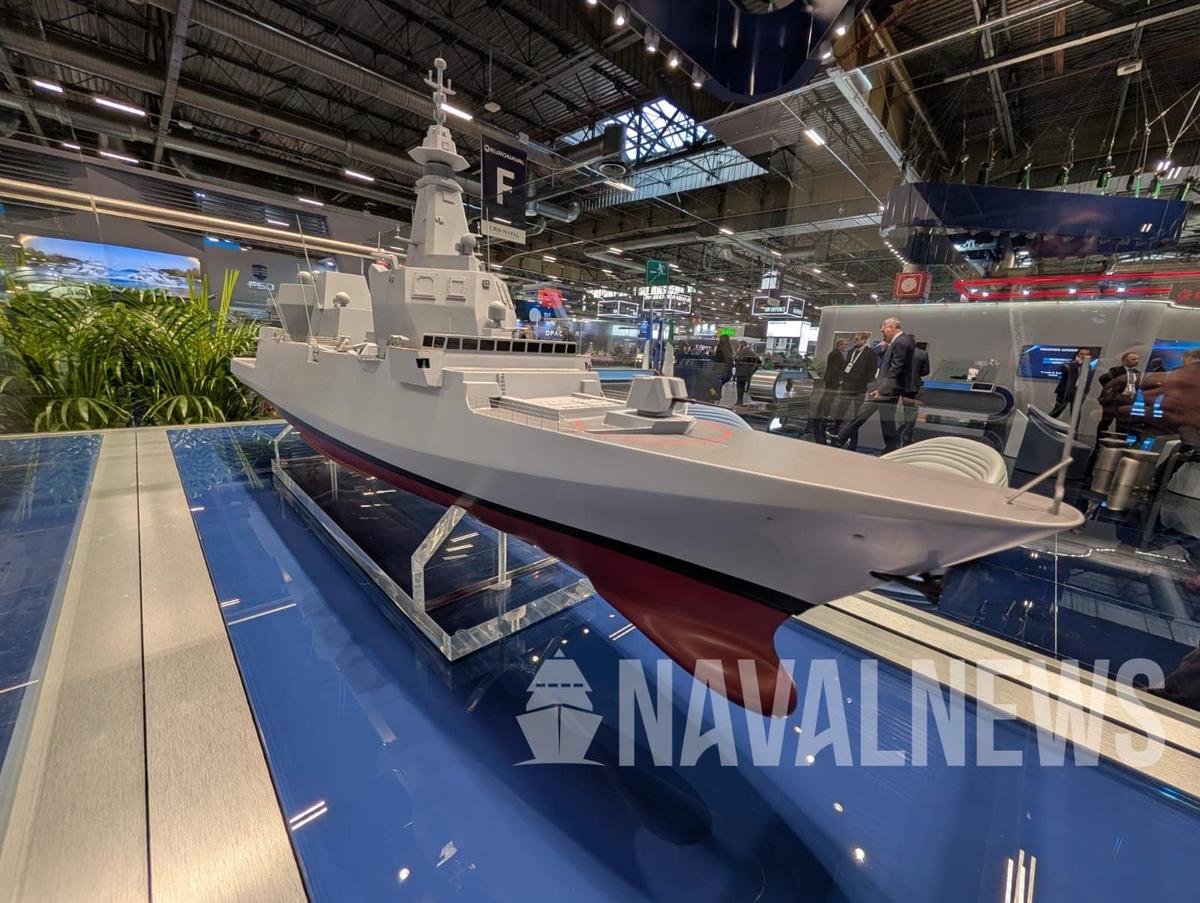
From the Gulf to FREMM EVO: How Fincantieri Is Shaping the Next Generation of Naval Air Defence
Companies Mentioned
Why It Matters
The FREMM EVO showcases a shift toward common, network‑centric combat systems that let navies defend against ballistic missiles, drones and saturation attacks without fielding separate specialist vessels, reshaping procurement and operational concepts worldwide.
Key Takeaways
- •FREMM EVO adds dual‑band AESA radar for ballistic missile tracking
- •First Italian frigate equipped with dedicated counter‑UAS AESA suite
- •Aster 30 Block 1 enables ship‑based ballistic missile defence
- •Common combat architecture spreads across all Fincantieri surface ships
Pulse Analysis
The Gulf’s recent naval skirmishes have underscored how quickly air‑defence threats evolve at sea. Qatar’s Al Fulk LPD and Al Zubarah corvettes, both built by Fincantieri, used Aster missiles to intercept aerial targets, illustrating a layered, networked defence that relies on early‑warning radars, shared command links and distributed interceptors. This operational picture is driving navies to move away from single‑mission platforms toward integrated combat ecosystems that can address ballistic missiles, cruise missiles, drones and saturation attacks in a unified manner.
At the heart of this shift is Italy’s FREMM EVO, a "heavy" multi‑mission frigate that builds on the proven Bergamini hull while introducing a suite of next‑generation sensors and weapons. The ship will host Leonardo’s Kronos dual‑band AESA radar, a four‑face CUAS radar, and an upgraded combat management system capable of fusing data from active and passive sources. Its armament centers on the Aster 30 Block 1 missile, providing genuine ballistic missile defence, complemented by 76 mm Strales/DART guns and 30 mm programmable CIWS for cost‑effective counter‑UAS engagement. The design retains the CODLAG propulsion and superior anti‑submarine capabilities that have made the FREMM line a benchmark in quiet, endurance‑focused warfare.
Fincantieri’s broader strategy extends this architecture beyond a single class, applying the same sensor‑fusion and layered‑defence philosophy to its Multi‑Purpose Combat Ship (MPCS) and future surface combatants. By standardising combat systems, the company reduces development costs, shortens acquisition cycles and offers navies a plug‑and‑play upgrade path for existing vessels. For Western fleets facing increasingly complex threat environments, the FREMM EVO signals a new paradigm where frigates act as network nodes, sharing radar data, missile cues and electronic‑warfare assets across the fleet, thereby enhancing collective survivability while preserving the flexibility to address both high‑end and low‑cost threats.
From the Gulf to FREMM EVO: How Fincantieri is Shaping the Next Generation of Naval Air Defence
Comments
Want to join the conversation?
Loading comments...