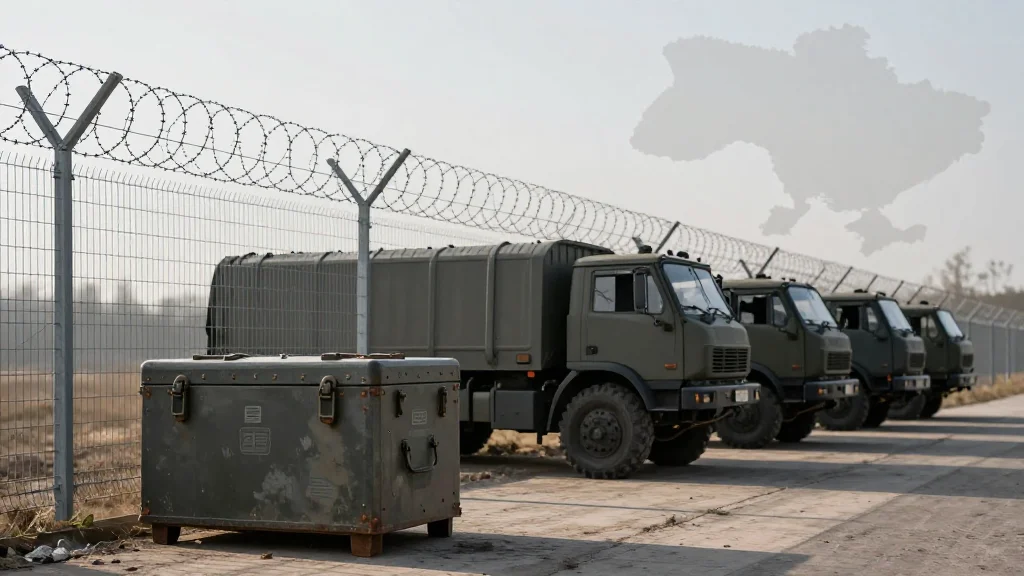
Frontex Official Warns of Post-War Ukraine Arms-Smuggling Danger
Companies Mentioned
Why It Matters
Uncontrolled weapons trafficking could destabilize EU member states and strain law‑enforcement resources, raising broader security concerns across the continent.
Key Takeaways
- •Frontex sees high post‑war arms‑smuggling risk from Ukraine
- •Potential flow likened to post‑Yugoslav weapons surge
- •Agency has increased presence on Ukraine’s western borders
- •Smuggling could arise after ceasefire due to surplus arms
- •European security could be compromised by illicit weapons influx
Pulse Analysis
The four‑year war in Ukraine has left the country awash with Soviet‑era weaponry, ammunition and improvised explosives. As combat operations wind down, those stockpiles become attractive commodities for criminal networks seeking quick cash. History shows that post‑conflict environments—most famously the breakup of Yugoslavia—can generate a flood of illicit arms that cross porous borders, fueling violence far beyond the original battlefield. EU intelligence services fear that these weapons could also be diverted to extremist groups operating in the Western Balkans and the Middle East, heightening continental security concerns.
Frontex, the European Union’s border‑control agency, has responded by reinforcing patrols along Ukraine’s western frontier, deploying additional mobile units and intelligence teams. Deputy Executive Director Lars Gerdes emphasized that the agency has been preparing for this scenario since the war’s outset, integrating satellite surveillance and customs data to spot irregular movements. By mirroring the agency’s Yugoslav‑era experience—when unchecked arms flows destabilized the Balkans—Frontex aims to intercept shipments before they reach EU member states, preserving the Schengen area’s integrity. The agency is also coordinating with NATO’s Allied Command Transformation to align border checks with broader strategic threat assessments.
Policymakers face a narrow window to embed robust export‑control and disarmament clauses into any Ukraine peace framework. Coordinated action between Frontex, national customs authorities, and Interpol will be essential to trace and seize illicit consignments. Moreover, investing in community‑level de‑mining and weapons‑buy‑back programs can reduce the pool of surplus arms that traffickers target. Analysts estimate that unchecked smuggling could cost EU member states billions in law‑enforcement and social‑service expenditures over the next decade. Failure to address the risk could translate into a rise in organized‑crime activity, terrorist procurement, and a costly security burden for European governments.
Frontex official warns of post-war Ukraine arms-smuggling danger
Comments
Want to join the conversation?
Loading comments...