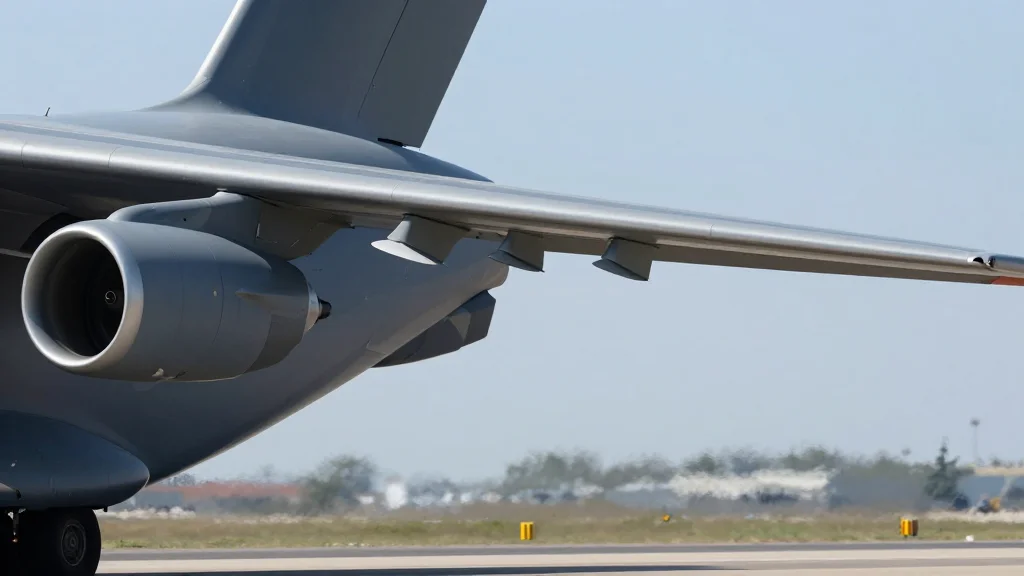
Full C-17 Fleet to Use 3D-Printed Drag Reduction Fins Within a Year, U.S. Air Force Official Says
Companies Mentioned
Why It Matters
By cutting drag across the whole C‑17 fleet, the Air Force gains significant fuel savings, lowers operating costs, and reduces its carbon footprint, reinforcing the value of rapid‑manufacturing technologies in military logistics.
Key Takeaways
- •Microvanes cut C‑17 drag by 1%, saving fuel.
- •Full fleet of 222 C‑17s to receive fins within a year.
- •Projected annual fuel savings exceed $14 million for the Air Force.
- •3D‑printed fins use adhesive bonding, simplifying retrofits.
- •Similar vortex‑control tech adopted by Delta’s 737 fleet.
Pulse Analysis
Additive manufacturing is reshaping legacy platforms, and the Air Force’s microvanes illustrate that shift. The 10‑cm‑by‑40‑cm 3D‑printed fins are produced using metal powder bed fusion, allowing precise aerodynamic shaping that traditional machining can’t match. By attaching them with high‑strength adhesive, the service avoids costly structural modifications, enabling a rapid retrofit across the C‑17 fleet. This approach not only shortens deployment timelines but also demonstrates how defense agencies can leverage commercial‑grade 3D printing to modernize existing airframes without new aircraft purchases.
The operational impact of a modest 1% drag reduction compounds across the C‑17’s extensive mission set. With 222 aircraft flying thousands of sorties annually, the cumulative fuel savings translate to over $14 million each year, a figure that directly improves the Department of Defense’s budget efficiency. Beyond the dollar value, reduced fuel burn lessens the logistical burden of fuel transport in forward operating bases and cuts greenhouse‑gas emissions, aligning with the Air Force’s broader sustainability goals. The adhesive‑bonded microvanes also proved resilient in diverse climates, from arctic cold to desert heat, confirming their serviceability under combat‑ready conditions.
The technology’s ripple effect is already evident in the commercial sector. Delta Air Lines recently equipped its 737‑800/900ER fleet with vortex‑control finlets derived from the same aerodynamic principles, underscoring a convergence of military and civilian innovation. As airlines and militaries alike chase marginal efficiency gains, 3D‑printed aerodynamic devices are poised to become standard retrofits. This trend signals a future where additive manufacturing not only produces new aircraft but also incrementally upgrades legacy fleets, delivering cost‑effective performance enhancements across the aerospace ecosystem.
Full C-17 fleet to use 3D-printed drag reduction fins within a year, U.S. Air Force official says
Comments
Want to join the conversation?
Loading comments...