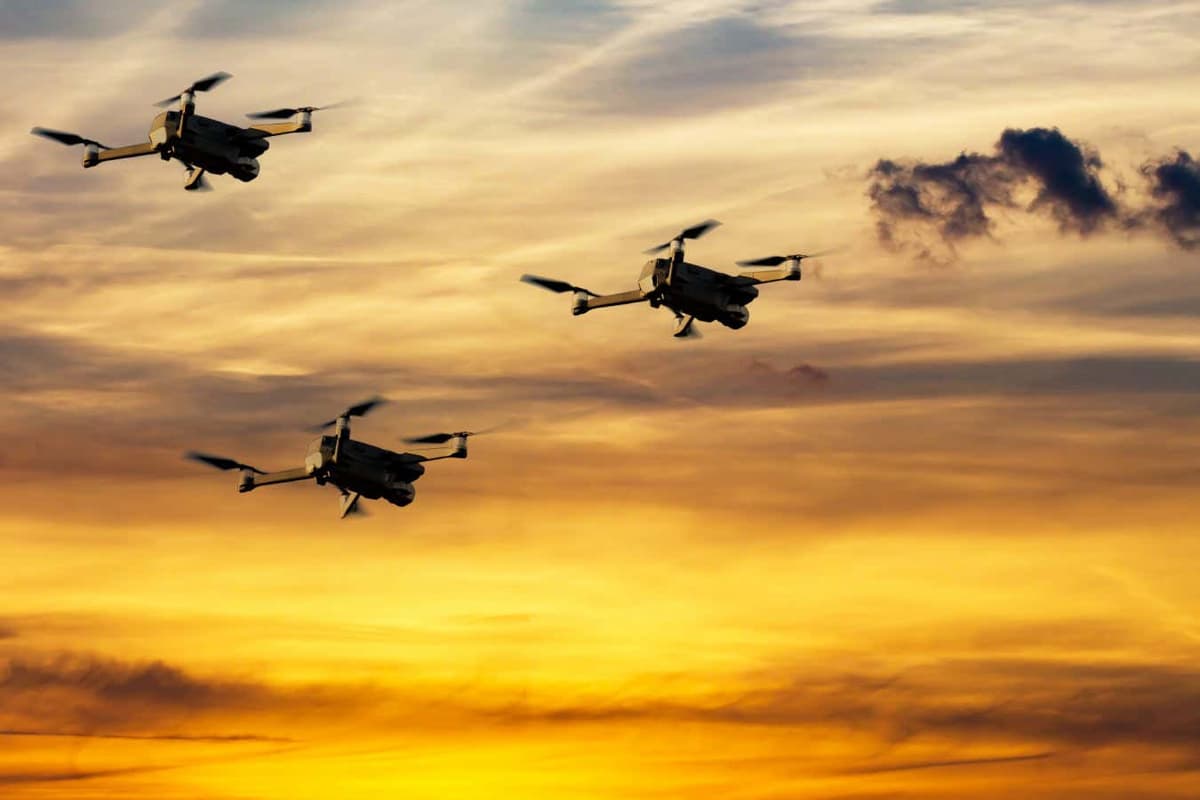
Fully Autonomous Drones Have Killed Human Soldiers for the First Time
Why It Matters
The incident proves AI can independently select and engage targets, raising urgent legal, ethical, and strategic questions for militaries worldwide and accelerating pressure for international regulation.
Key Takeaways
- •Ten AI‑controlled “Terminator” drones killed Russian soldiers in test
- •Ukraine’s defense ministry still bans fully autonomous lethal strikes
- •UN calls for global prohibition of lethal autonomous weapons
- •US and other militaries develop semi‑autonomous target‑selection drones
- •Future Ukrainian ALITA system will launch 64 interceptors, still human‑verified
Pulse Analysis
The Ukrainian test of ten AI‑driven “Terminator” drones marks a watershed moment in modern warfare. Designed to fly autonomously for up to ten minutes, the quadcopters entered a self‑targeting mode that allegedly identified and eliminated Russian infantry and a vehicle without any human operator in the loop. While the experiment was limited to a single engagement and has not been fielded operationally, it provides concrete evidence that lethal autonomous weapon systems (LAWS) can function without real‑time human oversight, a capability long theorized but never publicly confirmed.
The revelation has reignited a contentious debate over the legality and morality of fully autonomous weapons. Ukraine’s own regulations currently forbid AI from making final kill decisions, and the Ministry of Defence has not authorized broader deployment. Internationally, the United Nations, led by Secretary‑General António Guterres, continues to push for a binding treaty to ban LAWS, warning that removing human judgment could breach humanitarian law and increase civilian casualties. Experts from Oxford and Exeter stress that, beyond ethical concerns, the practical military advantage of fully autonomous strikes remains uncertain, given the limited reliability of current AI targeting and the risk of fratricide or unintended escalation.
Looking ahead, other powers are quietly advancing semi‑autonomous drone capabilities that still require human confirmation, while the United States explores systems that can suggest targets for rapid human approval. Ukraine’s upcoming ALITA interceptor network, slated for October, will automate launch and flight but retain a human check before engagement, illustrating a compromise path. As AI integration deepens, policymakers face a tightrope: harnessing speed and precision without surrendering accountability, a challenge that will shape the next generation of armed conflict.
Fully autonomous drones have killed human soldiers for the first time
Comments
Want to join the conversation?
Loading comments...