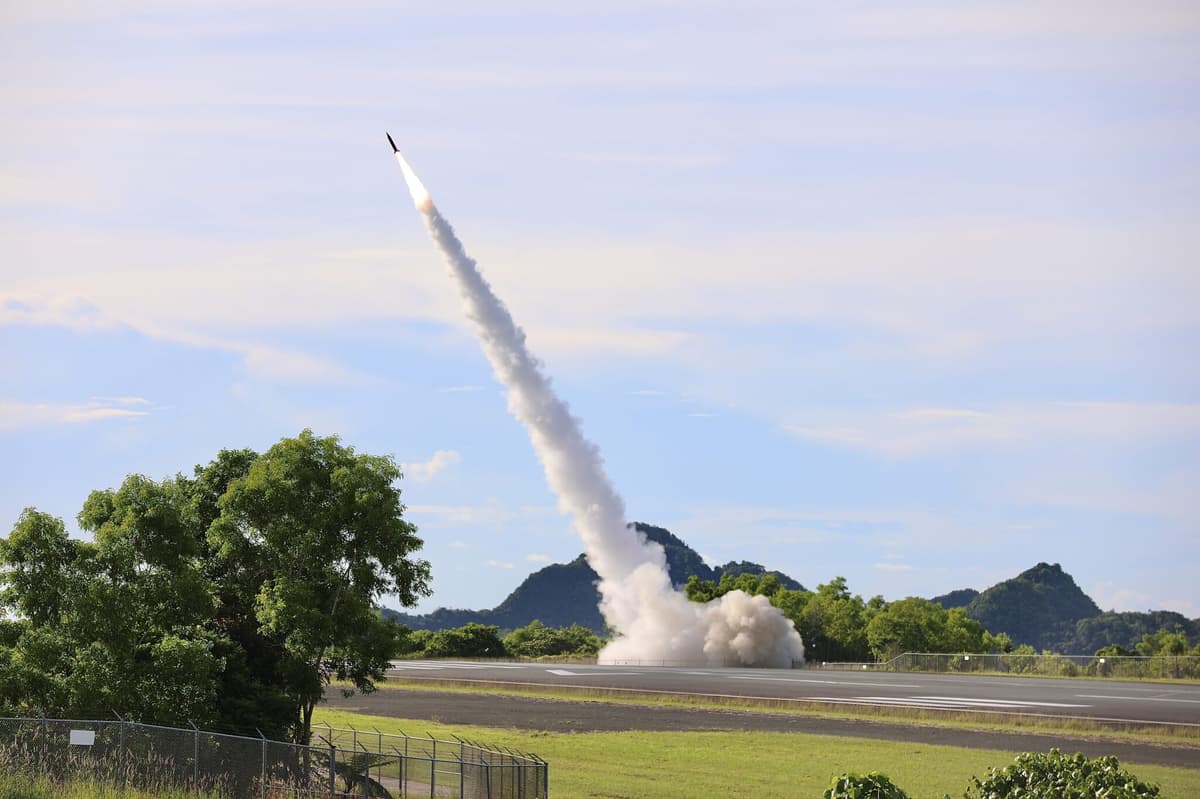
Future Anti-Ship PrSM Prioritizes Indo-Pacific Ops and 1,000 Km Range
Why It Matters
Providing a ground‑based, long‑range anti‑ship capability gives the U.S. and its allies a mobile, survivable option to counter China’s naval forces in the Indo‑Pacific, reshaping regional power dynamics.
Key Takeaways
- •PrSM Increment 4 aims for 1,000 km anti‑ship range.
- •Missile must operate in contested Indo‑Pacific environments.
- •HIMARS will launch PrSM from islands and ships.
- •Army seeks GPS‑denied targeting of moving maritime targets.
- •Fielding accelerated to support U.S.–Philippines joint defense.
Pulse Analysis
The emergence of the Precision Strike Missile’s anti‑ship variant marks a pivotal evolution in the Army’s long‑range fire‑support portfolio. Historically, maritime strike has been the domain of naval aviation and surface combatants, but the PrSM leverages the mobility of the High Mobility Rocket Artillery System (HIMARS) to bring land‑based firepower to sea lanes. By extending the missile’s reach to roughly 1,000 km, the service can threaten hostile vessels far beyond the horizon, filling a capability gap that became evident during recent exercises in the Western Pacific.
Achieving that reach is not merely a matter of larger rockets; the program must overcome contested GPS environments and the need to track fast‑moving ships. The request for solutions explicitly calls for a system that can “penetrate GPS‑contested environments” and engage both maritime and relocatable land targets. Integrating such a seeker into the existing HIMARS architecture demands advances in data‑link resilience, mid‑course updates, and hardened electronics. Moreover, the missile’s launch platform must be deployable by air, sea, and even austere island bases, demanding a versatile logistics chain.
From a strategic standpoint, a ground‑based anti‑ship missile reshapes the deterrence calculus in the Indo‑Pacific. Positioned on islands or forward‑deployed bases, HIMARS units equipped with PrSM can create a dispersed, hard‑to‑target strike network that complicates the People’s Liberation Army Navy’s operational planning. The accelerated fielding aligns with the U.S.‑Philippines partnership, reinforcing joint training such as Balikatan and signaling a commitment to regional stability. As other services explore similar capabilities, the Army’s PrSM could become a cornerstone of a multi‑domain approach to countering maritime aggression.
Future Anti-Ship PrSM Prioritizes Indo-Pacific Ops and 1,000 km Range
Comments
Want to join the conversation?
Loading comments...