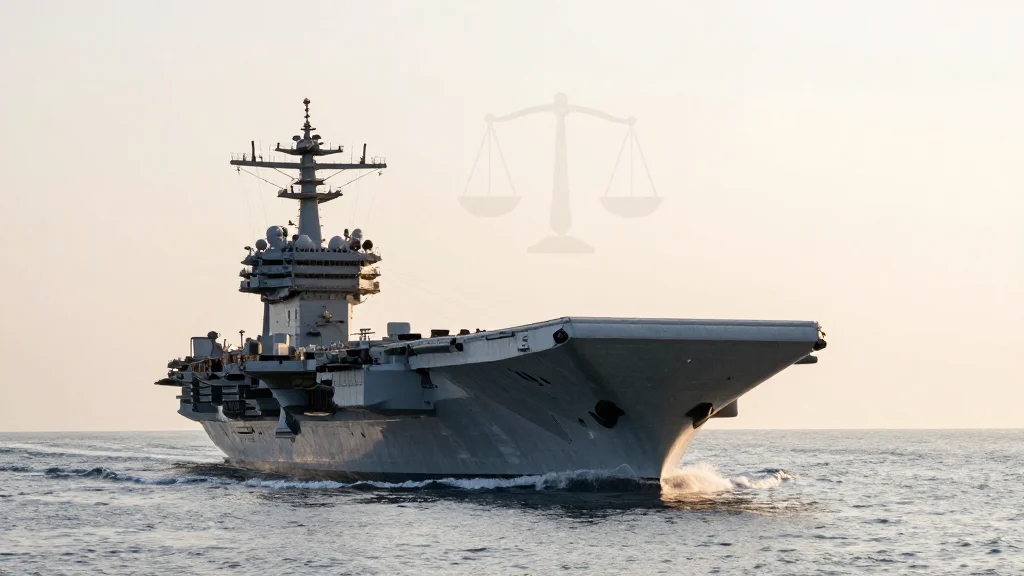
Future Ford-Class Carrier Orders May Be at Risk
Why It Matters
Delays and overruns threaten the Navy’s carrier fleet renewal timeline and could force a strategic shift toward alternative platforms or reduced procurement. The outcome will shape defense budgeting, industrial base health, and U.S. power‑projection capabilities for the next decade.
Key Takeaways
- •Ford-class program cost rose $2.8 B, schedule slipped 12 years
- •USS John F. Kennedy delivery pushed from 2025 to 2027
- •Enterprise (CVN‑80) now slated for 2030, two years later
- •Navy Secretary Phelan signals possible cancellation of CVN‑82‑87
- •Phelan also proposes $17 B ‘Trump‑class’ battleship to start 2028
Pulse Analysis
The Ford‑class carrier initiative was launched to replace aging Nimitz‑class hulls with cutting‑edge electromagnetic catapults, arresting gear and weapons elevators. While the technology promises higher sortie rates and reduced crew workload, the decision to install these systems before they reached mature development caused a cascade of technical setbacks. The lead ship, Gerald R. Ford, exceeded its original budget by $2.8 billion and missed its 2015 delivery target by more than a decade, forcing the Navy to operate an incomplete platform for years while engineers wrestled with non‑functional elevators and other defects. These challenges have eroded confidence in the program’s cost‑effectiveness and schedule reliability.
Budgetary pressures amplify the stakes of the carrier review. With the Navy facing a multi‑decade procurement horizon, each delayed hull compresses the window for maintaining a three‑carrier operational tempo. Secretary Phelan’s willingness to reconsider CVN‑82 through CVN‑87 reflects a broader push to curb defense spending excesses, especially after his recent cancellation of the Constellation‑class frigate. At the same time, his advocacy for a $17 billion "Trump‑class" battleship underscores a competing vision that favors fewer, heavily armed surface combatants over a larger carrier fleet. Decision‑makers must weigh the sunk costs of the Ford program against the strategic value of carriers in contested maritime environments.
The uncertainty surrounding future Ford‑class orders reverberates across the defense industrial base. Huntington Ingalls Industries, the sole carrier builder, relies heavily on a steady pipeline of hulls to sustain its workforce and supply chain. A slowdown could trigger layoffs, reduced R&D investment, and a loss of expertise in high‑tech shipbuilding. Moreover, the Navy may accelerate alternative concepts such as unmanned surface combatants, distributed lethality, or even revisiting land‑based aviation options to preserve power projection. Ultimately, the review will signal how the U.S. balances technological ambition with fiscal prudence in shaping its maritime dominance for the 2030s.
Future Ford-Class Carrier Orders May Be at Risk
Comments
Want to join the conversation?
Loading comments...