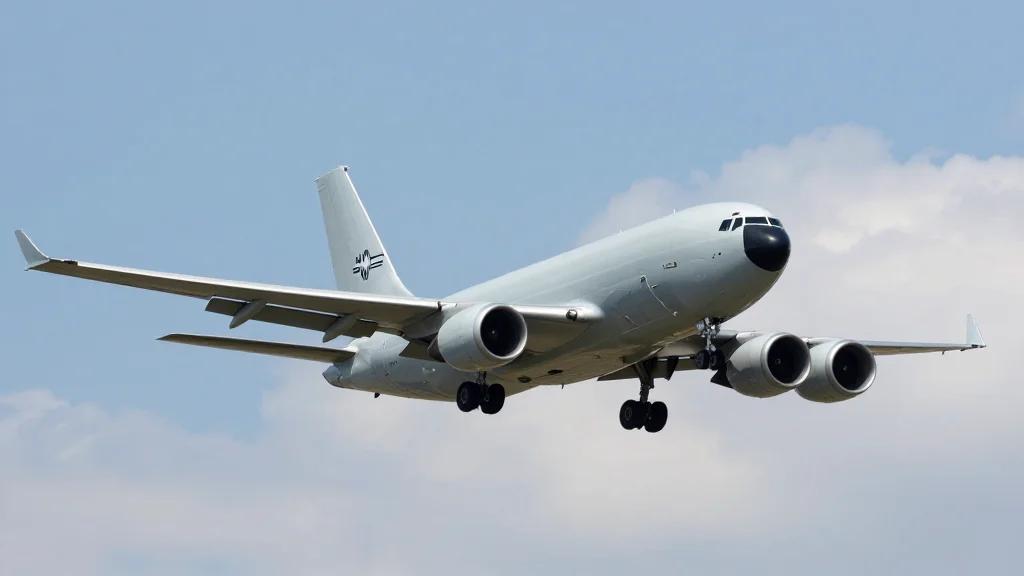
FY2027 Budget Request Highlights Shift in USAF’s Future Aerial Refuelling Priorities
Companies Mentioned
Why It Matters
Redirecting funds from NGAS to ATS accelerates upgrades to existing tankers, enhancing operational readiness and influencing defense‑industry contracts. The move underscores the Air Force’s priority for immediate capability gains over speculative sixth‑generation development.
Key Takeaways
- •USAF adds 15 KC‑46A tankers for $2.4 billion
- •NGAS study continues, but FY2027 funding omitted
- •$13 million allocated to new Advanced Tanker Systems effort
- •Shift suggests near‑term modernization over sixth‑gen tanker development
Pulse Analysis
The Air Force’s latest procurement underscores a pragmatic approach to sustaining its aerial refuelling capability. By investing $2.4 billion in 15 additional KC‑46A aircraft, the service not only expands its existing fleet but also leverages Boeing’s mature platform to meet immediate operational demands. This acquisition aligns with broader defense budgeting trends that favor proven systems over untested concepts, ensuring that the force can project power without delay.
Concurrently, the Next‑Generation Aerial Refuelling System (NGAS) remains in a feasibility study phase, yet the FY2027 budget request conspicuously excludes any funding for its development. The absence of earmarked dollars suggests senior leaders view the sixth‑generation tanker concept as a longer‑term horizon, one that can survive without immediate fiscal support. By postponing NGAS investment, the Air Force can avoid premature commitments while still gathering data to inform future design decisions.
Instead, the Pentagon allocated $13 million to launch the Advanced Tanker Systems (ATS) program, a modest but strategic seed fund aimed at incremental upgrades and technology insertion into current tankers. This shift signals a preference for rapid capability enhancements—such as improved refuelling rates, digital cockpit upgrades, and survivability kits—over the ambitious, cost‑intensive NGAS pathway. For defense contractors, the ATS focus opens new contract opportunities, while the broader strategic community watches how this reallocation will shape the Air Force’s long‑term aerial refuelling roadmap.
FY2027 budget request highlights shift in USAF’s future aerial refuelling priorities
Comments
Want to join the conversation?
Loading comments...