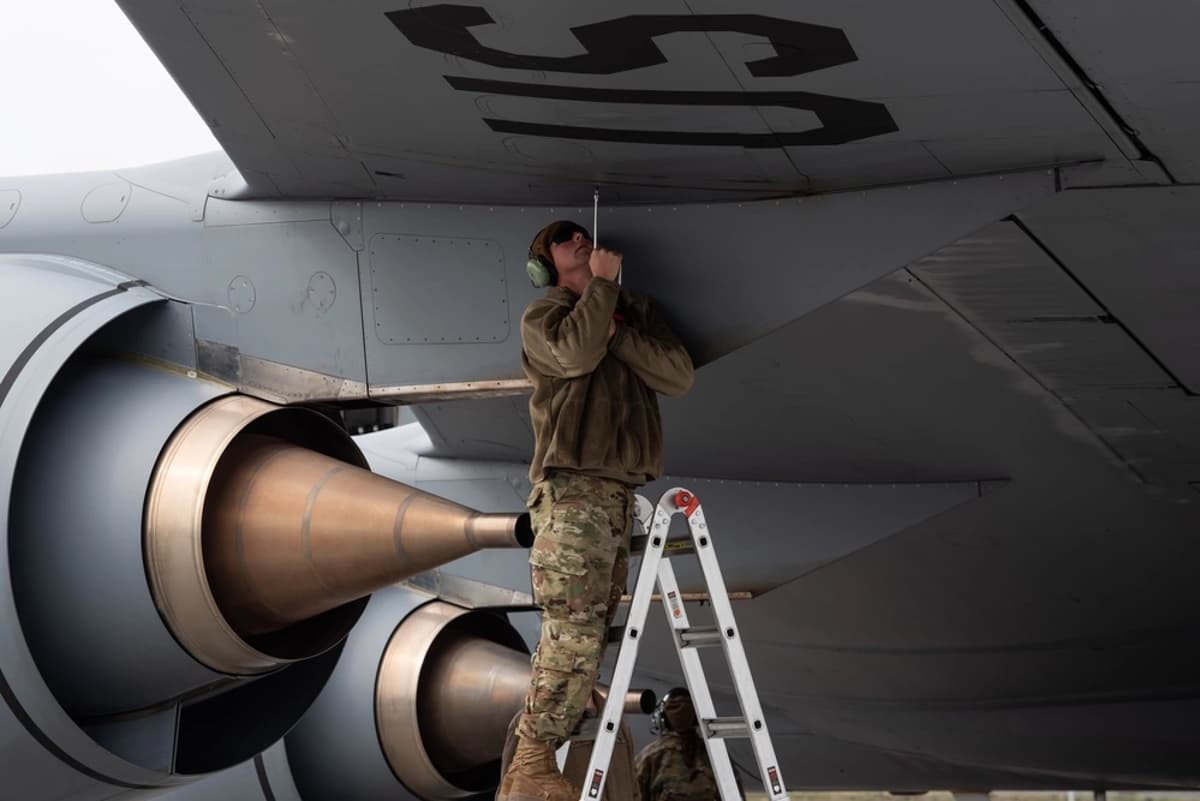
GAO: Tanker Fleet Struggling with Readiness Due to Parts Shortage, KC-46 Delays
Companies Mentioned
Why It Matters
Reduced tanker readiness hampers the United States’ global air‑refueling capability, threatening strategic mobility and influencing future procurement decisions.
Key Takeaways
- •GAO finds tanker availability below 68% for KC‑135, 62% for KC‑46.
- •Parts shortages and inexperienced maintainers drive low mission‑capable rates.
- •Air Force‑Boeing pact aims 6% near‑term, 20% long‑term availability boost.
- •$24.7 B sustainment budget and $4 B working capital fund target spare‑part gaps.
Pulse Analysis
Aerial refueling is the backbone of U.S. power projection, enabling fighters, bombers and transport aircraft to operate across the globe. The GAO’s latest assessment reveals that both the aging KC‑135 fleet and the newer KC‑46A are falling short of the Air Force’s own readiness standards, with mission‑capable rates hovering in the high‑60s and low‑60s percent respectively. These shortfalls stem from a confluence of supply‑chain constraints, technical glitches in the KC‑46’s Remote Vision System, and a growing gap in skilled maintenance personnel.
The root causes are multifaceted. Critical spare parts for both tanker models are in short supply, and some components for the KC‑135 are no longer in production, forcing the service to resort to reverse‑engineering and cannibalization. Meanwhile, the KC‑46’s redesigned boom actuator and vision system have suffered repeated delays, limiting its operational availability. Compounding the hardware issues, the Air Force’s transition to a largely civilian maintenance workforce has left many depots staffed by technicians lacking the requisite experience, further depressing mission‑capable rates.
In response, the Air Force and Boeing have signed a multipronged agreement that accelerates the fielding of the upgraded Remote Vision System 2.0, repurposes five early‑build KC‑46s for high‑value spares, and introduces a performance‑based logistics contract. Coupled with a $24.7 billion sustainment allocation and a $4 billion working‑capital fund in the FY2027 budget, the plan targets a near‑term 6% availability lift and a long‑term increase of over 20% by 2030. If executed, these measures could restore confidence in the tanker fleet and safeguard the United States’ strategic air‑refueling edge.
GAO: Tanker Fleet Struggling with Readiness due to Parts Shortage, KC-46 Delays
Comments
Want to join the conversation?
Loading comments...