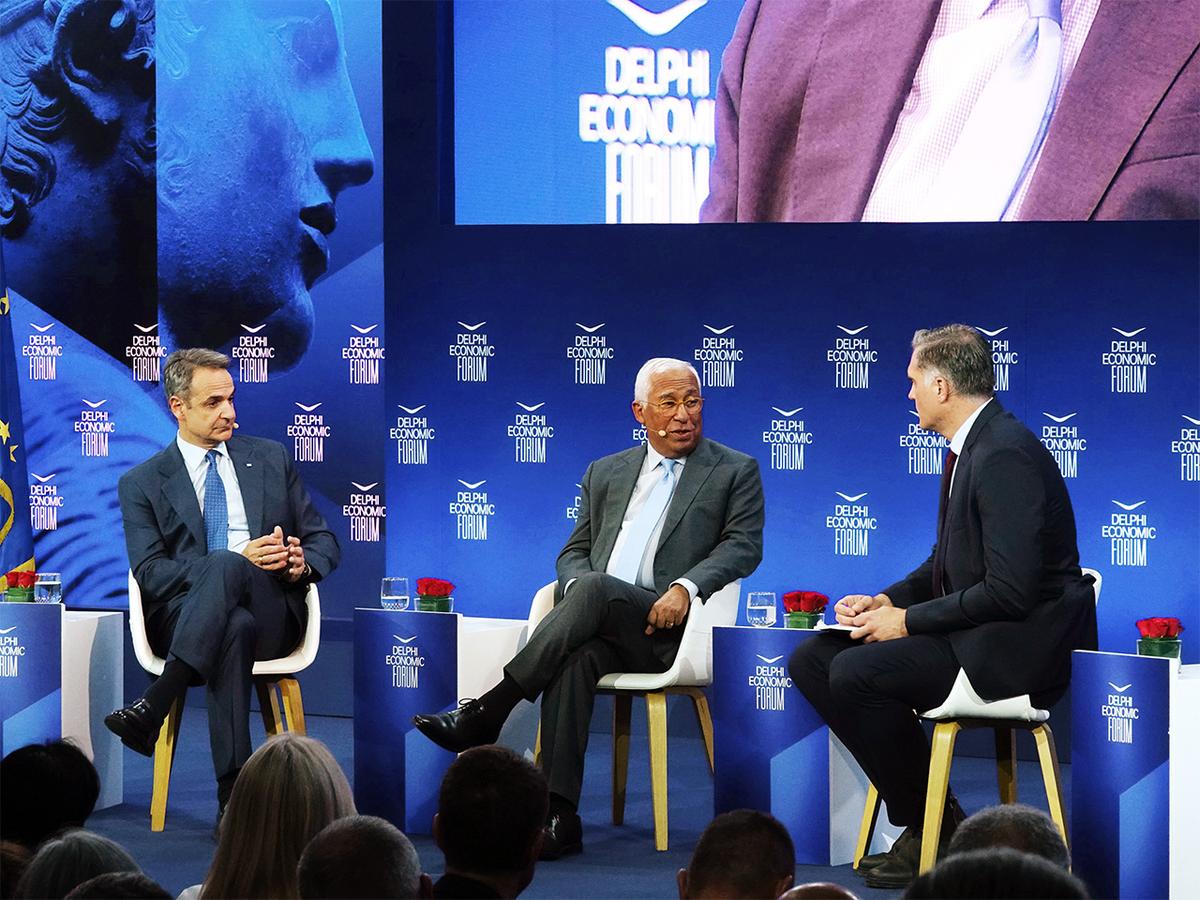
Geopolitics Might’ve Lost Its Shock Value but the Delphi Economic Forum Is a Good Omen for Diplomacy
Why It Matters
The forum signals a growing coalition of middle powers seeking collective security and economic coordination, a shift that could reshape stability in the Balkans, Eastern Mediterranean, and beyond.
Key Takeaways
- •The Shock of the New theme reflects normalized geopolitical turbulence
- •Greek‑owned vessel Epaminondas attacked, highlighting shipping risks in Hormuz
- •Middle powers pledge cooperation to offset declining US global leadership
- •In‑person dialogue cited as essential for trust among Balkan and Baltic leaders
Pulse Analysis
The Delphi Economic Forum, set against the ancient backdrop of Greece’s historic oracle, has evolved into a modern diplomatic crucible where regional actors test ideas that are too nuanced for larger multilateral venues. By invoking “The Shock of the New,” organizers acknowledge that today’s geopolitical tremors—ranging from energy wars to cyber threats—no longer surprise policymakers. Instead, the forum serves as a laboratory for middle powers to rehearse coordinated responses, leveraging Greece’s strategic position at the crossroads of Europe, the Middle East, and Africa.
A key driver of the forum’s agenda is the perceived vacuum left by a retreating United States. Canadian Prime Minister Mark Carney’s recent World Economic Forum address called on middle powers to safeguard shared interests, a sentiment echoed in Delphi’s speaker lineup. The incident involving the Greek‑owned, Liberia‑flagged freighter Epaminondas, which came under fire in the Strait of Hormuz, exemplifies the tangible risks that maritime nations face when great‑power rivalries spill into commercial shipping lanes. For the Balkans and Eastern Mediterranean, where economies rely heavily on seaborne trade, such threats demand a collective security framework that transcends traditional NATO channels.
Beyond strategic calculations, the forum reaffirms the enduring value of personal diplomacy. Leaders like Estonia’s President Alar Karis stress that eye‑to‑eye encounters at coffee stations foster confidence that virtual meetings cannot replicate. This human element accelerates consensus on issues from energy diversification to digital infrastructure, laying groundwork for future policy alignment. As middle powers deepen their cooperation, the Delphi Economic Forum may become a bellwether for a more multipolar diplomatic order, influencing EU policy, regional trade agreements, and the broader quest for stability in a world where shocks are now the norm.
Geopolitics might’ve lost its shock value but the Delphi Economic Forum is a good omen for diplomacy
Comments
Want to join the conversation?
Loading comments...