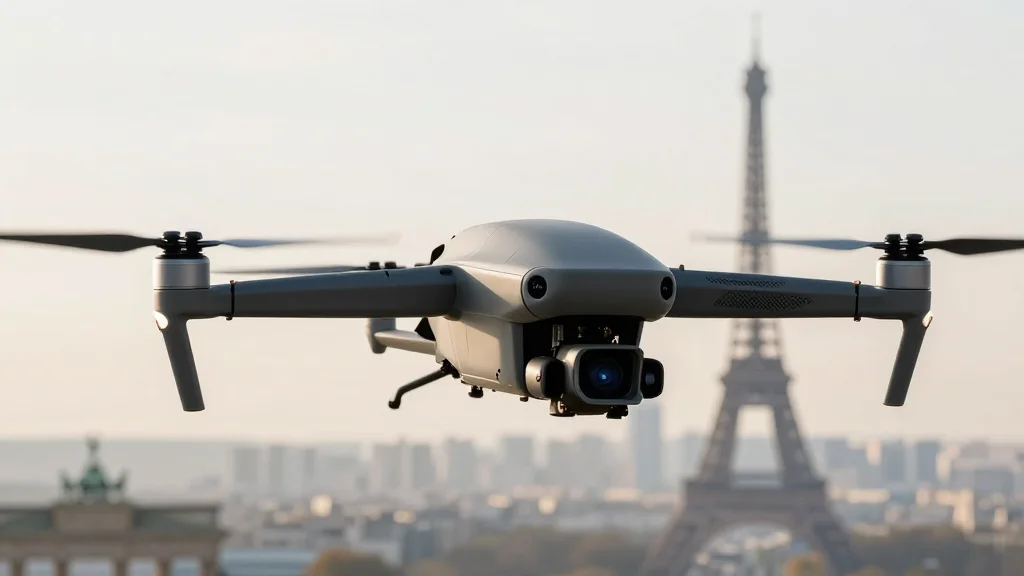
Germany Says Europe Needs to Learn From Ukraine’s Drone Warfare Successes
Why It Matters
Accelerating European drone production can offset capability gaps from a shrinking U.S. presence, bolstering NATO’s deterrence against Russia. It also marks a strategic pivot toward indigenous, cost‑effective defence technology across the EU.
Key Takeaways
- •Ukraine’s cheap drones prove rapid, cost‑effective combat solutions
- •Germany urges EU to fast‑track indigenous drone development
- •US plans to withdraw 5,000 troops from Germany this year
- •NATO’s conventional deterrence remains central despite U.S. troop reductions
Pulse Analysis
Ukraine’s drone revolution has reshaped modern warfare, showing that low‑cost, rapidly manufactured unmanned systems can challenge far more expensive platforms. By leveraging commercial off‑the‑shelf components and agile procurement, Kyiv fielded swarms that disrupted Russian logistics and air defenses, prompting European militaries to reconsider legacy acquisition cycles. The success story underscores a broader trend: speed and adaptability now outweigh sheer firepower, especially for nations facing budget constraints and evolving threats.
The United States’ decision to withdraw 5,000 troops from Germany—part of a broader pull‑back amid political friction with President Trump—has reignited debate over Europe’s defence burden-sharing. German officials, while affirming NATO’s collective security, acknowledge that reliance on U.S. forces alone is unsustainable. Consequently, Berlin is urging faster development of indigenous drone capabilities, a move that could stimulate the continent’s aerospace sector, create jobs, and reduce dependence on external suppliers. France’s President Macron has similarly highlighted drones as a cornerstone of future defence strategy.
Looking ahead, the EU faces a strategic crossroads: invest heavily in a unified drone industrial base or risk fragmented, slower progress. Coordinated research programmes, joint procurement, and cross‑border testing ranges could accelerate innovation while spreading costs. Moreover, integrating artificial‑intelligence‑driven autonomy will enhance operational effectiveness against sophisticated adversaries like Russia. For policymakers, the imperative is clear—cultivate a resilient, home‑grown drone ecosystem that complements NATO’s conventional deterrence and safeguards European security in an era of shifting great‑power dynamics.
Germany says Europe needs to learn from Ukraine’s drone warfare successes
Comments
Want to join the conversation?
Loading comments...