The plan could reshape EU security cooperation, boosting industrial competitiveness but also risking a split between fast‑track and traditional members.
The concept of a “two‑speed” Europe reflects Berlin’s response to escalating geopolitical pressures, especially Russia’s aggression and shifting trans‑Atlantic dynamics. By concentrating decision‑making among the EU’s economic powerhouses, Germany hopes to cut through the often‑slow consensus process that hampers rapid procurement and joint capability development. This approach mirrors similar fast‑track mechanisms in other policy areas, such as the eurozone’s banking union, and signals a willingness to prioritize defence as a catalyst for broader economic resilience.
The E6 format brings together Germany, France, Poland, Spain, Italy and the Netherlands, targeting four pillars: defence investment, a savings‑and‑investment union, euro stability and secure access to critical raw materials. Poland’s inclusion underscores its strategic pivot toward deeper EU defence integration, while a dedicated Polish‑German working group will explore bilateral projects independent of the broader E6 negotiations. The recent German‑Italian protocol adds concrete steps toward an integrated air and missile defence system, hinting at future collaboration on unmanned and electronic‑warfare capabilities. These moves collectively aim to close capability gaps and reinforce the European pillar of NATO.
Financially, Germany’s commitment to allocate nearly €83 billion to the Bundeswehr in 2026 marks a significant escalation, positioning the country to meet its 3.56% of GDP defence spending goal by 2029 and the ambitious 5% target championed by Chancellor Friedrich Merz. While the increased budget could fuel a vibrant defence industrial base, critics warn that a two‑speed model may fragment EU cohesion, leaving non‑E6 members feeling sidelined. Balancing accelerated capability gains with inclusive political dialogue will be essential for maintaining a unified European security architecture.
Germany wants a “two‑speed EU” on defence. What about Poland?
By Michał Górski
6 February 2026, 11:42
To speed up the making of important defence decisions, Germany is considering the creation of a “two‑speed” European Union. To that end, it is setting up a special group.
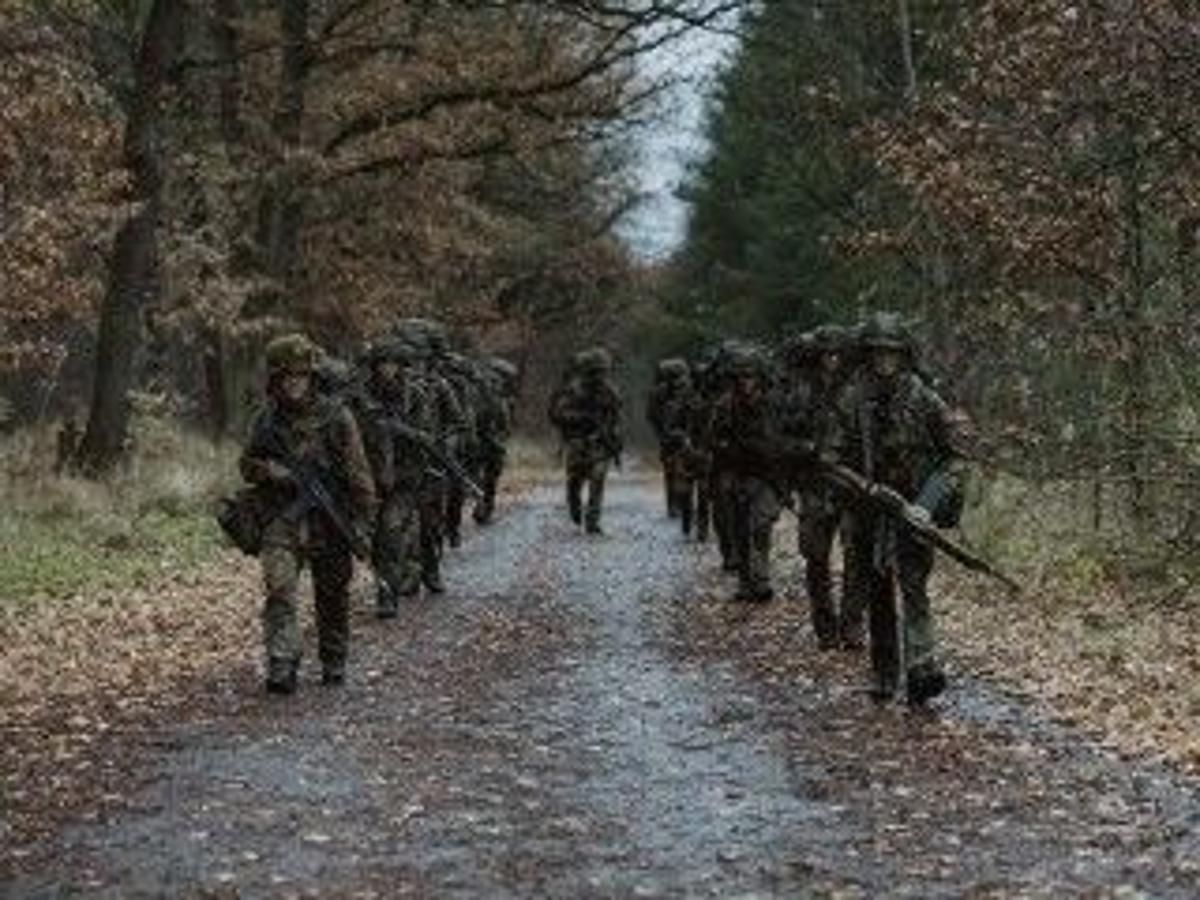
Soldiers of the Bundeswehr, basic training.
Photo: Bundeswehr / Jana Neumann
Germany is leading an initiative aimed at creating a “two‑speed” European Union. It proposes that a group of six of the EU’s largest economies bypass the traditional decision‑making process based on consensus among all member states. The goal? To accelerate cooperation on defence and industrial competitiveness in the face of rising geopolitical tensions.
At the end of January, at the initiative of the German and French finance ministers, a videoconference was held intended to lay the groundwork for a new format bringing together the six largest EU economies. “The time has come for a two‑speed Europe,” said Lars Klingbeil, Germany’s finance minister.
According to information obtained by Defense News, the E6 format (in addition to France and Germany it is to include Poland, Spain, Italy and the Netherlands) is to focus on four areas: defence investments, a savings‑and‑investment union, strengthening the euro, and securing critical resources.
As reported, the German minister in a special document called for closer cooperation on the funds allocated to defence in Europe. The politician also favours prioritising defence spending in the next multi‑annual EU budget. Meanwhile, the defence industry should, in his view, become a “motor of economic growth” in the European Union.
The initiative reflects a strategic recalibration of Berlin’s European partnerships, but carries the risk of fragmenting European cohesion, notes Defense News, pointing to the possible alienation of EU members who supported deeper integration but are not part of the group of six. In response to that criticism, the German side is said to argue that the format will be open to additional participants.
Returning to the strategic recalibration of partnerships, the outlet cites a German‑Italian protocol on an action plan for strategic defence cooperation signed the day before the videoconference. In the document, endorsed by Chancellor Friedrich Merz and Prime Minister Giorgia Meloni, both countries commit to urgently and jointly achieving Europe’s defence readiness by closing capability gaps and strengthening the European pillar within NATO. What exactly will Berlin’s cooperation with Rome cover? As reported, it includes, among other things, an integrated air and missile defence system, while cooperation on unmanned systems or electronic warfare is also not ruled out.
It is worth mentioning here that the article also includes a thread about Poland, with which Germany also plans to conclude a similar defence agreement. “For the purposes of a deeper assessment of areas of cooperation in security and defence and the identification of specific bilateral projects, we agreed to set up a working group at the level of ministries of defence. Its work will be conducted in parallel, but independently of negotiations on a new defence agreement, which is to be prepared by the ministries of defence and signed in 2026,” the Polish Ministry of Foreign Affairs wrote in response to inquiries from Niezależna.pl.
In 2026 Germany plans to allocate nearly €83 billion to strengthen the Bundeswehr. According to information provided by the Atlas Institute for International Affairs, this budget is over €20 billion higher than last year’s. Data from the Centre for Eastern Studies (Ośrodek Studiów Wschodnich) indicate that by 2029 German defence spending is expected to reach 3.56 % of GDP (in 2026 it is to be 2.83 %).
The German chancellor’s plans are even more ambitious. At the recently concluded World Economic Forum in Davos, Friedrich Merz confirmed the desire to reach a level of 5 % of GDP in the coming years. Merz stated that Europe has entered the era of great‑power politics.
Comments
Want to join the conversation?
Loading comments...