Why It Matters
The addition deepens NATO maritime interoperability and distributes R&D expenses, strengthening collective security against submarine threats in the North Atlantic.
Key Takeaways
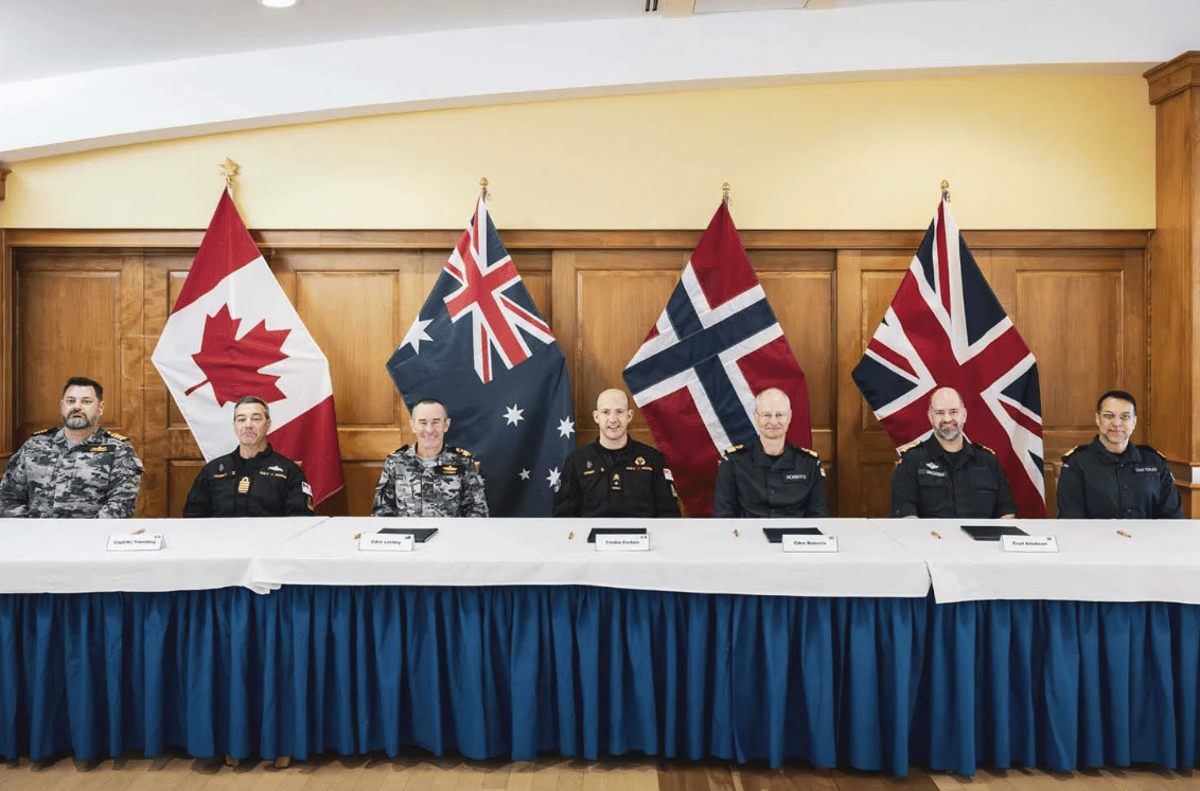
- •Norway signs charter, becoming fourth Global Combat Ship member
- •Program targets 34 ships across UK, Canada, Australia, Norway
- •Norway to acquire minimum five Type 26 frigates for Atlantic defense
- •Shared design cuts development costs, estimated £2 bn (~$2.5 bn) total
- •Interoperability focus enhances NATO anti‑submarine warfare capabilities
Pulse Analysis
The Global Combat Ship (GCS) partnership marks a rare convergence of four major navies around a single war‑ship family. By anchoring the effort on the proven Type 26 hull, the United Kingdom, Canada, Australia and now Norway can field vessels that share core systems while allowing national variations in sensors and weapons. Norway’s entry, formalised in Halifax, expands the user group to four nations and signals a strategic commitment to protect the Atlantic corridor and Europe’s northern flank from increasingly sophisticated submarine threats.
Beyond the geopolitical calculus, the GCS programme delivers tangible economic benefits. The estimated £2 billion (≈$2.5 billion) budget is spread across shipyards in the UK, Canada and Australia, sustaining domestic industrial bases and preserving skilled workforces. Joint procurement reduces duplicate testing, shortens development cycles and creates a common supply chain that can be leveraged for future upgrades. For Norway, participation also guarantees a steady flow of components and expertise, mitigating the risk of isolated procurement and fostering a resilient defence industrial ecosystem.
Operationally, the shared design underpins NATO’s push for seamless interoperability. Crews from the four navies will train on common platforms, simplifying logistics and enabling rapid coalition deployments. The ships’ primary anti‑submarine warfare (ASW) capability, complemented by multi‑role flexibility, aligns with emerging maritime challenges such as quiet diesel‑electric subs and unmanned underwater vehicles. As the first vessels, like HMS Glasgow and Canada’s HMCS Fraser, near service entry by the decade’s end, the GCS framework promises a unified, cost‑effective fleet ready to address the evolving security landscape of the North Atlantic.
Global Combat Ship partnership welcomes fourth member
Comments
Want to join the conversation?
Loading comments...