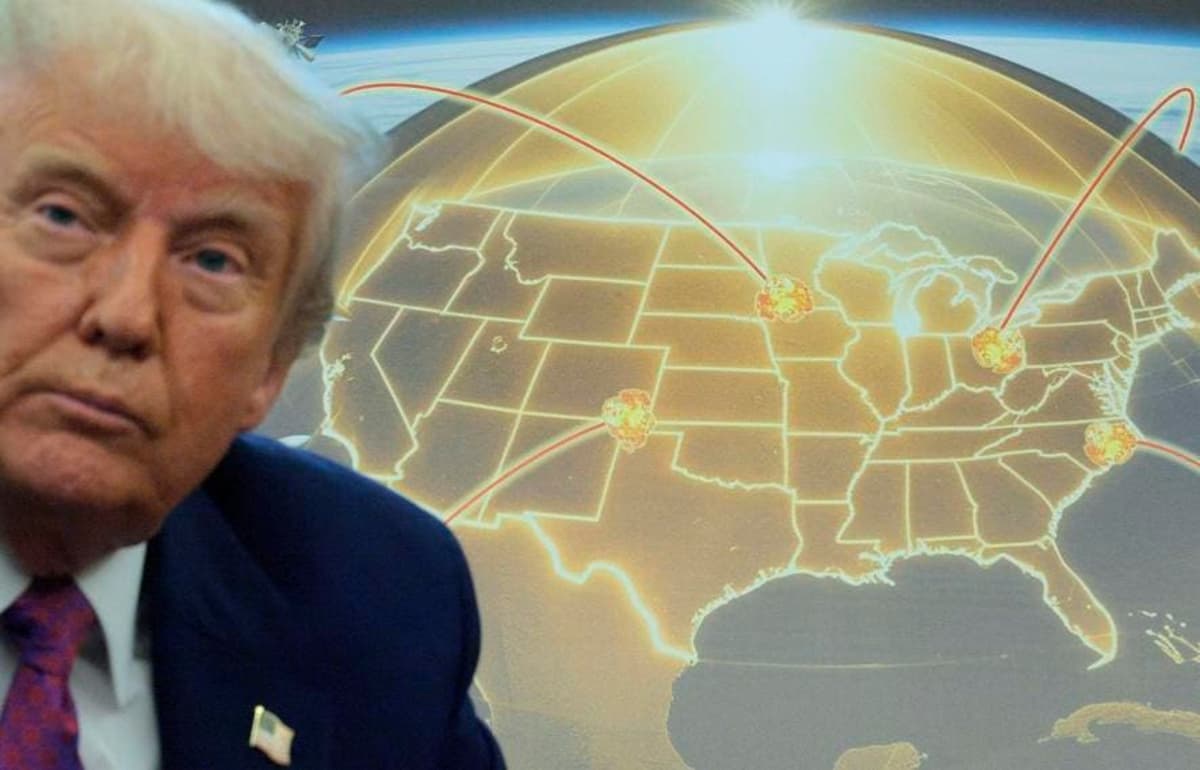
Golden Dome Marks A Moment Of Truth For Military Tech Firms
Why It Matters
If pursued, Golden Dome could divert trillions from other defense priorities while exposing critical space assets, reshaping the U.S. defense industrial base and budget allocations.
Key Takeaways
- •Golden Dome could cost up to $3.6 trillion over its lifecycle
- •Experts say leak‑proof missile defense requires ~1,600 interceptors per warhead
- •Anduril’s Palmer Luckey argues defense could be cut to $500 billion
- •Space‑based interceptors risk civilian satellite operations and escalation
- •Legacy firms like Lockheed face competition from Silicon Valley startups
Pulse Analysis
The Golden Dome proposal revives the lofty ambitions of Reagan's 1983 "Star Wars" initiative, promising a near‑perfect shield against ballistic and cruise missiles. Yet technical assessments reveal daunting hurdles: an incoming warhead traveling at 15,000 miles per hour can be cloaked by decoys, and achieving a truly leak‑proof defense would demand thousands of interceptors per target. Even the most optimistic cost models project a $3.6 trillion price tag, dwarfing current missile‑defense spending and raising questions about fiscal sustainability.
Silicon Valley’s military‑tech surge, epitomized by Anduril and SpaceX, fuels the debate. Proponents like Palmer Luckey contend that a streamlined, technology‑driven force could slash the Pentagon budget to $500 billion, half of today’s outlays. Their narrative hinges on replacing legacy platforms—such as the F‑35 and traditional launch services—with cheaper drones and commercial launch capabilities. While these firms have demonstrated disruptive potential, their enthusiasm for large‑scale projects like Golden Dome may be driven by the prospect of lucrative government contracts, potentially skewing objective assessments of feasibility.
Policy makers must weigh the strategic trade‑offs. Deploying interceptors in orbit not only escalates the militarization of space but also jeopardizes civilian satellite communications that underpin global finance, navigation, and intelligence. Moreover, the massive financial commitment could crowd out investments in more pragmatic defenses, such as hardened infrastructure and allied capacity‑building. A rigorous, multi‑stakeholder review—incorporating congressional oversight, scientific expertise, and public scrutiny—is essential to ensure that the pursuit of an idealized shield does not compromise national security or fiscal responsibility.
Golden Dome Marks A Moment Of Truth For Military Tech Firms
Comments
Want to join the conversation?
Loading comments...