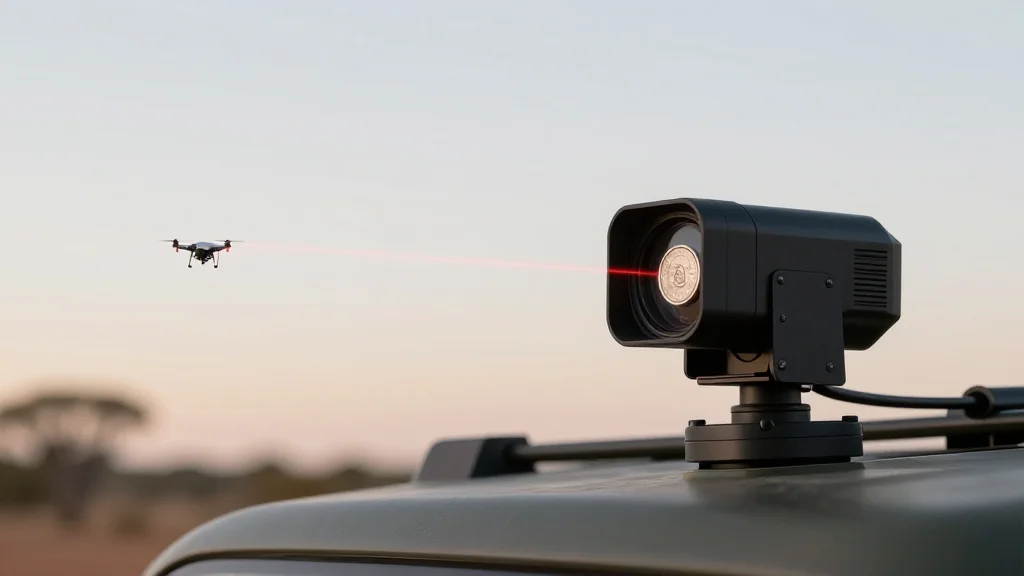
Government Pours $30m Into Counter-Drone Technology in Wake of Iran War
Why It Matters
The move signals a strategic shift toward cost‑effective, asymmetric defence, reducing reliance on expensive missiles and opening export opportunities for Australian autonomous systems.
Key Takeaways
- •$30 M AUD (~$20 M USD) awarded to Sypaq and AIM Defence.
- •Sypaq’s Corvo Strike drone targets larger enemy drones.
- •AIM Defence’s Fractl laser burns steel at 100 km/h.
- •Funding part of $7 B AUD (~$4.6 B USD) 10‑year plan.
- •Seeks cheaper alternatives to $3 M missiles for $30 K drones.
Pulse Analysis
The rapid proliferation of inexpensive, off‑the‑shelf drones in recent conflicts has forced militaries to rethink traditional air‑defence doctrines. In Ukraine, swarms of low‑cost UAVs overwhelmed conventional missile systems, while Iran’s Shahed drones demonstrated how cheap platforms can inflict strategic damage. Analysts now argue that the cost disparity—spending millions to destroy a $30,000 drone—undermines sustainability, prompting governments worldwide to invest in dedicated counter‑drone technologies that can engage threats more economically.
Australia’s latest $30 million AUD injection underscores this paradigm shift. By backing Sypaq’s Corvo Strike, an armed drone designed to intercept larger UAVs, and AIM Defence’s Fractl laser, which can track and neutralise fast‑moving objects, the Defence Ministry aims to create a layered, autonomous shield against swarms. These systems promise to replace costly missile interceptors, delivering a cheaper kill‑ratio while preserving high‑value assets. Moreover, the $7 billion AUD ten‑year budget positions Australia as a potential exporter of counter‑drone solutions, leveraging its reputation in autonomous systems to tap into a global market hungry for affordable defence options.
The broader implication for the defence industry is a pivot toward asymmetric advantage. As state and non‑state actors increasingly rely on low‑cost drones, the demand for scalable, rapid‑response countermeasures will grow. Companies that can integrate AI‑driven detection with kinetic or directed‑energy weapons stand to capture significant contracts, both domestically and abroad. For Australia, the strategy not only enhances national security but also strengthens its defence export portfolio, aligning with the National Defence Strategy’s emphasis on technological leadership and allied interoperability.
Government pours $30m into counter-drone technology in wake of Iran war
Comments
Want to join the conversation?
Loading comments...