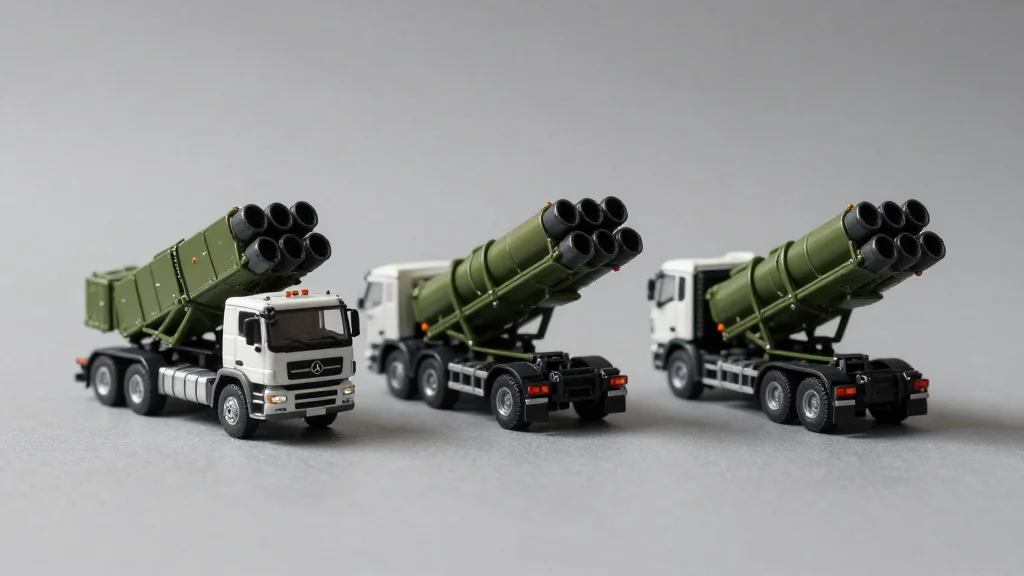
Greece Opts for PULS Long-Range Artillery as Demand for Capability Surges
Companies Mentioned
Why It Matters
The acquisition boosts Greece’s strike depth and aligns its artillery with NATO standards, while signaling a broader European shift toward diversified, high‑precision rocket systems that reinforce regional defense industrial capacity.
Key Takeaways
- •Greece signs €650 million PULS contract with Elbit Systems.
- •Deal includes launchers, precision rockets, loitering munitions, and training.
- •Four‑year delivery plus ten‑year support ensures long‑term capability.
- •Sixth European nation adopts PULS, reflecting rising artillery demand.
- •Diverse European purchases boost regional defense industrial base.
Pulse Analysis
The resurgence of long‑range, precision‑guided artillery has become a defining trend in European defense planning. Nations are moving away from legacy tube artillery toward modular rocket‑launcher platforms that can strike targets beyond 70 km with pinpoint accuracy. Systems such as the U.S.-made HIMARS, South Korea’s Chunmoo, and Israel’s PULS offer rapid fire, mobility, and the ability to integrate loitering munitions, meeting the NATO‑aligned emphasis on layered deterrence. This shift reflects both the perceived threat environment in Eastern Europe and a desire to sustain a domestic defense industrial base.
Greece’s €650 million (≈US$750 million) agreement with Elbit Systems marks the latest milestone in that evolution. The contract, signed on 6 April, calls for modular, truck‑mounted PULS launchers, a mixed munition package—including training rockets, precision‑guided rockets of varying ranges, and loitering weapons—and a comprehensive ten‑year support window after the four‑year delivery phase. While the exact number of launchers remains undisclosed, the scale of the investment signals Athens’ intent to modernize its artillery corps, enhance strike depth, and align with NATO’s interoperable standards.
By becoming the sixth European country to adopt PULS, Greece reinforces a broader continental push for diversified procurement that reduces reliance on a single supplier. The parallel purchases by Sweden (HIMARS) and Norway (Chunmoo) illustrate a competitive market where capability, cost, and industrial partnership drive decisions. For Elbit, the deal expands its footprint in the European segment and could spur follow‑on orders from neighboring states seeking compatible logistics and training. Ultimately, the growing appetite for precision rocket artillery reshapes the region’s deterrence calculus and fuels a new wave of defense‑industry collaboration.
Greece opts for PULS long-range artillery as demand for capability surges
Comments
Want to join the conversation?
Loading comments...