Defense News and Headlines
  • All Technology
  • AI
  • Autonomy
  • B2B Growth
  • Big Data
  • BioTech
  • ClimateTech
  • Consumer Tech
  • Crypto
  • Cybersecurity
  • DevOps
  • Digital Marketing
  • Ecommerce
  • EdTech
  • Enterprise
  • FinTech
  • GovTech
  • Hardware
  • HealthTech
  • HRTech
  • LegalTech
  • Nanotech
  • PropTech
  • Quantum
  • Robotics
  • SaaS
  • SpaceTech
AllNewsDealsSocialBlogsVideosPodcastsDigests

Defense Pulse

EMAIL DIGESTS

Daily

Every morning

Weekly

Sunday recap

NewsDealsSocialBlogsVideosPodcasts
DefenseNewsGrowing Cracks in the BRICS+ Wall
Growing Cracks in the BRICS+ Wall
Defense

Growing Cracks in the BRICS+ Wall

•February 11, 2026
0
Asia Times – Defense
Asia Times – Defense•Feb 11, 2026

Why It Matters

BRICS+’ loss of unity threatens its ability to challenge Western financial dominance, while the BoP’s rapid, unilateral approach could reshape conflict‑resolution norms. Policymakers and investors must reassess where future geopolitical leverage will reside.

Key Takeaways

  • •BRICS+ expansion diluted internal cohesion
  • •China, Russia, India pursue divergent agendas
  • •BoP operates with private‑equity‑style speed
  • •Consensus‑based BRICS+ hampers swift action
  • •De‑dollarization goals face member currency peg obstacles

Pulse Analysis

The recent enlargement of BRICS into BRICS+ has turned a tightly‑knit reformist bloc into a sprawling coalition of disparate economies. By admitting nations ranging from Iran to the United Arab Emirates, the alliance exchanged strategic depth for geographic breadth, complicating consensus on core initiatives such as a common currency or coordinated de‑dollarisation. Member states bring competing regional interests and varying degrees of reliance on the US dollar, turning what was once a credible alternative to Western‑led finance into a forum of aspirational statements.

In stark contrast, President Trump’s Board of Peace adopts a private‑equity‑style governance model, with a single chairman and a $1 billion entry fee that enables rapid decision‑making. This institutional velocity allows the BoP to launch initiatives—like the proposed Gaza reconstruction plan—within weeks, bypassing the procedural gridlock that stalls BRICS+. The BoP’s ability to forge bilateral buy‑ins and direct access to its chairperson underscores a broader shift toward deal‑based diplomacy, where speed and personal relationships outweigh multilateral legitimacy.

The divergence between these two models signals a pivotal moment for global governance. As bilateralism and transactional politics gain traction, BRICS+ risks becoming a spectator in the multipolar arena, unable to offer actionable alternatives to crises. Meanwhile, the BoP’s long‑term relevance hinges on delivering tangible outcomes, particularly in Gaza. Stakeholders—from sovereign investors to policy analysts—must monitor whether rapid, unilateral mechanisms can sustain legitimacy, or if a re‑engineered, more agile multilateral framework will emerge to fill the governance gap.

Growing cracks in the BRICS+ wall

The 2026 World Economic Forum in Davos highlighted a deepening divergence in how global stability is managed

While the formalization of President Trump’s “Board of Peace” (BoP) signaled a move toward a hyper‑transactional, unilateralist approach to conflict resolution, it simultaneously exposed the structural limitations of the BRICS+ alliance.

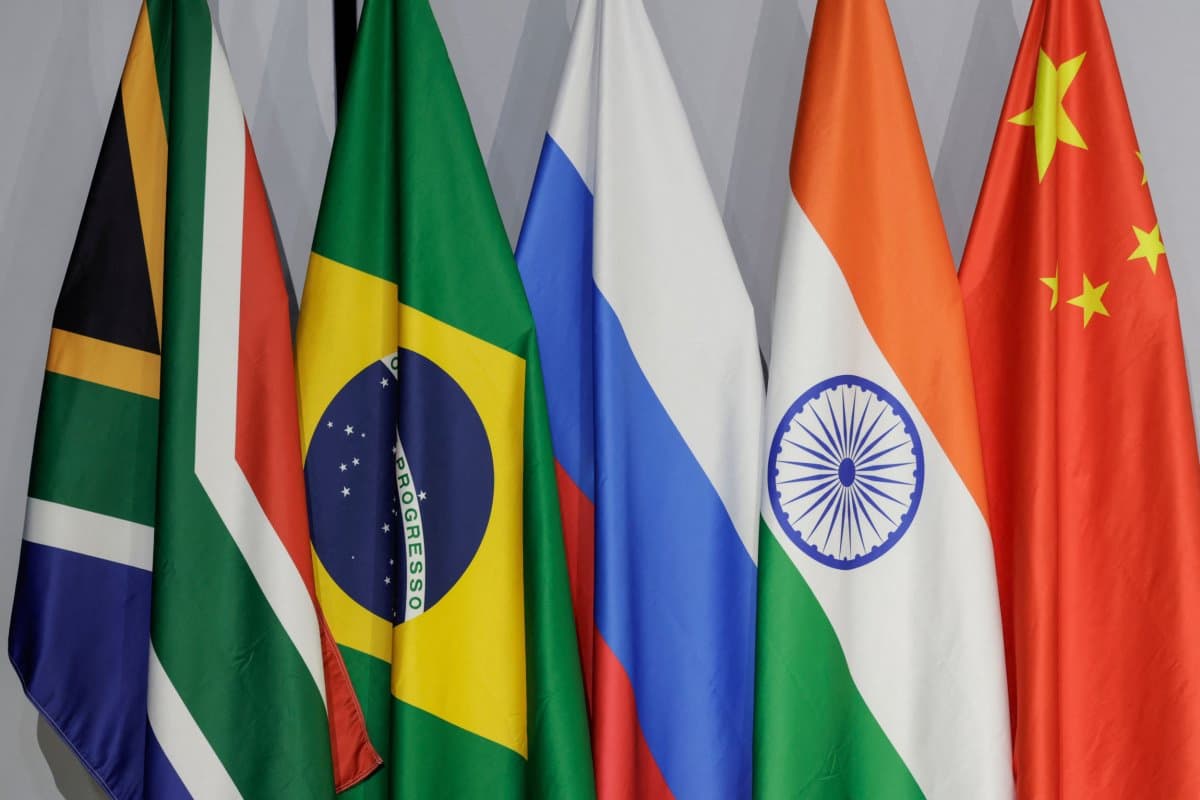
Long popularized as a major alternative to Western‑led governance, BRICS+ now faces a strategic crisis. As the international system shifts toward a diplomatic trajectory defined by bilateralism and personal diplomacy, the cracks in BRICS+ are widening.

Yet for those who maintain a balanced assessment of global governance, the current stagnation of BRICS+ is not an anomaly but a reflection of its foundational nature. Despite its reputation as a system‑breaker, the bloc has mainly acted as a reformist actor within the contours of a UN‑based framework, lacking the revolutionary ambition and capability required to displace the status quo.

This lack of ideological cohesion is exacerbated by a leadership vacuum and the divergent interests of its core heavyweights: China’s economic prerogatives, Russia’s military focus and India’s commitment to multi‑alignment.

Furthermore, the group’s 2024 expansion prioritized geographic breadth over collective action, making it increasingly difficult for the bloc to function as a unified hub for non‑Western governance in an era defined by Trump‑centric transactionalism.

Institutional velocity vs bureaucratic consensus

The primary divide between Trump’s BoP and the BRICS+ framework lies in their respective institutional velocity.

The Board of Peace is structured like a private equity firm, with Trump as “chairman for life” and a US$1 billion entry fee for permanent membership — a model that allows for rapid, albeit personalist, decision‑making.

In contrast, BRICS+ remains anchored in a model of consensus‑based multilateralism that is inherently slow. Because the bloc operates within the reformist logic of the UN Charter, it is frequently paralyzed by its commitment to procedural legitimacy.

While the BoP can announce a “Gaza Executive Board” with immediate mandates and personal appointments, BRICS+ struggles to agree on even basic financial instruments, such as a common currency, because of the fiscal divergence among its members.

The structural erosion of BRICS+ is most evident in the divergence of its three primary pillars: China, Russia and India.

Unlike the Board of Peace, which benefits from the centralized authority of a “chairman,” BRICS+ remains a headless giant. Its survival has long depended on strategic ambiguity that is now being stripped away by the pressures of a hyper‑transactional global environment.

  • China remains the bloc’s indispensable economic engine, yet its interest lies in using BRICS+ as a platform to challenge US dollar hegemony — a goal that often alienates partners who fear trading one form of hegemony for another.

  • Russia, meanwhile, functions as the group’s military heavyweight, yet its focus is increasingly narrowed by its deepening reliance on Chinese markets, creating a lopsided internal power structure that undermines the bloc’s claim to being a democratic alternative.

  • India provides the most significant check on the bloc’s cohesion. The relationship between Prime Minister Narendra Modi and Trump has entered a period of managed hostility following the 2025 tariff war. Washington’s imposition of 50 % duties on Indian goods in retaliation for New Delhi’s energy ties with Moscow and its refusal to endorse Trump’s narrative on the India‑Pakistan ceasefire has been a major disappointment for Modi.

However, it would be a mistake to assume this friction will transform India into a staunch non‑Western revolutionary within BRICS+. Even as New Delhi pursues “financial resilience” through local‑currency trade, it has no interest in becoming a non‑Western revolutionary within the group.

India’s strategic autonomy is defined by its refusal to be an “either‑or” actor; its hesitation to join the Board of Peace at Davos is not an act of BRICS‑led defiance but a calculated hedge to ensure it is not reduced to a “rubber stamp” for any single power center, along with the risk that the BoP could one day intervene in Indo‑Pakistan disputes.

This “Big Three” paradox results in an institutional lack of ambition. While the BoP can pivot with the agility of a private corporation, BRICS+ is relegated to issuing aspirational declarations. The recent expansion has exacerbated this problem; by prioritizing geographic breadth over strategic depth, the bloc has increased its global footprint at the cost of its collective ability to act.

In a world defined by swift bilateral transactions, a bloated and divided BRICS+ is finding that multipolarity without a unified center of gravity is indistinguishable from paralysis.

Expansion trap

The decision to expand BRICS into BRICS+ was framed as a historic milestone. Yet from an analytical standpoint, it has functioned more as a strategic dilution than a force multiplier.

By incorporating a diverse array of states — including Iran, Egypt, Ethiopia, the United Arab Emirates and, most recently, Indonesia — the bloc has traded its remaining internal cohesion for a broader but hollower geographic footprint. This expansion trap is becoming increasingly apparent as the group attempts to navigate the unilateralist waters of a second Trump administration.

In any multilateral organization, the difficulty of collective action increases exponentially with each new member, particularly when those members bring competing regional interests and varying levels of dependence on the Western financial system.

The inclusion of Saudi Arabia and the United Arab Emirates, whose currencies remain pegged to the US dollar, complicates any serious push for de‑dollarization, turning what was once a core BRICS ambition into a series of technical hurdles.

Furthermore, the entry of regional rivals such as Egypt and Ethiopia, along with the friction inherent in Iran’s presence alongside more Western‑aligned economies, ensures that consensus remains limited to the lowest common denominator.

Horizon of legitimacy

The period leading up to the expiration of UN Security Council Resolution 2803 at the end of 2027 will serve as a definitive window for this diplomatic experiment.

Until then, the Board of Peace enjoys a unique limbo of legitimacy, operating with the tacit endorsement of a UN mandate while building a hyper‑transactional diplomatic habitus that circumvents the organization that authorized it.

As regional heavyweights such as Egypt, Turkey and Saudi Arabia integrate into the BoP’s executive structures, they are forming habits of cooperation defined by bilateral buy‑ins and direct access to the chairman. In this critical window, BRICS+ risks remaining out of touch, offering performative solidarity while its members are pulled into the orbit of a more immediate, functional power center.

However, the BoP’s long‑term viability is tethered to a singular litmus test: Gaza. The ambitious architecture unveiled at Davos — the International Stabilization Force, the technocratic National Committee for the Administration of Gaza and the $25 billion “New Gaza” reconstruction plan — must move beyond AI‑generated renderings into tangible stability.

If the BoP proves unable to manage the realities of Palestinian self‑determination or security challenges on the ground, its relevance will likely evaporate alongside Resolution 2803. A failure in Gaza would expose the BoP as an extension of personalist ambition rather than a sustainable governance alternative.

Yet a failure for the BoP would not automatically translate into a victory for the BRICS+ model. The bloc’s continued silence and inability to offer a competing, actionable stabilization framework reinforce its image as a reactive forum.

In the current trajectory of global governance, the rules‑based aesthetics of BRICS+ are being outpaced by the deal‑based reality of the BoP. Whether Trump’s transactionalism succeeds or fails, it has exposed a fundamental truth: In an era of acute crisis, a headless bloc with divergent interests is destined to be a spectator in its own multipolar dream.

Burak Elmali is a researcher at TRT World Research Centre in Istanbul, Turkey.

Read Original Article
0

Comments

Want to join the conversation?

Loading comments...