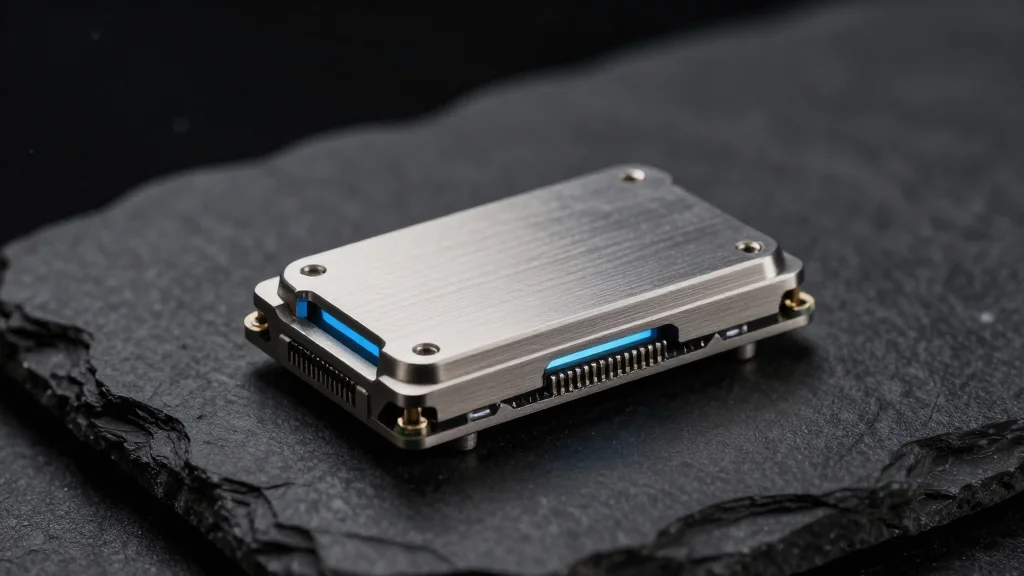
Guide to Qualifying Space and Defense Grade Electronic Components

Why It Matters
Effective qualification reduces costly failures and schedule delays in missions where reliability is non‑negotiable, directly influencing program success and budget stability.
Key Takeaways
- •Offers step‑by‑step screening procedures for space‑grade components
- •Highlights latest industry standards for defense electronic qualification
- •Discusses integration challenges for mixed‑technology systems
- •Shows how disciplined qualification mitigates mission‑critical risk
Pulse Analysis
The aerospace and defense markets are experiencing unprecedented growth, driven by satellite constellations, hypersonic programs, and advanced weapon systems. As hardware budgets swell, manufacturers face heightened scrutiny over component reliability, prompting a shift toward more rigorous qualification frameworks. This eBook arrives at a pivotal moment, providing a consolidated knowledge base that bridges legacy practices with emerging technologies such as wide‑bandgap semiconductors and additive‑manufactured parts.
Qualification of electronic components for space and defense applications involves multiple layers of testing, from material analysis to full‑system environmental stress screening. The guide details contemporary screening methods—including burn‑in, radiation hardness assurance, and vibration profiling—while aligning them with standards like MIL‑STD‑883 and ECSS‑Q‑ST‑30. By mapping these procedures to real‑world case studies, the publication helps engineers anticipate failure modes and select parts that meet stringent performance thresholds, ultimately shortening development cycles.
For program managers, the eBook offers a strategic lens on risk mitigation and lifecycle cost reduction. A disciplined qualification approach not only safeguards mission objectives but also enhances supplier accountability and traceability. Looking ahead, the integration of AI‑driven predictive analytics and digital twins promises to further refine qualification processes, enabling faster iteration without compromising safety. Stakeholders who adopt these insights will be better positioned to deliver reliable, high‑performance systems in the increasingly contested and complex operational environments of tomorrow.
Guide to Qualifying Space and Defense Grade Electronic Components
Comments
Want to join the conversation?
Loading comments...