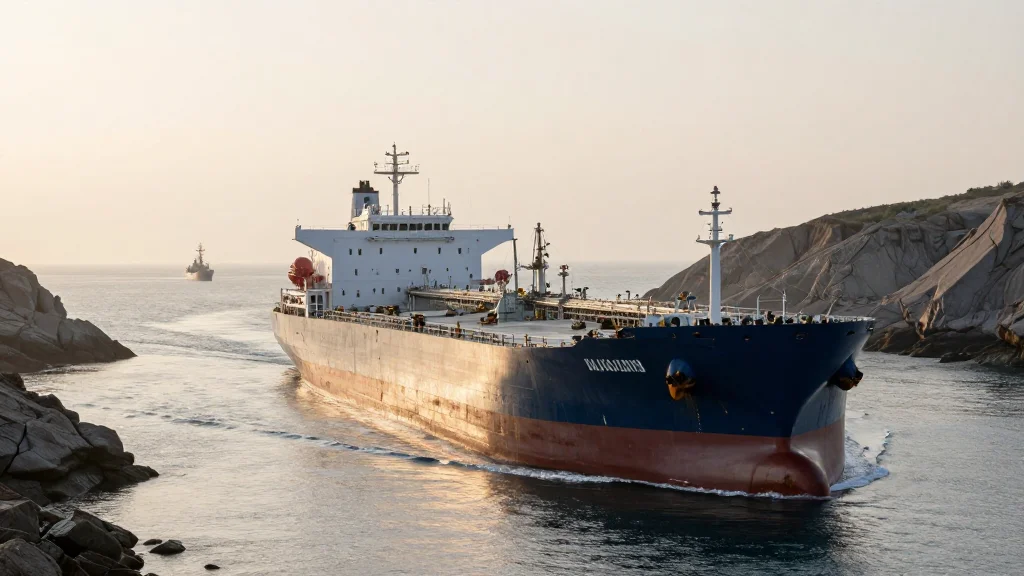
Gulf States Warn U.S.-Iran Talks Could Cement Iran’s Grip on Hormuz

Why It Matters
The Strait of Hormuz is a linchpin of global energy markets; any shift in its governance directly impacts oil prices, supply chain stability, and the strategic calculus of naval powers. For the Gulf, a permanent Iranian grip could force a re‑allocation of defense resources, spur investment in alternative corridors like the Red Sea‑Suez route, and heighten the risk of miscalculation during future crises. For the United States and its allies, accepting Iran’s leverage may undermine long‑standing non‑proliferation and maritime security frameworks, compelling a reassessment of both diplomatic and military tools in the region. Moreover, the emphasis on uranium enrichment rather than missile capabilities signals a potential softening of the U.S. stance on Iran’s broader threat spectrum. This could embolden Tehran to expand its regional activities, from proxy support to naval posturing, while limiting the leverage Gulf states have historically exercised through collective security arrangements such as the Gulf Cooperation Council.
Key Takeaways
- •Gulf officials say upcoming U.S.-Iran talks risk cementing Iran’s leverage over the Strait of Hormuz.
- •Negotiations are shifting focus from missile limits to uranium enrichment levels.
- •The Strait handles roughly one‑fifth of global oil shipments, making it a critical economic chokepoint.
- •Medvedev described Hormuz as an "inexhaustible" strategic asset for Iran.
- •Ebtesam Al‑Ketbi warned the emerging arrangement is not a historic settlement.
Pulse Analysis
The current diplomatic trajectory reflects a pragmatic, albeit risky, calculus by Washington: contain Iran’s nuclear ambitions while tolerating its economic leverage. Historically, U.S. policy has linked non‑proliferation progress with de‑escalation of regional coercion, but the present emphasis on enrichment caps sidesteps the broader security architecture that includes missile development and proxy warfare. By allowing Iran to retain a "golden" grip on Hormuz, the United States may inadvertently legitimize a tool of geopolitical blackmail, weakening deterrence credibility among Gulf allies.
From a defense industry perspective, the potential entrenchment of Iranian control could spur a surge in demand for alternative maritime security solutions—ranging from autonomous patrol vessels to advanced surveillance satellites—aimed at monitoring and, if necessary, countering any disruption of oil flows. Regional navies may also accelerate procurement of anti‑access/area‑denial (A2/AD) capabilities to offset any perceived imbalance.
Looking ahead, the Islamabad talks will test whether the United States can extract concessions on enrichment without conceding strategic leverage. If Tehran walks away with an implicit acknowledgment of its Hormuz dominance, the Gulf’s security calculus will shift toward self‑reliance and diversification, potentially reshaping alliance dynamics and defense spending priorities across the Persian Gulf for the foreseeable future.
Gulf States Warn U.S.-Iran Talks Could Cement Iran’s Grip on Hormuz
Comments
Want to join the conversation?
Loading comments...