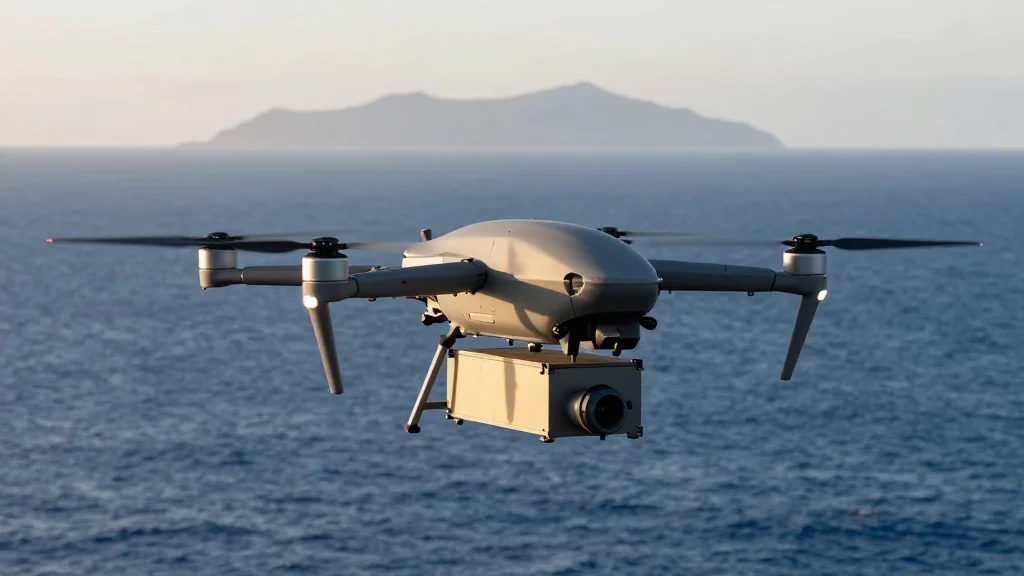
HASC Seeks Insight Into Air Force, DOD Plans for Cargo Drones
Companies Mentioned
Why It Matters
Autonomous cargo drones could dramatically reduce logistical vulnerability for dispersed forces, enhancing U.S. power projection in contested environments. Congressional oversight and funding signal a rapid shift toward attritable, high‑payload UAVs as a core component of future combat logistics.
Key Takeaways
- •Air Force seeks autonomous cargo drones for contested Pacific logistics.
- •Grid Aero’s Lifter Lite can haul 8,000 lb over 1,500 mi.
- •Pentagon allocates $1.1 bn for Drone Dominance, targeting 200k UAVs by 2028.
- •HASC draft bill mandates Air Force briefing on prototype testing schedule.
- •Joby‑Xwing and Reliable Robotics also developing unmanned airlift solutions.
Pulse Analysis
The Air Force’s agile combat employment (ACE) doctrine envisions small, dispersed units operating from improvised airfields across the Indo‑Pacific. Traditional supply chains are vulnerable to anti‑access/area‑denial threats, prompting senior leaders to explore unmanned airlift as a way to keep forward‑deployed forces stocked without exposing manned aircraft to high‑risk environments. By leveraging autonomous cargo drones, the service hopes to maintain sortie rates and sustain airpower while complicating enemy targeting.
Industry response has been swift. Grid Aero’s Lifter Lite prototype, a low‑cost, attritable platform, can transport up to 8,000 pounds over roughly 1,500 miles, and has secured $6 million in seed funding plus an AFWERX Phase II contract. Meanwhile, Joby Aviation’s acquisition of Xwing and its partnership with L3Harris aim to field a hybrid VTOL drone for contested logistics, and Reliable Robotics is retrofitting Cessna airframes with autonomous flight systems for cargo missions. These efforts collectively demonstrate a growing commercial ecosystem ready to meet the military’s heavy‑lift UAV requirements.
Congressional action underscores the strategic priority of unmanned logistics. The FY2027 NDAA draft mandates a briefing on prototype testing and a rapid‑prototyping acquisition roadmap, while the Pentagon’s $1.1 billion Drone Dominance initiative targets the procurement of over 200,000 drones, including Group 4 and 5 systems capable of long‑range, high‑payload missions. This convergence of policy, funding, and industry capability suggests that autonomous cargo drones will become a cornerstone of future U.S. expeditionary operations, reshaping how the military sustains forces in contested theaters.
HASC Seeks Insight into Air Force, DOD Plans for Cargo Drones
Comments
Want to join the conversation?
Loading comments...