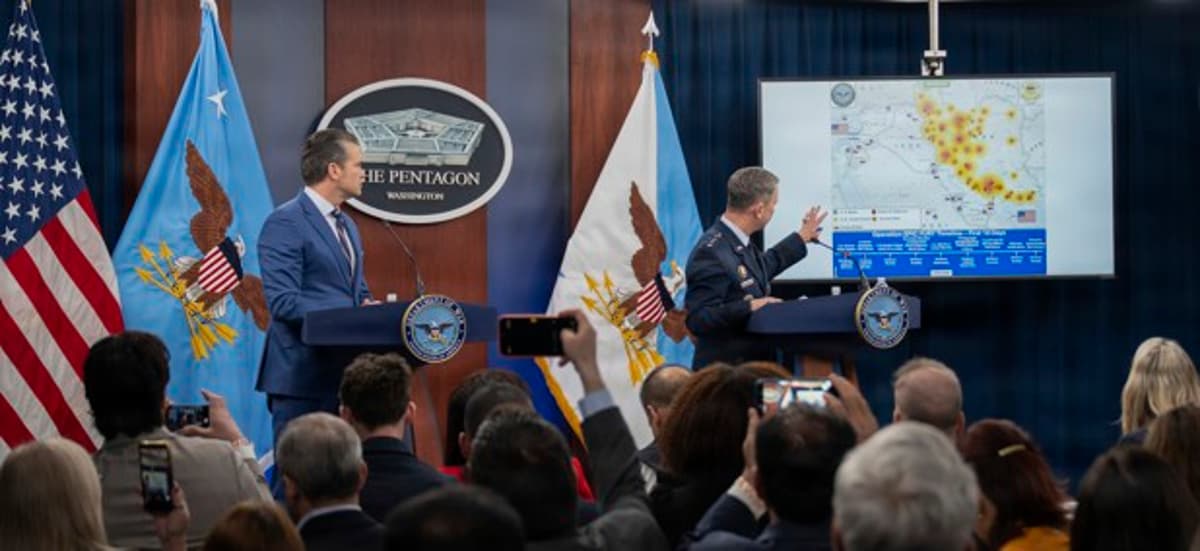
Why It Matters
The shift narrows strategic focus while escalating kinetic pressure on Iran, influencing regional security dynamics and raising scrutiny over civilian‑protection standards.
Key Takeaways
- •U.S. narrowed Iran objectives to three core goals
- •Day 11 marks most intense strike day yet
- •Over 5,000 Iranian targets hit, including missile sites
- •Ballistic missile attacks down 90%, drone attacks down 83%
- •Civilian‑casualty office eliminated, raising legal concerns
Pulse Analysis
The Pentagon’s recalibrated strategy in the Iran conflict reflects a pragmatic departure from President Trump’s more rhetorical posture. By concentrating on destroying missile capabilities, neutralizing the navy, and preventing nuclear proliferation, the U.S. aims to achieve measurable degradation rather than an indefinite occupation. This focus aligns with broader defense doctrines that prioritize clear, attainable objectives, allowing senior leaders to justify resource allocation and sustain political support at home and abroad.
Operationally, the campaign’s intensity has surged. Day 11 featured the highest concentration of strikes, with over 5,000 targets bombed, including deep‑buried launch pads and one‑way drone production lines. The Joint Chiefs reported a dramatic 90 percent drop in Iranian ballistic missile launches and an 83 percent reduction in drone attacks, signaling that the kinetic pressure is effectively blunting Tehran’s offensive capabilities. However, the rapid tempo has reignited concerns about civilian harm, especially after the Pentagon dismantled a congressionally mandated office tasked with minimizing non‑combatant casualties.
Politically, the episode underscores the tension between executive war‑making and congressional oversight. Hegseth’s deference to Trump on timeline messaging, coupled with the removal of civilian‑casualty safeguards, fuels debate over the legality and morality of the strikes, particularly in light of recent accusations involving civilian infrastructure. As the U.S. moves toward a post‑campaign phase, policymakers will grapple with how to translate battlefield gains into durable diplomatic outcomes while addressing the legal ramifications of a campaign that operates with limited civilian‑protection mechanisms.
Hegseth leaves Iran war’s timeline in Trump’s hands
0
Comments
Want to join the conversation?
Loading comments...