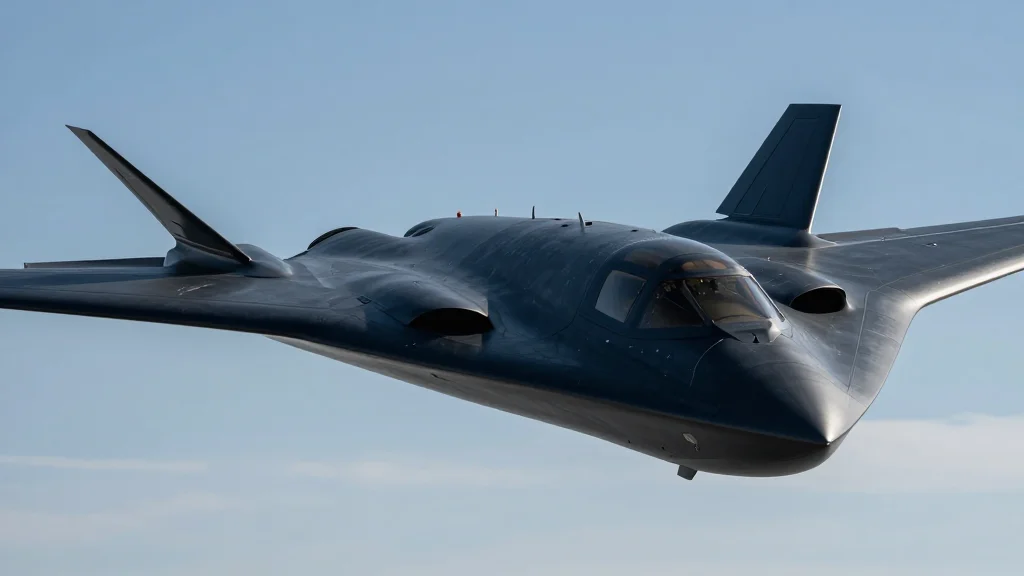
Hegseth: US Will Require ‘a Lot More’ Than 100 B-21 Bombers
Companies Mentioned
Why It Matters
Expanding the B‑21 fleet would deepen U.S. long‑range strike capability and reinforce deterrence against China and Russia, while driving significant defense‑industry investment. The decision will shape the future composition of America’s bomber force and its ability to operate in contested environments.
Key Takeaways
- •Pentagon may push B-21 buy beyond 100 units
- •Strategic Command chiefs endorse raising fleet to 145 aircraft
- •Northrop invests $2.5 B to speed B-21 production
- •B-21 slated for service 2027, could replace B‑2 and B‑1
- •Calls for 200 bombers reflect rising Indo‑Pacific threat
Pulse Analysis
The B‑21 Raider program has become a focal point of U.S. defense planning, largely because it remains on schedule and under budget while delivering next‑generation stealth capabilities. Northrop Grumman’s $2.5 billion self‑funded acceleration, combined with a $6.1 billion allocation in the FY2027 budget, underscores the government’s confidence in the aircraft’s design and its role as the cornerstone of a modernized bomber fleet. Analysts view the B‑21 as a versatile platform that can carry both conventional and nuclear payloads, positioning it to replace the aging B‑2 Spirit and B‑1B Lancer as those airframes retire.
Demand for additional B‑21s reflects broader strategic concerns, especially the need to counter China’s expanding anti‑access/area‑denial capabilities in the Indo‑Pacific. Senior leaders, including the heads of U.S. Strategic Command, have suggested a fleet size of 145, while some congressional voices advocate for as many as 200 aircraft to ensure a robust penetrating strike capability. Compared with the Cold‑War peak bomber force, the current fleet is a fraction of its former size, prompting calls for a resurgence in bomber numbers to maintain a credible deterrent and to support conventional power projection.
The push for a larger B‑21 inventory also has significant industrial implications. Accelerated production will sustain high‑skill jobs at Northrop’s facilities and stimulate the broader aerospace supply chain. However, scaling up the program will require careful coordination with the Joint Requirements Oversight Council to align bomber numbers with evolving war plans and emerging technologies such as hypersonic weapons and unmanned platforms. The outcome of this debate will shape the U.S. Air Force’s long‑term force structure and its ability to stay ahead of peer competitors in contested airspace.
Hegseth: US Will Require ‘a Lot More’ Than 100 B-21 Bombers
Comments
Want to join the conversation?
Loading comments...