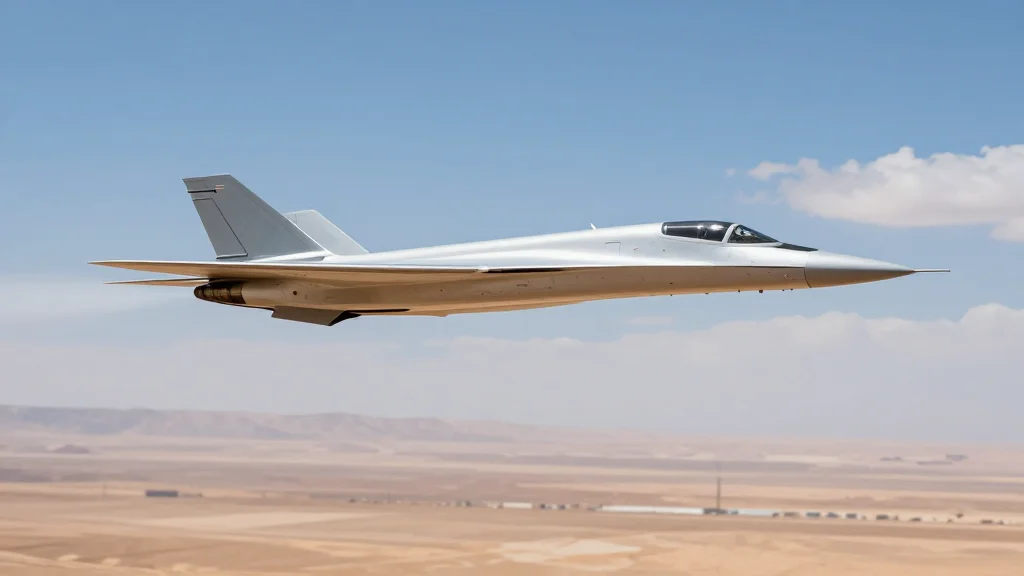
Hermeus’ Quarterhorse Mk 2.1 Completes First Supersonic Flight
Why It Matters
The flight proves Hermeus can rapidly develop operational supersonic drones, a capability the Pentagon is eager to field against near‑peer competitors. Faster delivery of such platforms could reshape asymmetric air power and logistics for the U.S. military.
Key Takeaways
- •Quarterhorse Mk 2.1 hit Mach 1.21 in first supersonic flight
- •Test completed at Spaceport America over White Sands Missile Range
- •Hermeus secured $60 million USAF partnership for autonomous high‑speed testing
- •Mk 2.2 already under construction, targeting faster performance
- •Pentagon’s focus on high‑speed capability rises amid China competition
Pulse Analysis
Hermeus’ rapid‑prototype approach is redefining how high‑speed unmanned aircraft are brought to market. By leveraging the proven Pratt & Whitney F100 engine and an iterative test‑flight regime, the company shaved a year off the traditional development timeline. This agility aligns with the Department of Defense’s push for rapid fielding of asymmetric capabilities, especially as great‑power rivals invest heavily in hypersonic and supersonic platforms.
The successful Mach 1.21 flight of Quarterhorse Mk 2.1 signals a tangible step toward operationalizing autonomous, high‑Mach drones for strike, reconnaissance, and rapid logistics. The $60 million USAF partnership underscores government confidence and provides a clear pathway for further testing and eventual deployment. As the Pentagon evaluates high‑speed options, Hermeus’ ability to iterate quickly—evidenced by the concurrent development of Mk 2.2—offers a compelling alternative to legacy programs that often stall in bureaucracy.
Strategically, the emergence of a production‑ready, F‑16‑sized supersonic UAV could shift the balance in contested airspaces. With China accelerating its own high‑speed missile and aircraft programs, the United States benefits from a platform that can penetrate defended zones faster than conventional jets while reducing crew risk. Hermeus’ roadmap, featuring three models and a focus on scalability, positions it to meet evolving defense needs and potentially open commercial high‑speed transport markets in the longer term.
Hermeus’ Quarterhorse Mk 2.1 completes first supersonic flight
Comments
Want to join the conversation?
Loading comments...