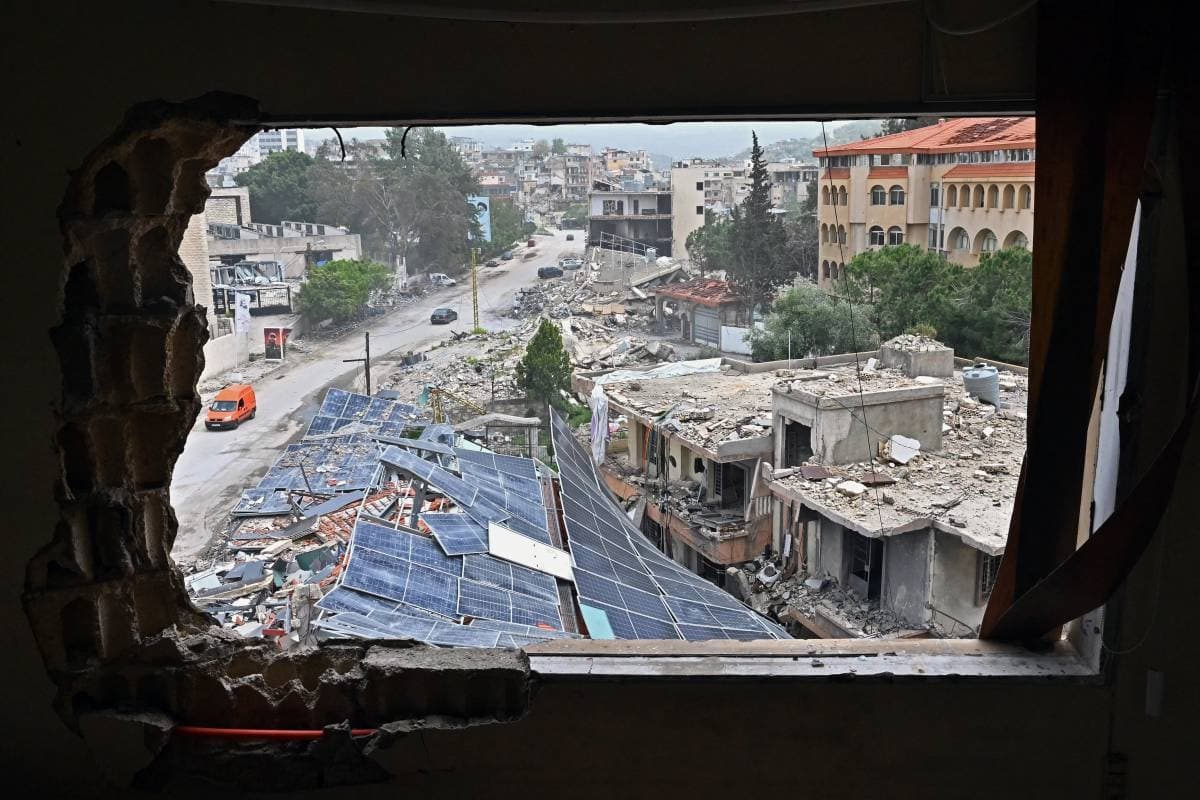
Hezbollah Chief Says Truce Can't Be One-Sided, Vows to Respond to Israel Attacks
Why It Matters
The statement raises the risk of renewed hostilities on the Israel‑Lebanon border if the ceasefire is seen as one‑sided, and highlights Tehran’s leverage over regional diplomacy. It also underscores the challenges facing U.S.‑brokered peace initiatives in a volatile Middle‑East landscape.
Key Takeaways
- •Hezbollah demands reciprocal ceasefire, threatens retaliation for Israeli violations
- •Qassem condemns U.S. ceasefire draft as insult to Lebanese sovereignty
- •Iran praised for keeping Strait of Hormuz closed amid truce talks
- •Lebanon’s disarmament push meets Hezbollah’s claim of cooperation with authorities
- •Direct Israel‑Lebanon negotiations face backlash from Tehran‑backed militia
Pulse Analysis
The ten‑day truce announced in late April was intended to pause the fiercest fighting between Israel and Hezbollah since the March 2 escalation that followed the killing of Iran’s supreme leader. While the ceasefire technically halts artillery and air strikes, Hezbollah’s chief, Naim Qassem, made clear that any Israeli violation will be met with immediate retaliation. By framing the pause as a conditional, mutual agreement rather than a unilateral concession, Hezbollah seeks to preserve its deterrent posture and signal to both Beirut and Washington that it remains a decisive actor on the southern front.
Iran’s involvement adds another layer of complexity. Qassem’s gratitude toward Tehran underscores the strategic partnership that includes logistical support and coordinated pressure on global shipping lanes, exemplified by the repeated closures of the Strait of Hormuz. The strait’s shutdown not only amplifies regional tension but also impacts global oil markets, reinforcing Iran’s leverage in negotiations. As the United States attempts to mediate a broader ceasefire, Tehran’s ability to manipulate maritime routes serves as a reminder that any durable settlement must address the broader Iran‑Israel rivalry, not just the Lebanese theater.
Within Lebanon, the truce arrives amid a government push to curb Hezbollah’s armed wing, a move that has sparked political friction and public debate over sovereignty and national security. Qassem’s claim of openness to cooperate with Lebanese authorities is a tactical overture aimed at softening domestic opposition while maintaining the militia’s core capabilities. For U.S. policymakers, the challenge lies in balancing diplomatic pressure on Israel with the need to prevent a resurgence of violence that could destabilize an already fragile Lebanese state and reignite broader regional conflict.
Hezbollah chief says truce can't be one-sided, vows to respond to Israel attacks
Comments
Want to join the conversation?
Loading comments...