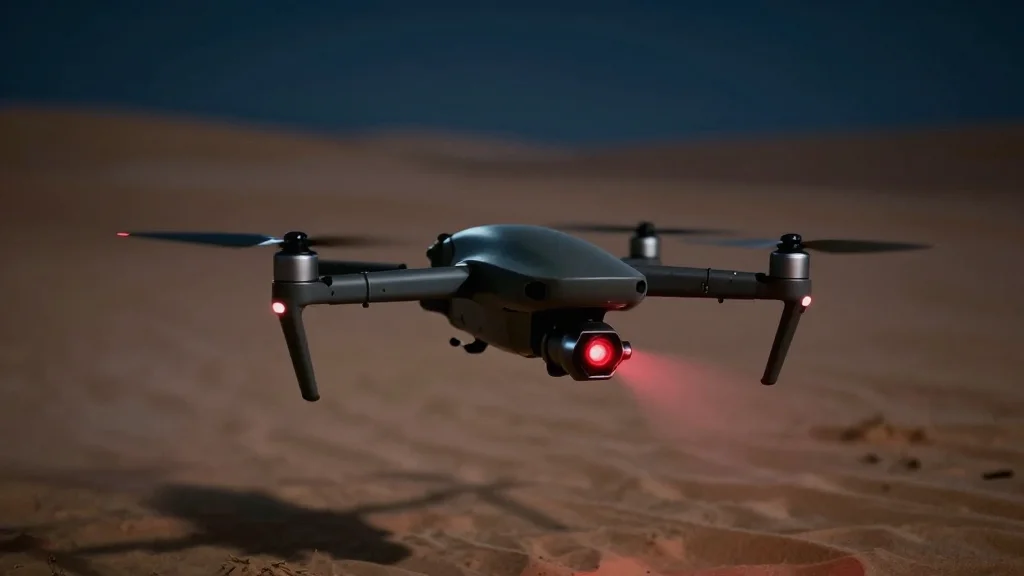
Hezbollah's 'Game Changing' Night-Hunting Weapon Punches Through Israel's Defenses: Expert
Companies Mentioned
Why It Matters
Night‑capable drones give Hezbollah a low‑cost, hard‑to‑detect strike capability, forcing Israel to overhaul its night‑time defense posture and highlighting the danger of UAV proliferation among proxy forces.
Key Takeaways
- •Hezbollah deployed Category 1/2 night drones with thermal sensors.
- •Drones bypass Israeli radar, striking troops and installations after dark.
- •IDF resorts to fishing nets and electronic jamming as stop‑gap defenses.
- •Netanyahu convened emergency security meeting after surprise drone blitz.
- •Experts warn supply chains from Iran, China, Russia enable drone proliferation.
Pulse Analysis
Hezbollah’s recent deployment of small Category 1 and Category 2 drones equipped with thermal imaging marks a decisive shift in the Lebanon‑Israel border conflict. Unlike earlier UAVs that operated only in daylight, these night‑hunting platforms can locate heat signatures of Israeli soldiers and launch strikes under cover of darkness. Defense analysts say the tactic transforms a conventional artillery exchange into an asymmetric, low‑cost air campaign, forcing the Israel Defense Forces (IDF) to rethink battlefield awareness and force protection strategies across the northern front.
The sudden influx of night drones has exposed gaps in Israel’s layered air‑defense architecture. With the drones’ low radar cross‑section and modest speed, traditional missile interceptors prove ineffective, prompting improvised countermeasures such as commercial fishing nets, soccer‑net barriers, and electronic jamming units. These stop‑gap solutions buy time but strain logistics and morale, as troops must operate with reduced mobility during night operations. The IDF is now accelerating development of dedicated counter‑UAV systems, including directed‑energy weapons and AI‑driven detection algorithms, to restore night‑time operational freedom.
Beyond the immediate tactical surprise, the drone surge signals a broader supply‑chain evolution. Experts trace the hardware to a mix of legacy Iranian designs, Chinese components, and black‑market acquisitions, suggesting a coordinated effort to arm proxy forces with affordable, export‑ready technology. If unchecked, the proliferation could embolden other non‑state actors in the region, escalating low‑intensity conflicts into persistent, night‑time skirmishes. Policymakers in Washington and Jerusalem therefore face a dual challenge: bolstering Israel’s immediate defensive posture while curbing the flow of UAV parts that enable asymmetric warfare.
Hezbollah's 'game changing' night-hunting weapon punches through Israel's defenses: expert
Comments
Want to join the conversation?
Loading comments...